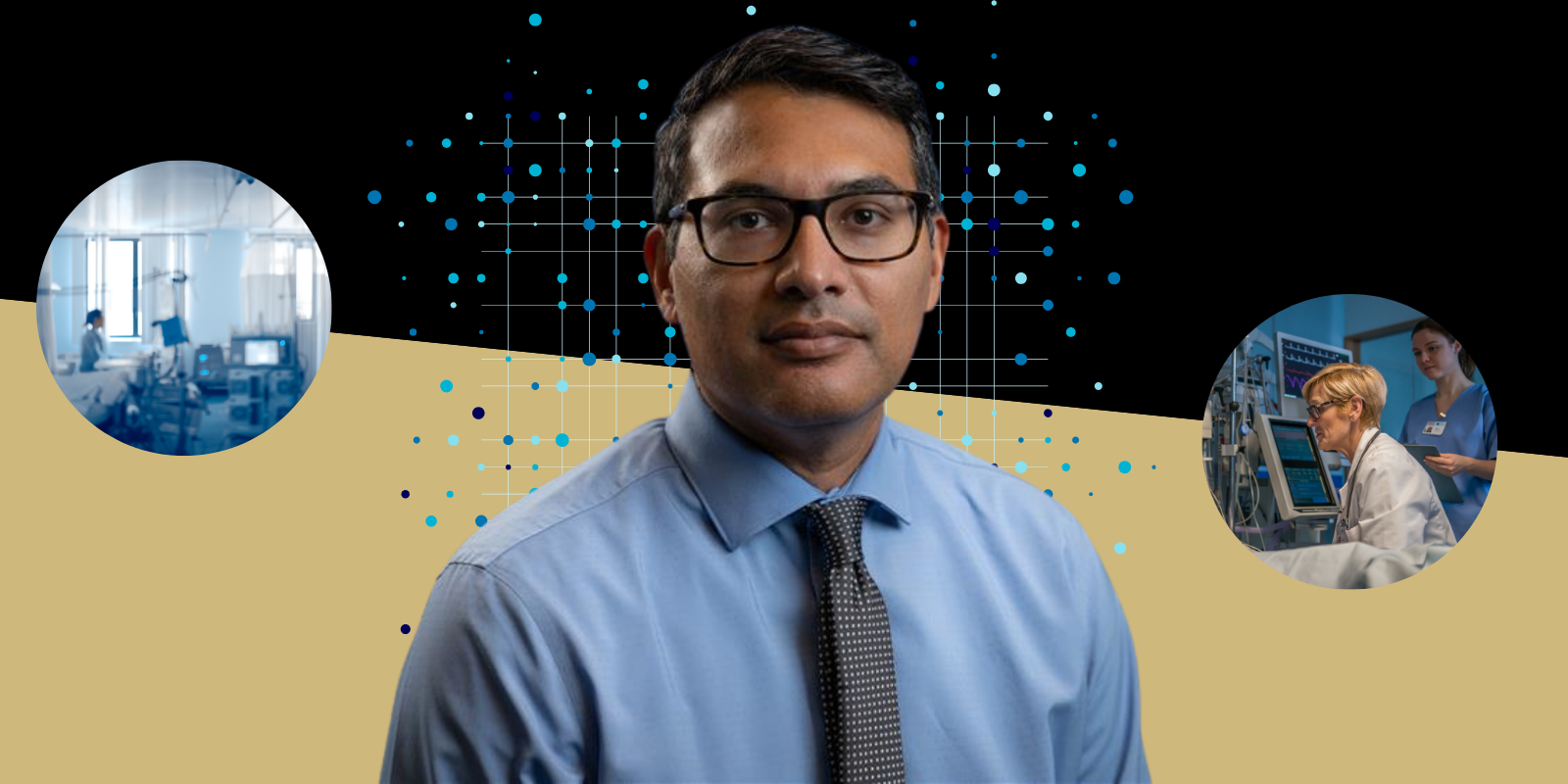
There are two kinds of rhetoric around artificial intelligence (AI), says Aakriti Pandita, MD, assistant professor of medicine and investigator with the Adult and Child Center for Outcomes Research and Delivery Science (ACCORDS).
“One is that AI is going to replace everyone. Then, there are other people who want to see real change in the world,” she says. “So, it’s upon us: how do we harness AI?”
That’s a question on a lot of people’s minds. As a self-described optimist, Pandita has hope for the use of AI for the collective good. She sees the potential of what it can do for the medical field and what it’s capable of when it comes to improving experiences for providers and patients, preventing burnout among the health care workforce, and even how technology can offer opportunities for connection.
Support, not substitution
Pandita doesn’t foresee AI taking the place of a doctor altogether or that the technology will be used to diagnose patients on its own. Instead, she’s focused on increasing efficiency for physicians while easing their cognitive load.
“I’m curious about how we can use AI to make our lives better,” Pandita says. She’s already witnessed first-hand how much documentation workload can overburden a provider and result in burnout. This can also have an impact on the patient’s experience. She envisions a future where medical providers can be truly-patient centric and is passionate about addressing documentation-related workload as one way to achieve that.
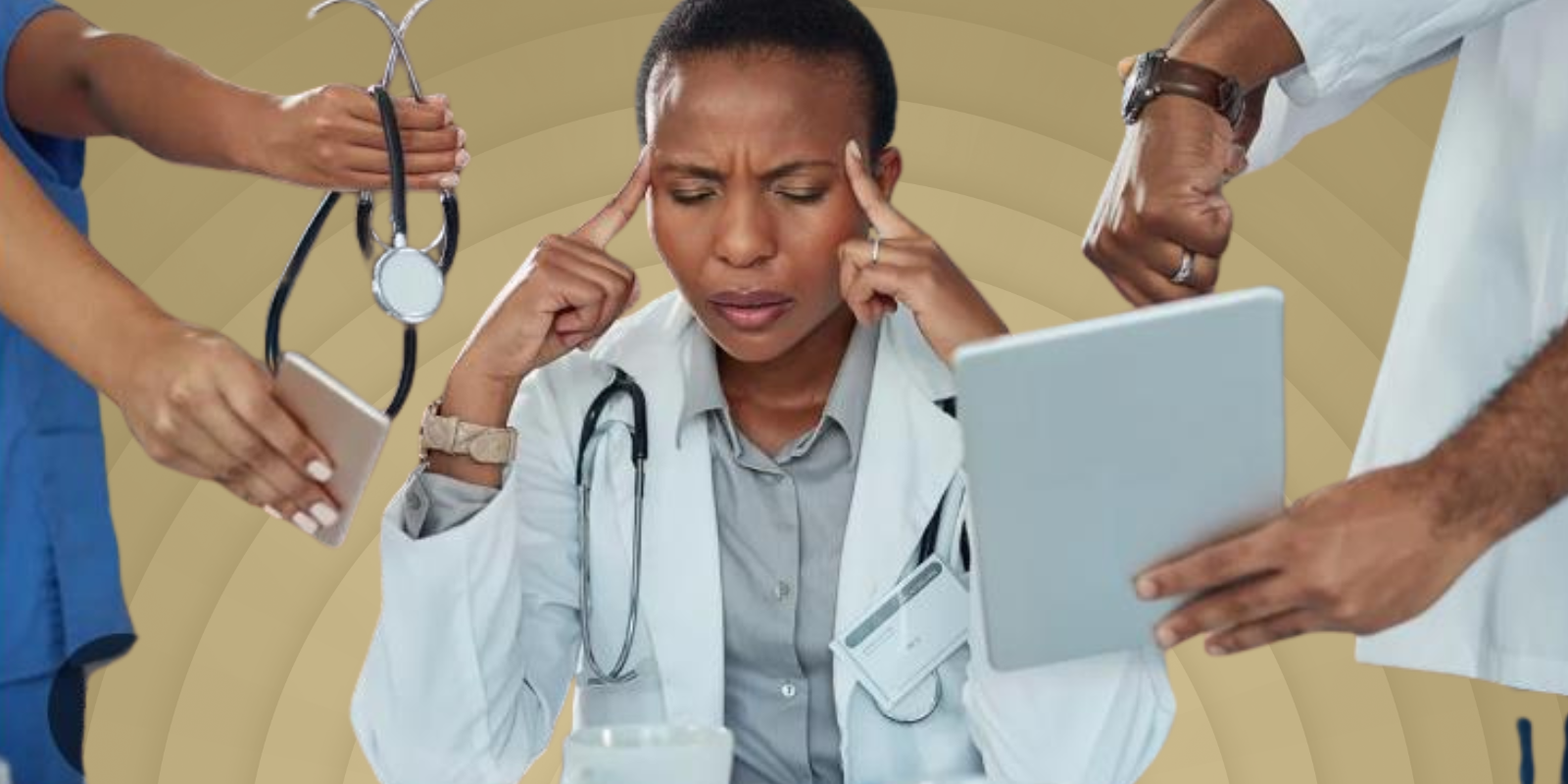
“The biggest ROI right now for us to focus on is helping physicians to feel more supported and basically eliminate the part of the electronic health record (EHR) workload causing a burnout crisis. EHR-related burnout is one of the leading causes of burnout, which is making clinicians leave practice,” Pandita says.
According to a survey of 1,003 primary and specialty care doctors, 93% of physicians reported regular feelings of burnout and more than half have considered leaving medicine because of it. Pandita believes EHR-related burnout is a contributing factor and wants to catalyze change by using AI as a tool to achieve that outcome.
She’s already started with radiology data in Project AIDA and now is looking to expand to other disciplines with their tool, which Pandita and the researchers say they believe to be the first of its kind to be developed.
The power of patient–provider connection
Pandita believes technology has the power to connect patients with their providers.
“What’s lacking in our current health care system is connection,” she says. “For a patient to focus on their care, they need to feel connected to their caregivers – the doctors, the nurses, everyone who’s part of their health care team. That’s not always happening right now. The same is true for clinicians who need the connection to feel purposeful in their work. But I do feel there is a potential for technology to bridge that, to make amends.”
How that is accomplished hinges on clinicians and researchers harnessing technology, AI or otherwise, and Pandita is clear about where the responsibility for that lies.
“We’re responsible for both the technology and how we use it,” she says. “That’s where rigorous research and programs such as the SCORE fellowship come in." As a former SCORE fellow herself, Pandita believes the role of training programs is "to make sure we train and implement these technologies in a way that’s patient-centric and not just another piece of scholarly literature. That’s the whole point of good research; it needs to affect real-world outcomes.”