Every September, National Advanced Practice Provider Week honors the contributions of physician assistants, nurse practitioners, and other advanced practice providers (APPs) who keep medical operations running smoothly in hospitals and clinics throughout the country.
That includes the University of Colorado Cancer Center, where APPs work with patients and providers in multiple specialties and cancer types.
In recognition of National APP Week for 2025, here are three APPs helping to transform patient care at the CU Anschutz Cancer Center.
Jennifer Hreno, PA-C, MPAS
.jpg?width=300&height=390&name=Hreno%2c%20Jennifer%20S%2001x%20(2x3).jpg) Hreno is a physician assistant in the head and neck cancer and gastrointestinal cancer clinics at the CU Cancer Center, helping patients through chemotherapy, immunotherapy, and radiation treatment. She has worked at CU Anschutz for 13 years — four as a clinical research coordinator in the Division of Medical Oncology before becoming a PA, her role for the past nine years.
Hreno is a physician assistant in the head and neck cancer and gastrointestinal cancer clinics at the CU Cancer Center, helping patients through chemotherapy, immunotherapy, and radiation treatment. She has worked at CU Anschutz for 13 years — four as a clinical research coordinator in the Division of Medical Oncology before becoming a PA, her role for the past nine years.
What inspired you to become a PA?
What I really liked about being a clinical research coordinator was working with the patients. That was always going to be very limited in that role, and I wanted to interact more, clinically. Being a physician assistant seemed like a great way to be more involved clinically.
What do you like most about being a PA?
It's a stressful time when you get diagnosed with cancer. People are looking for compassion and education, and I enjoy being able to spend time with them, talk to them, and guide them through the whole process. And I really love the collaboration with the physicians. We have a great group of people, and they keep they keep me coming back.
How important is National APP Week to you?
I think it's important that APPs get recognized for all they do, because we do a lot. There are a lot of us now, and I think we're only becoming a more important part of health care as health care changes and grows. APPs play an important role in making sure patients are being seen and getting the care they need. It's a good bridge, especially for communities that don't have the resources to hire physicians.
Jessica Berman, AGACNP-BC, MSN, RN
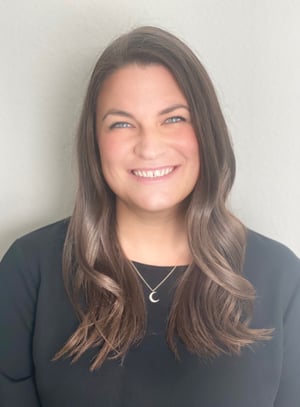 Berman is an APP in cancer genetics, testing for gene mutations in individuals with a personal history or family history of cancer. Berman worked as an intensive care unit nurse and a transplant surgery APP before moving into the world of cancer genetics.
Who else do you test when a patient tests positive for a cancer-related gene mutation?
It depends on age. We don't test kids, because the folks at Children’s Hospital Colorado do that. Generally it’s first-degree relatives — parents, children, siblings. We can't reach out to folks directly, but once the patient knows the information, they share it with their family members, then we ask them to bring them in so we can test them. And we don't diagnose cancer; we identify risks. If I identify someone who has an increased risk, then I start monitoring them and following them long term. Ordering their mammogram, their breast MRIs — making sure they get tested for whatever the specific gene is.
What’s the biggest difference between working in transplant surgery versus cancer genetics?
Transplant is much more around the clock and acute, whereas genetics is more long term. My job now is dealing with patients, dealing with families, over the lifespan. My tagline is, “I'm as involved or uninvolved as you need me to be at different points through your life.” We might meet a couple of times in a year or two, and you’ll say, “I'm good, I’ve got my plan.” With kidney transplant, I was seeing patients at least weekly.
What’s the most rewarding part of your job?
My patient population is pretty varied, but I see a lot of young women in their 20s, 30s, and 40s who are at the decision-making stage of family planning. They might have gene mutations, and they need someone to talk to thoughtfully about that. I like following them.
I also see people who may have a gene mutation, but they don't have a cancer diagnosis. So I see a lot of high-anxiety folks. I have some personal experience with gene mutations, so I know how important it is to have these conversations.
Brooke Parker, MSN, FNP-C
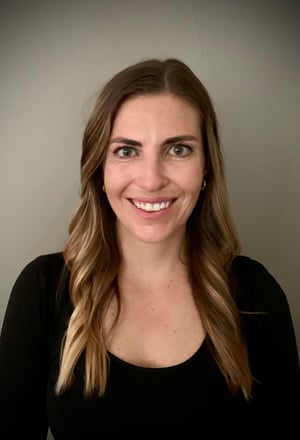 Parker is a nurse practitioner in the gastrointestinal (GI) cancer clinic, where she worked for five years as a nurse before becoming a nurse practitioner. She primarily oversees patients who are receiving chemotherapy or are enrolled in clinical trials of new drugs.
What does your day-to-day look like in the GI clinic?
We are less research-based and very clinical. Most of our day revolves around seeing patients. We see about 10 or so patients a day — typically GI, but sometimes I'll see head and neck patients and a few other cancer types. My role, while they're on chemotherapy, is to make sure it's safe to keep going. So, reviewing labs, seeing how they're doing, watching for red-flag symptoms that might need a further workup or additional imaging. Most of our patients are on standard-of-care treatment, but we see a lot of clinical trial patients as well.
Have you seen those clinical trials make a difference for people?
We have had phase-one clinical trials that have been wildly beneficial to patients. That's the most rewarding part, because people who are going on clinical trials, especially phase one, they tend to be out of options. They've exhausted all their standard-of-care treatment options, so they're going into it in a place of low hope. To have someone with a good treatment response or a prolonged treatment response is so exciting. It feels like treatment for cancer is changing rapidly.
Do you typically see people for a shorter, discrete period of time, or are there people that you see over a period of years?
Many of our patients are metastatic and on palliative chemotherapy, which means we're seeing them often for long periods of time. Obviously, that's not ideal for the patient, but it is nice to be able to create good relationships with them. There are some patients we see every two weeks for years, and that is unique. One of the best parts of my job is getting to be there for them in this unique part of their life. It's not often that you form intimate relationships with those who are dying. I feel very honored to be a part of that journey.