A multidisciplinary team project focusing on the role played by an enzyme in helping cancer cells resist two major types of treatment has been awarded a two-year grant under a program to foster team-science research at the University of Colorado Anschutz.
The project is led by CU Anschutz Cancer Center member James Costello, PhD, associate professor in the CU Anschutz Department of Pharmacology and co-director of the cancer center’s Biostatistics and Bioinformatics Shared Resource.
Costello’s team has been awarded support through CU ASPIRE, the CU Anschutz School of Medicine Programmatic Incubator for Research. The $200,000 grant is jointly funded by the cancer center and the school of medicine.
CU ASPIRE’s goal is to support research teams as they establish preliminary findings that could eventually lead to a major grant submission to a funding agency, like the National Institutes of Health. The cancer center’s involvement reflects its goal of fostering a team-science approach to answering complex questions that can lead to better therapies for patients.
“They support big-project ideas that require a team, bringing knowledge in various fields together to do what any individual lab would not be able to do alone,” Costello says.
Costello’s multi-institution team involves researchers with expertise in structural biology, cancer biology, immunology, and drug design. Costello’s own focus is computational systems biology, combining computer science, mathematics, and data science to model and understand complex biological systems.
“When you bring a whole team like this together, we can think about approaches, develop experiments, and not miss things, so we can have a really competitive grant application,” Costello says.
Focusing on NPEPPS
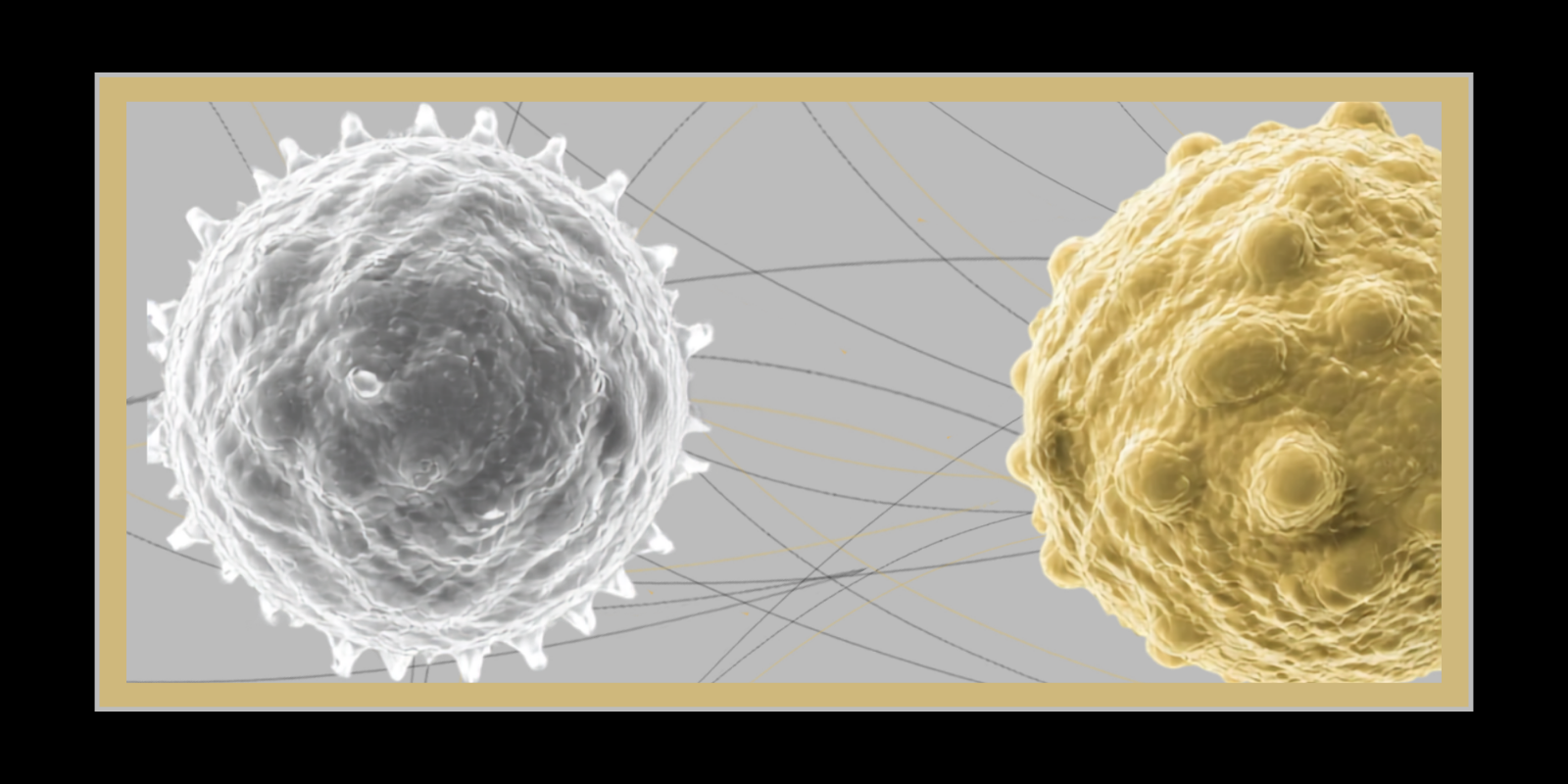
Costello and his colleagues will explore why two of the most important types of cancer treatment – chemotherapy (specifically, platinum-based drugs like cisplatin) and immunotherapy – often fail because cancer cells become resistant to them. They see an enzyme found in cancer cells, called NPEPPS, as key to their search.
Previous work published in 2024 by Costello and his longtime collaborator and mentor – Dan Theodorescu, MD, PhD of the University of Arizona, a former CU Anschutz Cancer Center director – established NPEPPS as a driver of cisplatin resistance.
NPEPPS (pronounced “en-peps” by researchers) has been found to help cancer resist treatment in two key ways:
- It acts as a cellular gatekeeper, blocking entry points – called volume-regulated anion channels, or VRAC – that platinum-based chemotherapy drugs use to enter cancer cells and kill them.
- It is directly involved with processing small protein fragments that turn into antigens, the biological “name tags” on the surface of cancer cells that the body’s immune-system T cells use to recognize cancer cells. With fewer antigens, cancer cells can more easily hide from immunotherapy drugs.
→ Researchers Discover a Mechanism That Could Improve Platinum-Based Cancer Therapy
Overcoming resistance
The big idea behind the Costello team’s project is that if NPEPPS is blocked, cancer cells potentially could be more vulnerable to both chemotherapy and immunotherapy.
In his 2024 study, “we showed that, by targeting NPEPPS, we could make resistant cancer cells more sensitive to chemotherapy,” Costello says.
Costello and his collaborators will seek to learn more about how NPEPPS works at the molecular level and what happens when it’s blocked. Then they hope to develop NPEPPS-blocking drugs that would be paired with existing chemo or immunotherapy drugs, and find biomarkers to identify which patients would benefit the most from this approach.
“We have two angles – the chemotherapy angle and the immunotherapy angle,” Costello says. “If we could manipulate NPEPPS in both settings at the same time, we potentially could have a synergistic effect in getting more platinum into the cells, and also increasing the response to immunotherapy by making the cells more recognizable to the immune system.”
Costello says the project potentially could have a widespread impact across many cancers. “Overall, about 20% of cancer patients will see a platinum drug in their treatment at some point, so it has the potential to impact many different cancer types,” he says. Platinum-based chemotherapy is especially common in treating bladder cancer and ovarian cancer, so the project is initially focused on those cancers.
→ VIDEO: James Costello, PhD, explains resistance to cisplatin
Going where the science leads
Costello hopes the work funded by the ASPIRE grant will generate enough data and evidence that the team can apply for a large NIH Program Project Grant (P01) in fall 2027 for a sustained research effort.
Costello, whose grandmother died of bladder cancer, says he has always been interested in translating findings in “omics” – the broad field of biological sciences that focuses on the comprehensive study of biological molecules (like DNA, RNA, and proteins) within an organism – into better clinical care for patients.
He notes that his lab does both “wet” and “dry” research – wet for hands-on work with specimens and fluids; dry for computational work.
“Especially in today’s age of AI and machine learning, we’re able to leverage those tools and resources to help with the fundamental questions that we're interested in,” he says. “We’re able to go where the science leads. And if the science leads us to areas where we don’t have expertise, we can rely on colleagues and collaborators to help guide us. That’s how this team was brought together.”
Costello’s team also includes CU Anschutz Cancer Center member Benjamin Bitler, PhD, associate professor in the Department of Obstetrics and Gynecology and holder of the Kay and Thomas Dunton Endowed Chair in Ovarian Cancer Research, and John Bankston, PhD, associate professor in the Department of Physiology and Biophysics, along with Theodorescu and other faculty from the University of Arizona as well as Johns Hopkins University School of Medicine.
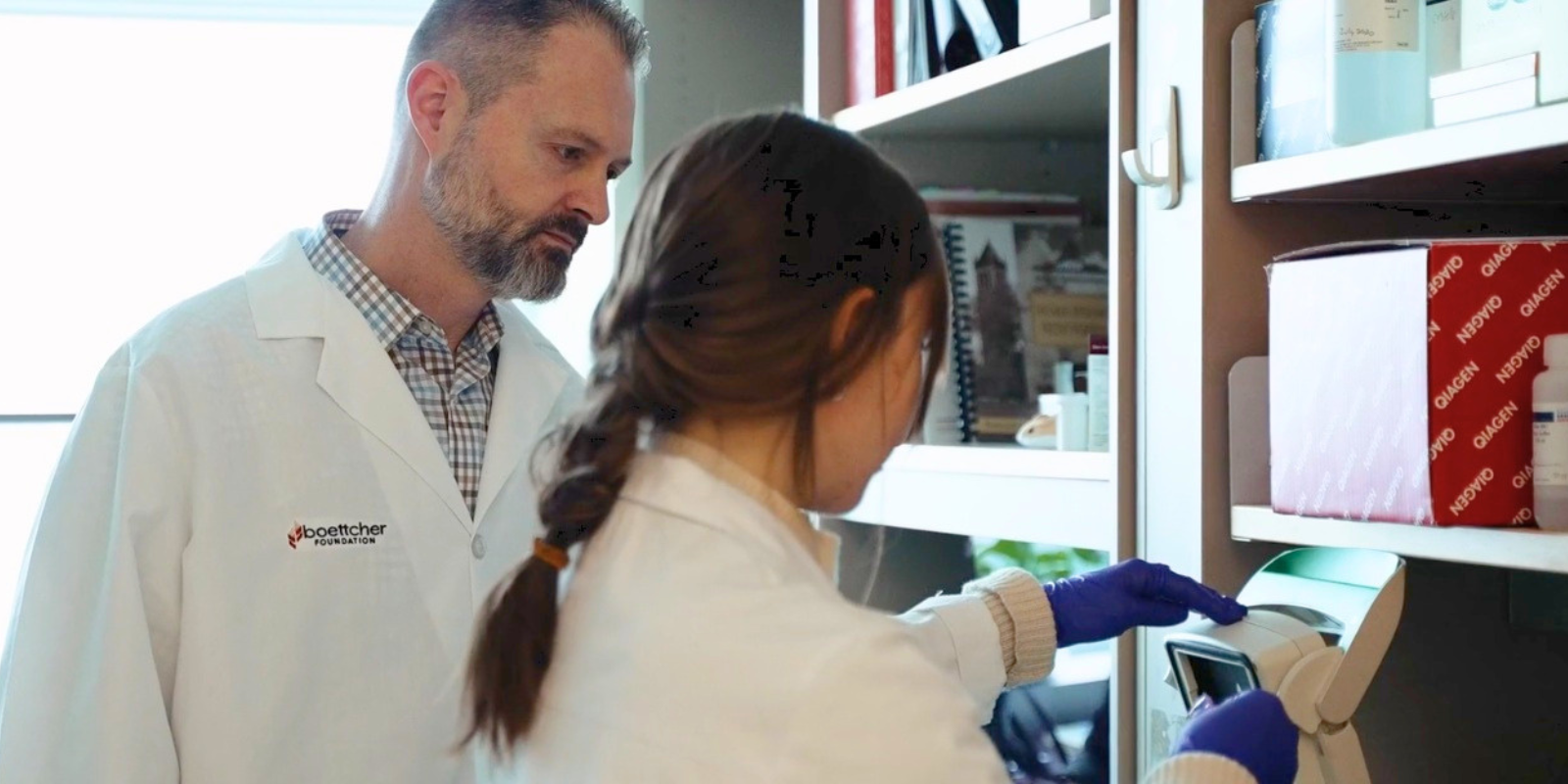
PHOTO AT TOP: James Costello, PhD, works in his lab. Photo credit: CU Anschutz Department of Pharmacology