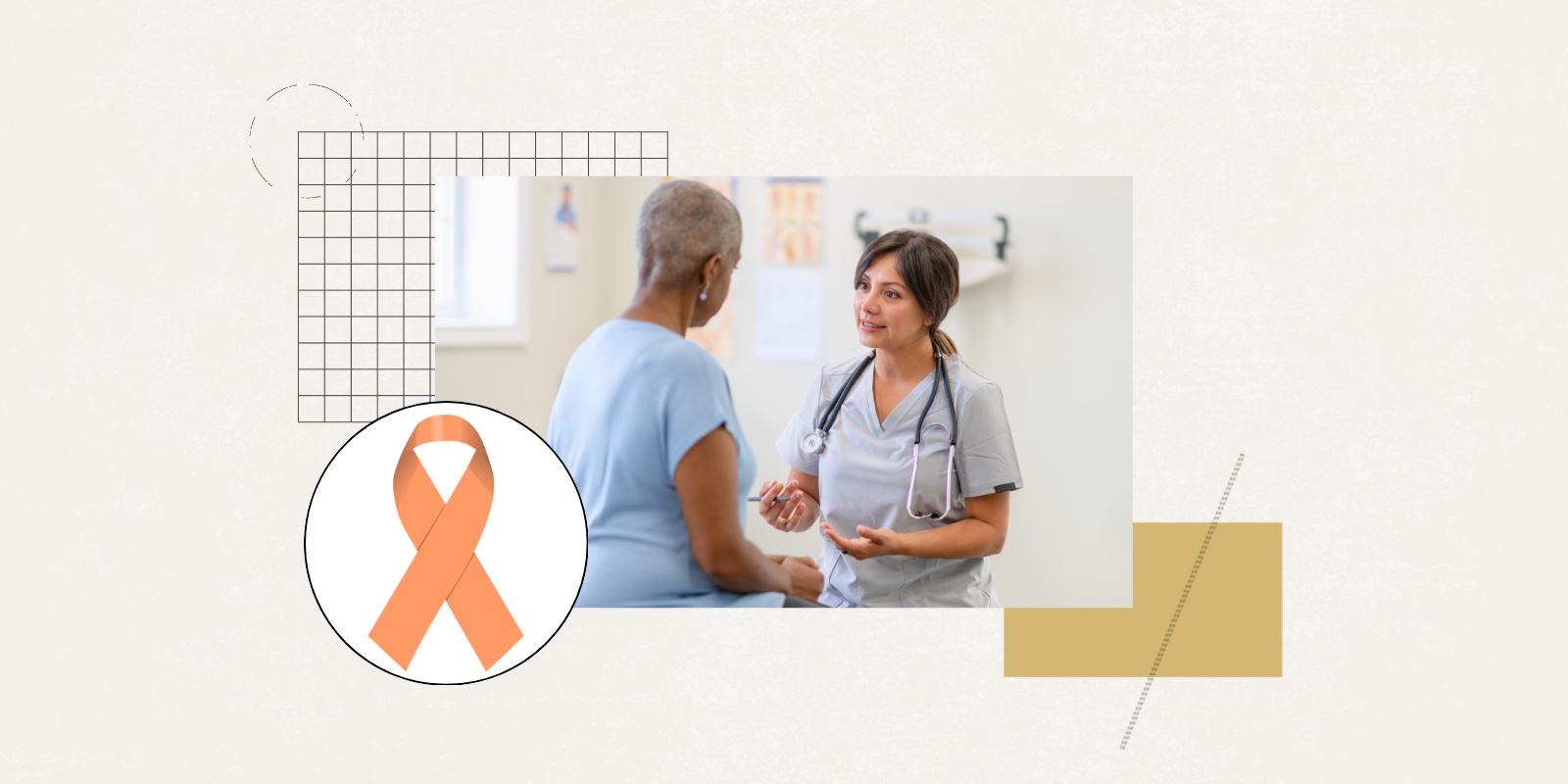
With rates of anal cancer rising among older women, University of Colorado Anschutz Cancer Center member Christine Conageski, MD, MSc, has a simple suggestion when it comes for screening and treatment for the disease: Train gynecologists to test for anal cancer at the same time they are performing Pap smears to look for cervical cancer.
HRA and digital exams
Because anal cancer and cervical cancer are both caused by human papillomavirus (HPV), a gynecologist can be the frontline in prevention, says Conageski, one of the co-authors of a recent perspective paper on the topic in the journal Obstetrics and Gynecology. Not only can gynecologists vaccinate eligible women against HPV; they also can conduct the same examination that is conducted after an abnormal Pap test — called a colposcopy — in the anus.
“We can do the equivalent of a colposcopy of the anus, and we can identify precancers and treat them to prevent the cancer,” says Conageski, associate professor of OB-GYN in the CU Anschutz School of Medicine. “We know that this test has reduced cervical cancer rates substantially when it is available.”
The procedure, known as high-resolution anoscopy, or HRA, is a direct visualization, using a microscope, to look for abnormal or precancerous cells. If abnormal cells are found, they are biopsied to look for a cancer. Think of it as a miniature colonoscopy, but patients don’t have to do any prep and are not put under anesthesia.
“If a gynecologist is uncomfortable doing an anal pap test, they could do a digital anal-rectal exam, so a one-finger exam, and feel for any lumps or bumps,” Conageski says. “There's at least one paper that says if you're comfortable doing digital anal exams, you can detect things as small as three to four millimeters, so that would at least be diagnosing these anal cancers early.”
Full-blown anal cancer is treated with a combination of excision, radiation, and chemotherapy, but when precancerous cells are detected, they can be treated with a process called electrocautery, which essentially burns off cells in the top layer of the anal lining.
Education matters
Educating gynecologists about anal cancer and its relationship to HPV is imperative for better screening, Conageski says, as is training them to do the HRA exam.
“They need to know the basics of HPV. They need to understand we don't need to screen the entire population — we need to identify the highest-risk individuals,” Conageski says. That group includes patients with a history of vulvar cancer or vulvar precancers, solid-organ transplant patients more than 10 years from their transplant, and HIV-positive patients older than 45.
“We want to bring awareness, to try to get people to at least consider doing a digital exam for these high-risk patients,” she says.
As for the HRA screening test, “we don't have enough high-resolution endoscopists throughout the country,” she adds. “There are only four of us in the entire state of Colorado. If there are gynecologists looking to take on a new skill, this can be very rewarding. If we want to be screening everybody that we’re supposed to be screening, we need more people to help us.”