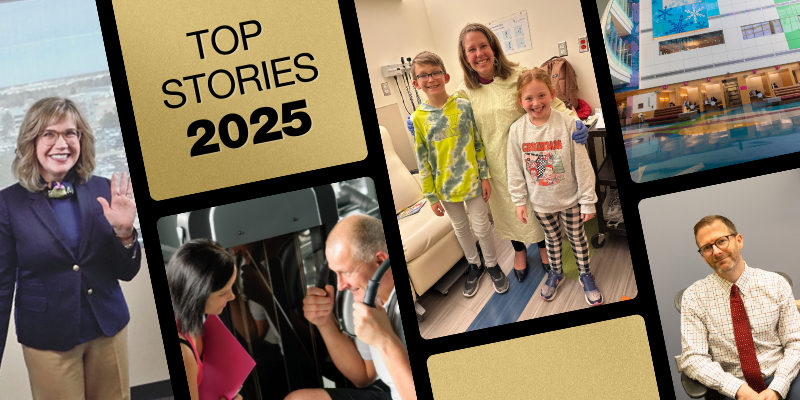
Research on cystic fibrosis continues to extend lifespan, reach more individuals, and reduce inflammation; Influential research leader steps away from her role; CCTSI pilot grants make a profound impact; New course teaches researchers how to manage their grants. Read the top 5 stories from the CCTSI.
Research Conducted at the CCTSI Continues to Advance 'Miracle Drug' for Kids With Cystic Fibrosis
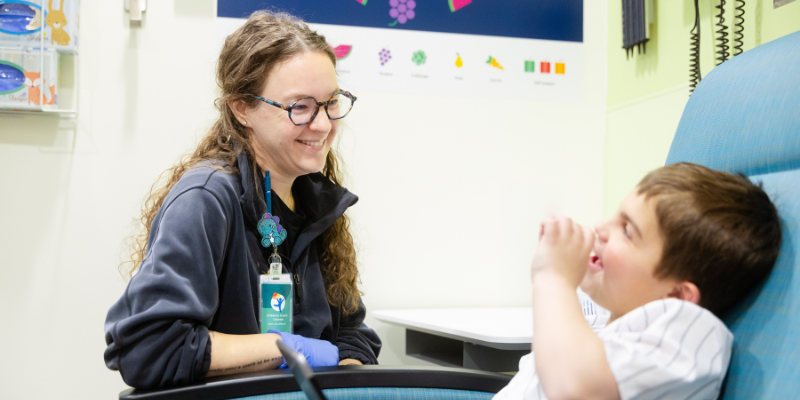
Twenty-five years ago, the median age of survival for someone with cystic fibrosis (CF) was about 30. Today, someone who has this rare, life-shortening genetic disease can look forward to a median survival age of 61. What has made the difference? Medical research.
“It is not lost on us how much CF (treatment) has advanced,” said Tara Kent, mother of two children with CF who received treatment through clinical trials at Children’s Hospital Colorado. These clinical trials led to the recent FDA approval of the drug called ALYFTREK.
Forty Years of Leading High-Impact Research
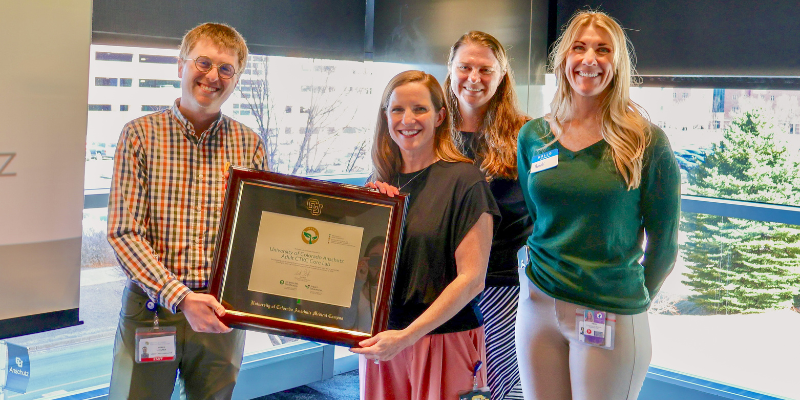
Wendy Kohrt, PhD, is stepping away from her long and illustrious leadership role with the Colorado Clinical and Translational Sciences Institute (CCTSI). To say Kohrt fills many roles at the university is an astonishing understatement. For nearly 40 years, she has been leading high-impact and influential research in geriatrics and integrative physiology.
The Power of Pilot Grants
Joshua Gowin, PhD, associate professor of radiology in the CU Anschutz School of Medicine, received a CCTSI Pilot award in 2021. Gowin is a neuroscientist who uses functional Magnetic Resonance Imaging (fMRI) to study the reward center in our brains. With his CCTSI pilot grant he looked at how naltrexone, an FDA-approved drug used to treat alcohol dependency, changes the brain’s response to reward. The CCTSI pilot grant has had multiple profound impacts beyond Gowin’s pilot project.
It’s Not All About the Science
Anne Libby, PhD, professor and vice chair for Academic Affairs in the Department of Emergency Medicine at the University of Colorado School of Medicine, noticed that many mentees were struggling to complete their funded projects. Yet nobody was teaching post-award project management courses for researchers.
“Researchers want to test hypotheses, advance knowledge, develop new approaches to care, and that is wonderful. But you must deal with the wrapper, which is money and sponsorship. Those skills are a requirement in this modern era of being a successful researcher,” Libby said, who is also a longtime program director in the Colorado Clinical and Translational Sciences Institute (CCTSI). So in April 2020, she launched the Researcher Management and Leadership Training to teach researchers the skills to successfully complete their funded projects.
Cystic Fibrosis Treatment Shows Long-Term Reduction in Inflammation
Despite CF research successfully leading to effective treatment, the story is not over. Doctors at CU Anschutz are currently leading clinical studies to learn more about the disease and advance treatment for people with CF. In the early days of the CFTR modulators, only a small percentage of individuals were eligible due to their specific genetic profile. Today, the therapy has evolved so that approximately 90 percent of all people with CF in the U.S. are eligible for a CFTR modulator. The ultimate goal of ongoing clinical research is to improve the lifespan and quality of life for all people with CF. To that end, Scott Sagel, MD, PhD, recently published results from the PROMISE study in the Annals of the American Thoracic Society, showing the impact of Elexacaftor/Tezacaftor/Ivacaftor (ETI) on inflammation, a feature and cause of CF lung disease. ETI is the most commonly prescribed CFTR modulator therapy.
-1.png)