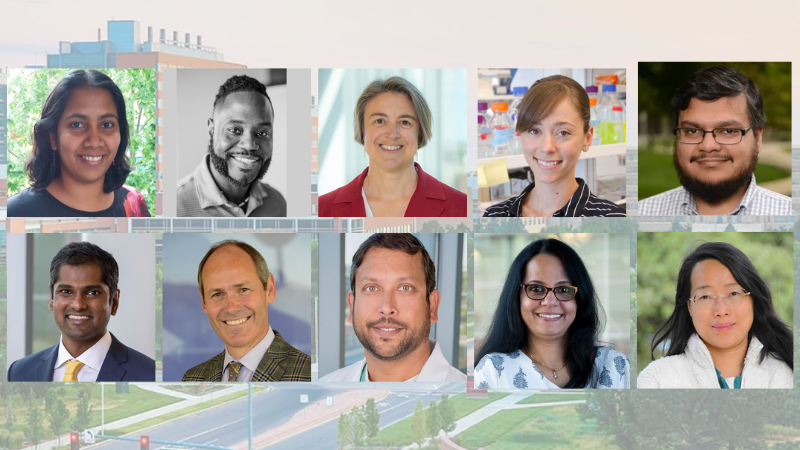
CU Anschutz Innovations has selected nine new faculty-led technology teams for Cohort 9 of SPARK and digiSPARK, representing some of the most promising translational discoveries emerging across CU Anschutz. This year’s projects span next generation cell therapies, first-in-class biologics, AI enabled clinical tools, advanced surgical devices, and novel diagnostics—each chosen for its potential to meaningfully improve patient care and accelerate impact.
The 2026 cohort reflects the continued growth and impact of SPARK and digiSPARK, which since its launch in 2018 has supported 70 projects across eight cohorts, engaged 65+ business mentors, delivered 32 commercialization seminars, and helped launch 29 startups.
SPARK teams have secured more than $60 million in follow‑on funding, building on $8.2 million invested directly into campus innovators. The program continues to serve as a critical bridge between academic discovery and real‑world patient benefit.
SPARK is an independent funding program aimed at accelerating early-stage innovation, technology development, and commercialization. Through milestone-driven funding, mentorship, and commercialization support, SPARK helps bridge the gap between academic discoveries and real-world applications. The SPARK program at CU Anschutz is funded by OEDIT and the Healthcare Innovation & Entrepreneurship (HIE) Initiative.
|
Applications open this summer for the next cohort! With the tenth cohort on the horizon, SPARK opens for new applications soon. If you have a promising new drug, medical device or diagnostic test that’s ready for development to treat patients, submit an application.
Please see the SPARK Colorado website to learn more about the application process and ways you can get support in preparing the application. |
Meet the 2026 SPARK Cohort
Curtis Henry, PhD, Associate Professor, Immunology & Microbiology — Interleukin‑37 Armored CAR T‑cells to Overcome Aging‑Associated T‑cell Dysfunction
An engineered CAR‑T therapy that secretes IL‑37 to restore age‑related T‑cell function, improving tumor control while reducing cytokine release syndrome in older patients.
Duncan Wilcox, MD, Professor, Surgery (Urology) —
A Deformable Needle and Introducer for Minimally Invasive Surgery
A shape‑changing Nitinol suture needle that passes straight through small ports and then returns to its optimal curved form inside the body, improving safety and suturing performance.
Kristi Kuhn, MD, PhD, Division Head, Rheumatology — Inhibition of tryptophanase for the treatment of rheumatoid and similar arthritis
An oral therapy that blocks gut bacteria from converting dietary tryptophan into indole, a key driver of joint inflammation, offering a safer alternative to immune-suppressing injections.
Olivia Rissland, PhD, Professor, Biochemistry & Molecular Genetics —
Link & Select: A Plug‑and‑Play Platform for In Vitro Protein Evolution
A platform that links proteins to their genetic instructions, enabling rapid screening and evolution of millions of variants using standard lab techniques.
Srinivas Ramachandran, PhD, Assistant Professor, Biochemistry & Molecular Genetics and
Sujatha Jagannathan, PhD, Associate Professor, Biochemistry & Molecular Genetics —
Cell‑Free DNA Biomarker for Facioscapulohumeral Muscular Dystrophy (FSHD)
A blood‑based diagnostic that measures muscle damage through circulating DNA fragments, reducing reliance on painful muscle biopsies.
Sujatha Venkataraman, PhD, Associate Professor, Pediatrics (Hematology/Oncology & Bone Marrow Transplantation) — Breaking Barriers: Armored CAR‑T Therapy for Curative Treatment of Pediatric Posterior Fossa A Ependymoma
A dual‑target armored CAR‑T engineered to overcome tumor heterogeneity and IL‑6/CCL2‑mediated immune suppression in one of the most challenging pediatric brain cancers.
Suzhao Li, PhD, Associate Research Professor, Medicine (Infectious Disease) —
Bi‑functional Miniproteins as First‑in‑Class Cytokine Storm Therapy
A novel biologic that activates IL‑37 anti‑inflammatory signaling to control hyperinflammation without broad or prolonged immune suppression.
Vik Patel, MD, Professor, Orthopedics — Wound Care System
A next-generation wound care system that enables ongoing management and dressing modification for complex surgical wounds without the need for repeat operative intervention.
digiSPARK Awardee
Niranjan Manoharan, MD, Associate Professor, Ophthalmology — Multimodal AI Recruitment Tool for Ophthalmology Clinical Trials
An AI platform that integrates EHR data, clinical text, and retinal imaging to automatically prescreen patients, reducing image‑driven screen failures and accelerating enrollment for sight‑saving therapies.
About SPARK Colorado
SPARK awards are independent, funding programs aimed at accelerating early-stage innovation, technology development, and commercialization. They typically provide non-dilutive, seed-stage grants (up to $200,000+) to bridge the gap between research and commercial application. Established in 2018 at CU Anschutz, SPARK accelerates the translation of CU discoveries into products that improve patient care. In 2020, the National Institutes of Health recognized the CU as one of five national hubs supporting translational science, awarding $4 million over four years to expand project funding and educational initiatives. SPARK provides milestone-driven support, hands-on project management, and access to industry-seasoned advisors to help faculty advance technologies toward clinical and commercial readiness. digiSPARK, a companion track, supports digital health innovations with targeted funding and technical guidance.
About SPARK Colorado
-
Explore SPARK award information and current projects: https://www.cuanschutz.edu/innovations/spark
-
The next round of SPARK applications will open in Summer 2026; stay tuned here: https://tinyurl.com/apply4spark
-
Watch previously recorded info sessions for innovators interested in commercialization: https://www.cuanschutz.edu/innovations/spark/events/recordings