.png)
What if your DNA could help predict disease and guide treatment, while being grounded in ancestral practices and knowledge from your community? That vision is becoming a reality at the University of Colorado Anschutz School of Medicine Claw Indigenous Genomics and Ethics Lab.
This innovative research team, led by Katrina Claw, PhD, associate professor of biomedical informatics, studies how genetics and environment intersect to shape health outcomes, with a special focus on nicotine metabolism and smoking cessation in American Indian and Alaska Native communities.
Grounded in two pillars—pharmacogenomics and bioethics —the Claw Lab combines cutting-edge science with deep respect for community. From understanding how genes influence medication response, to ensuring research is collaborative and ethical, to characterizing shared genetic variation back to ancient Ancestors like Neanderthals and Denisovans, the lab’s work is redefining personalized medicine.
By blending these foundations, the Claw Lab aims to deliver culturally tailored, science-driven healthcare solutions that honor both biology and community knowledge.
Behind this mission is a team of passionate scientists, each bringing unique expertise and perspective. Meet the members of the Claw Lab who are driving innovations and cultural engagement forward.
The Puzzle Solver with an Epigenetic Lens
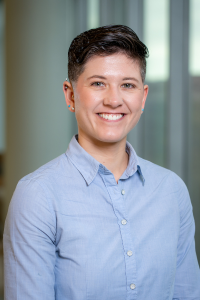
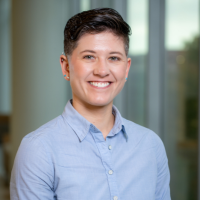
Kendra Ferrier, PhD, postdoctoral fellow, sees her research journey as a giant, ever-evolving jigsaw puzzle; every new piece brings the bigger picture into focus. Her passion lies in uncovering the interplay between genetics and the environment, using an epigenetic lens to understand the whole rather than just the parts.
In the Claw Lab, Ferrier’s research zeroes in on how epigenetic changes influence smoking behavior and nicotine metabolism in American Indian populations. Epigenetics acts as a bridge between genetic risk and environmental factors, making it a critical step toward understanding nicotine dependence. By identifying these contributions, Ferrier aims to help develop personalized smoking cessation strategies that respect both biology and culture.
Beyond the Lab
- Unwind after a long day: Reading and video games
- Alternative Career: Circus acrobat
- Personality: Go-with-the-flow (with a dash of planning)
- Advice for the next generation: Choose kindness
Exploring the Evolution of Pharmacogenes

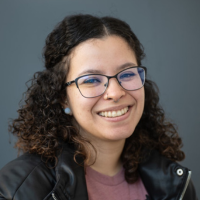
Shalom Jackson, research assistant, is asking a powerful question: How has natural selection shaped the evolution of pharmacogenes involved in drug metabolism across species and human populations?
Through a pharmacogenetic lens, Jackson investigates why the same medication can require different dosages for different individuals—an inquiry that bridges genetics, evolution and personalized medicine. For Jackson, science isn’t just about the destination; it’s about the journey, where every insight reveals a deeper connection between biology and adaptation.
Jackson’s work illuminates the evolutionary story behind pharmacogenes, offering clues that could transform how we approach drug response and treatment strategies across diverse populations.
Beyond the Lab
- Unwind after a long day: Knit, read fiction, watch movies
- Mantra: C’est la vie
- Alternative Career: Something in the social services
- Personality: Go-with-the-flow
- Wake up song: Prayer of the Refugee – Rise Against
- Advice for the next generation: Show dimensionality
Hiking Through Genetic Landscapes
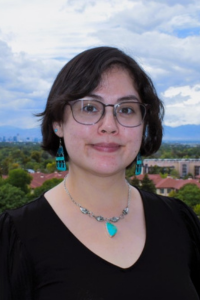
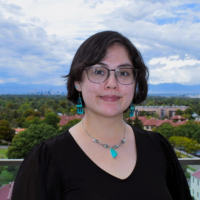
Carissa Sherman, PhD Candidate, thinks that research feels like a hike—immersive, focused and full of unexpected beauty. She studies genetic variation across global populations and amines how genetic variation influences differences in nicotine metabolism. Her ultimate research goal? Ensuring that research incorporates the rich knowledge and cultural values of Indigenous communities, including her own Tribe, Diné (Navajo).
Her work is a journey of persistence, one that not only aims to advance science but also champions equity for historically underrepresented populations.
Beyond the Lab
- Unwind after a long day: Sleep or craft. Sherman likes to make beaded earrings
- Mantra: All is well (from one of her dad’s favorite movies) and just keep swimming (from one of her favorite movies)
- Personality: Plan ahead
- Advice for the next generation: We can do what we set our mind to
The Alchemist of Data

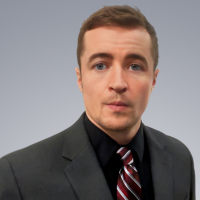
Jack Staples, PhD, postdoctoral fellow, approaches science with the same philosophy that drives the journey of Santiago in The Alchemist by Paulo Coelho: the pursuit of a personal legend, where curiosity and passion transform every step into learning. For Staples, research is about navigating the unknown with focus and purpose, uncovering insights that transform how we understand health.
His work centers on a critical question: How does genetically predicted nicotine metabolism influence cardiovascular health in people who smoke commercial tobacco?
Using supervised machine learning and Mendelian Randomization analyses, Staples investigates the causal link between nicotine metabolism and adverse cardiovascular outcomes like cholesterol levels. His findings reveal something unexpected: genetic risk estimates for disease and drug metabolism are highly sensitive to sociodemographic factors, adding a new layer of complexity to personalized medicine.
Staples’ research doesn’t just answer questions; it reframes them, showing that insight emerges when diligence meets curiosity. And yes, his toolkit includes the R statistical programming language, collaboration with the Strong Heart Study, and the department coffee machine.
Beyond the Lab
- Mantra: Follow the science and have little appetite for unnecessary bureaucracy that can get in the way of innovation or quality
- Personality: Plan ahead
By combining inventive thinking, cultural respect, and data-driven insights, the Claw Lab transforms complex genetic questions into solutions that matter. Their shared mission is clear: include those often overlooked, highlight community voices and advance personalized medicine for all. At the Claw Lab, science, creativity and collaboration converge to shape a healthier future.