
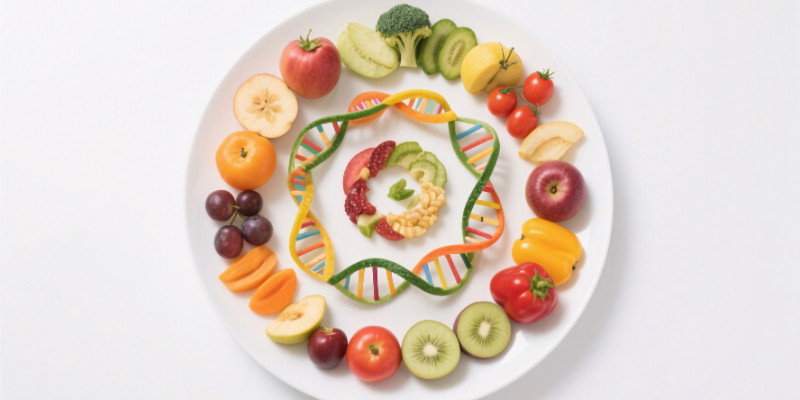
What does your relationship with food look like? What draws you toward some food while leaving others unappealing? How we perceive a food’s flavor, feel and aroma isn’t just personal- it’s also genetic.
The binding interaction between taste receptors and food compounds drives our sensory preferences. Researchers are paving the way for personalized nutrition plans by examining food choices through a genetic lens. Healthy eating becomes more satisfying when the individual naturally enjoys the flavors, textures and fragrances. Personalized plans help to eliminate foods that neither lower disease risk nor enhance health.
“Each person is genetically at risk for a different set of conditions,” explained Joanne Cole, PhD, assistant professor of biomedical informatics at the University of Colorado Anschutz School of Medicine. “We should be targeting each individual's genetic disease risk with disease-tailored lifestyle interventions.”
By exploring the relationship between genetic predisposition and dietary intake, we empower individuals to make conscious choices that align with health, sustainability and happiness.
Sensing Your Way to Wellness
As a geneticist, Cole explores the biological layer behind our cravings and aversions. She has identified hundreds of regions in the human genome that are associated with food liking and intake. Across individuals, some of these genetic variations influence how strongly our receptors bind to specific food compounds. For example, in broccoli or kale, people whose taste receptors bind more readily to bitter molecules may exhibit the “supertaster” phenotype, experiencing bitterness so intensely that it can overshadow other flavor notes.
Texture, too, plays a role in our sensory experience: mechanoreceptors, sensory receptors on the tongue, detect subtle differences in food structure, making the creaminess of chocolate or the roughness of broccoli feel particularly vivid for those with heightened sensitivity.
The soapy taste some individuals perceive when eating cilantro may result from stronger binding of its aldehyde molecules to olfactory receptors. This heightened smell-driven perception can dramatically alter how the flavor of cilantro is experienced.
Research is consistently exploring the links between genetic variation and our flavor, texture, and smell preferences. However, while taste preferences have strong genetic associations, the connections with texture and smell remain less understood. This highlights the need to further study to fully grasp how these sensory experiences are expressed individually. Together, these genetic and sensory differences illustrate why the same food can taste, feel and smell so different from person to person.
Your DNA, Your Decision
A common misconception in genetics is that “genes are deterministic.” Cole examines how genetic variation shapes our perceptions but also emphasizes the role of lifestyle and psychological factors. Even if our receptors make a compound like cilantro initially aversive, repeated exposure can reduce its perceived intensity. When cilantro is regularly consumed in a positive context, such as shared meals with family and friends, the psychological response to the food is reshaped.
Beyond genetics, the brain can reinterpret receptor signals through neural pathway adaptations. Our biology may guide our tastes, but our experiences can reshape them. This relationship transforms what was once an unpleasant soapy sensation into a rewarding experience.
Genetic Roadmap for Dietary Decision Making
By leveraging our genetics to understand inherited susceptibility to disease, nutrition can emphasize protective compounds while minimizing exposure to potentially harmful ones. For instance, individuals with a gene variant that reduces lactase enzyme production are at higher risk for lactose intolerance. Moderating lactose intake prevents the accumulation of lactose in the gut and the symptoms that result. At the same time, genetically preferred sources of protein and calcium can be used in their place. Building a dietary roadmap inspired by genetics supports a balanced and healthy diet that protects against genetic predisposition.
Alternative dietary sources will be chosen not only to enhance enjoyment but also to align with an individual’s genetic capacity for digestion. One must understand the role of sensory receptor interactions to identify satisfying foods that complement one's genetic profile.
For someone who enjoys the sweet flavor and creamy texture of cow milk, a coconut milk alternative can serve as a low-lactose source. Compounds in coconut milk engage sweet taste receptors and elicit decadent texture profiles reminiscent of cow milk. If the natural pulp texture is unappealing, opting for the pulp-free version will support sensory enjoyment, making the experience more palatable while preserving nutritional benefits.
Techniques that integrate sensory preferences with genetic predispositions emphasize the personalized nature of dietary nutrition plans, reinforcing a one-size-does-not-fit-all framework that supports an enjoyable, nutrient-rich regimen that individuals are motivated to follow consistently.
Next Frontier in Nutrition
As genomic research expands and becomes more representative, the potential to translate genetic insight into practical nutrition guidance will grow.
“You do in fact have some control over your health,” emphasized Cole. “If we can find rewarding, healthy foods for individuals to eat that target the diseases they're at a high genetic risk for, we can come up with a great combination nutrition strategy.” Combining genetic insights with foods that are both satisfying and health-promoting allows individuals to take meaningful control of their well-being.
The future of health lies not in rigid restriction but in understanding how to work with our biology. Through personalized and precise nutrition plans, eating will be transformed from a reactive act into a proactive strategy.