An ongoing clinical trial led by a University of Colorado Department of Medicine faculty member aims to test whether a cancer medicine called mitoxantrone can make an acute myeloid leukemia (AML) treatment more effective in patients who’ve had resistance to it. The idea sparked from previous groundbreaking investigations by CU researchers — including a recent graduate of the CU School of Medicine — and continues a legacy of applying team science to translate laboratory findings into potentially life-saving treatments for patients.
Physician and scientist Andrew Kent, MD, PhD, an assistant professor in the Division of Hematology and CU Cancer Center member who completed his residency and fellowship training at CU, is leading the trial, which he hopes will help more patients benefit from treatment and potentially lead to a new standard-of-care option.
“I'm excited to be part of a trial that could shift the entire way we think about treating leukemia,” he says. “CU is a great place to do translational research. We are creating new ideas and treatments, and I feel inspired to be working with scientists on our campus and helping their ideas blossom.”
Revolutionizing treatments
AML is an aggressive type of blood cancer. When describing the diagnosis to new patients, Kent explains that a person’s immune system is born from stem cells in their bone marrow, and those stem cells create and replenish a person’s blood and immune cells throughout their entire life.
“On an average day, the stem cells make two-to-four million new white blood cells and red blood cells every second. Every time they make a copy of themselves to make a new immune cell, they have to copy the DNA,” he says. “Mistakes can happen. If your body has a mutation in the wrong gene at the wrong time, it can lead to stem cells making abnormal, dysfunctional copies of themselves instead of making your normal immune or blood cells.”
The mortality rate is high for AML. According to the National Cancer Institute, data from 2014 to 2020 shows that less than one-third of patients (31.9%) diagnosed with AML were alive five years after being diagnosed. It underscores the need for effective treatments, especially since there are no curative therapies for AML besides a stem cell transplant — an intense treatment that not everyone is eligible for.
For many years, AML was treated the same way — with an intensive chemotherapy treatment that often made patients so sick that they had to remain in the hospital for over a month, Kent explains.
“That was the standard for decades until a groundbreaking new combination therapy of venetoclax and azacitidine was created,” Kent says. “The head of our division, Dan Pollyea, published some of the first clinical trials showing that venetoclax could be a new breakthrough therapy.”
Part of the reason the Food and Drug Administration approved venetoclax, a type of targeted drug that inhibits a protein in leukemia stem cells, as a treatment for AML in 2020 was because of research conducted by CU researchers Craig Jordan, PhD, a professor of hematology, and Dan Pollyea, MD, MS, head of the Division of Hematology. Their research showed the value of combining venetoclax, a drug that affects cell death, and azacitidine, a drug that affects DNA replication, to treat AML — effectively shifting how many physicians treat patients.
“Today, we use venetoclax and azacitidine in well over half of our patients, and the reason it’s so good is because it is as effective as the traditional chemotherapy but it’s much better tolerated by patients,” Kent says. “That way, we can give it to people who are much sicker and older — people who would not do well with the chemotherapy treatment. It’s really opened the doors for treatment to a lot of people who couldn’t get treatment before.”
However, venetoclax and azacitidine is not an effective treatment in all patients, Kent notes. Data suggests roughly 30% of patients do not initially respond to the treatment. Furthermore, the treatment is not thought to be curative, because almost all patients will eventually relapse regardless of initial response.
“Our translational science teams are looking at patients who did not respond to the treatment and at patients who relapsed after treatment to better understand their biology and uncover how those leukemia cells resist the therapy,” Kent says. “We want to find ways to make this therapy work better for more people and for longer periods of time.”
Translating lab research to clinical trial
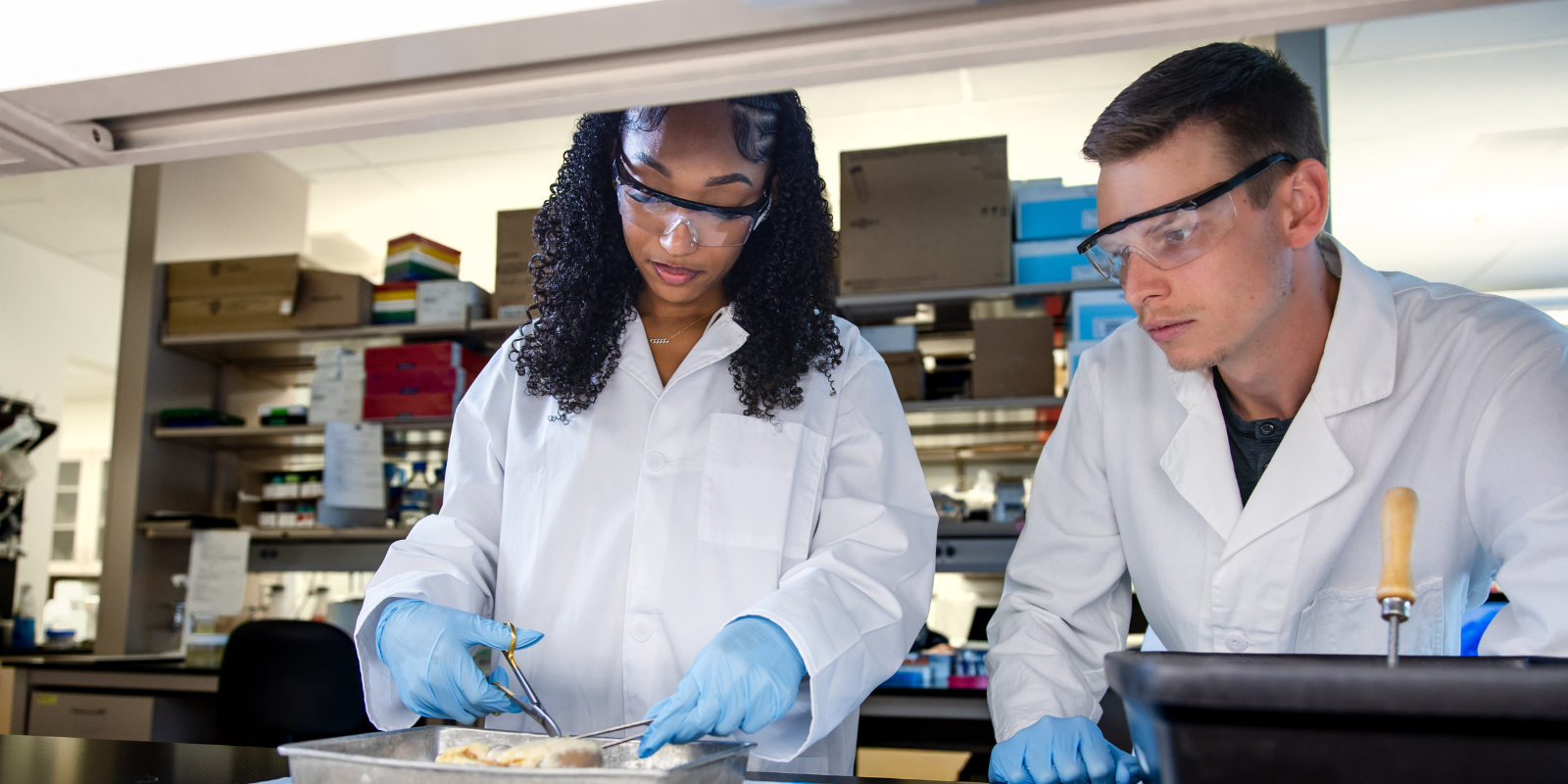
Continuing decades of research on leukemia stem cells, Jordan and members of his lab set out to uncover why some patients have resistance to venetoclax and azacitidine. A pivotal discovery was made by a then-student in his lab — Anagha Inguva Sheth, MD, PhD, a former student in the CU Medical Scientist Training Program who graduated this year.
The lab researchers compared leukemia patient samples of those who responded to the treatment and those who did not or relapsed after, Kent explains. One of the big differences they saw was that, in patients who had resistance to the treatment, there were higher calcium levels in the mitochondrial calcium uniporter of their leukemia cells. The mitochondrial calcium uniporter is an important protein in the mitochondria that helps regulate calcium balance and the metabolism that occurs in the mitochondria of the leukemia cells.
“The researchers thought that if they blocked the mitochondrial calcium uniporter, then that might restore the leukemia cells’ sensitivity to venetoclax and azacitidine,” Kent says. “In the lab, they figured out that one of the drugs that can target the mitochondrial calcium uniporter is mitoxantrone.”
Mitoxantrone is a chemotherapy drug. The researchers found that in the venetoclax and azacitidine-resistant leukemia cells, when they used mitoxantrone at very low levels, the drug was able to block the mitochondrial calcium uniporter-regulated metabolic changes in the mitochondria of the leukemia cells. This made the leukemia cells sensitive to venetoclax and azacitidine again.
“Based on that foundational basic science research done by Anagha and the Jordan lab, it was a no-brainer that we should try to apply these findings in a clinical trial to see if it can help patients,” Kent says.
Kent, who has worked with Jordan and Pollyea on previous research projects, was asked if he would be interested in leading the clinical trial, given his interest in becoming a translational researcher who brings basic science to the patients’ bedside. During his training in the CU Internal Medicine Residency Training Program, Kent participated in the CU Physician-Scientist Training Program, which he says laid “the foundation of everything I do today.”
“I feel lucky to be leading this because this research is essentially a home-grown idea, and we have the opportunity to carry it from the initial discoveries all the way through to new treatment paradigms,” he says. “I’m proud to be part of this team science initiative, helping grow an idea that started on our campus from Anagha and the Jordan lab. That’s how science is supposed to work.”
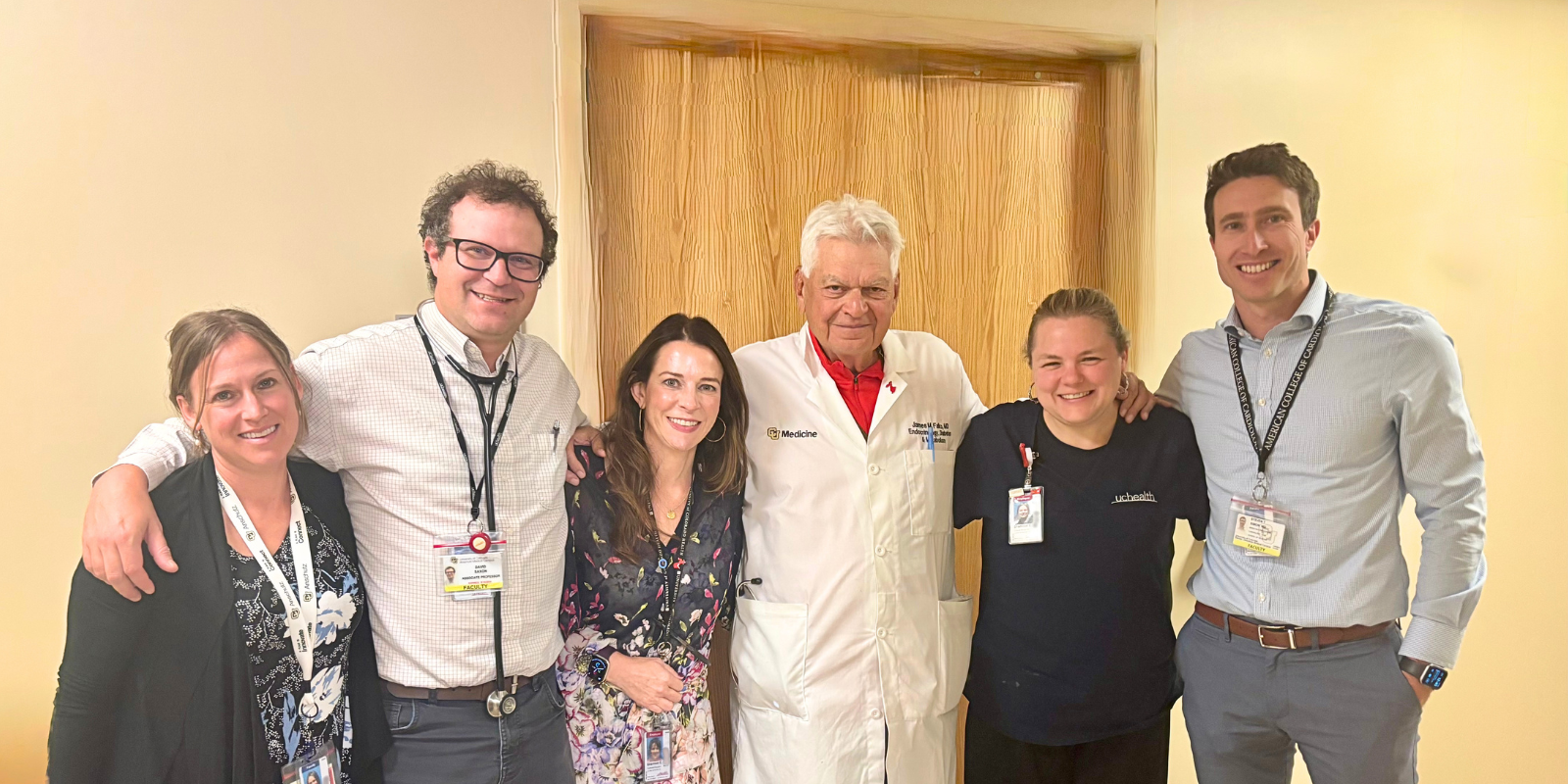
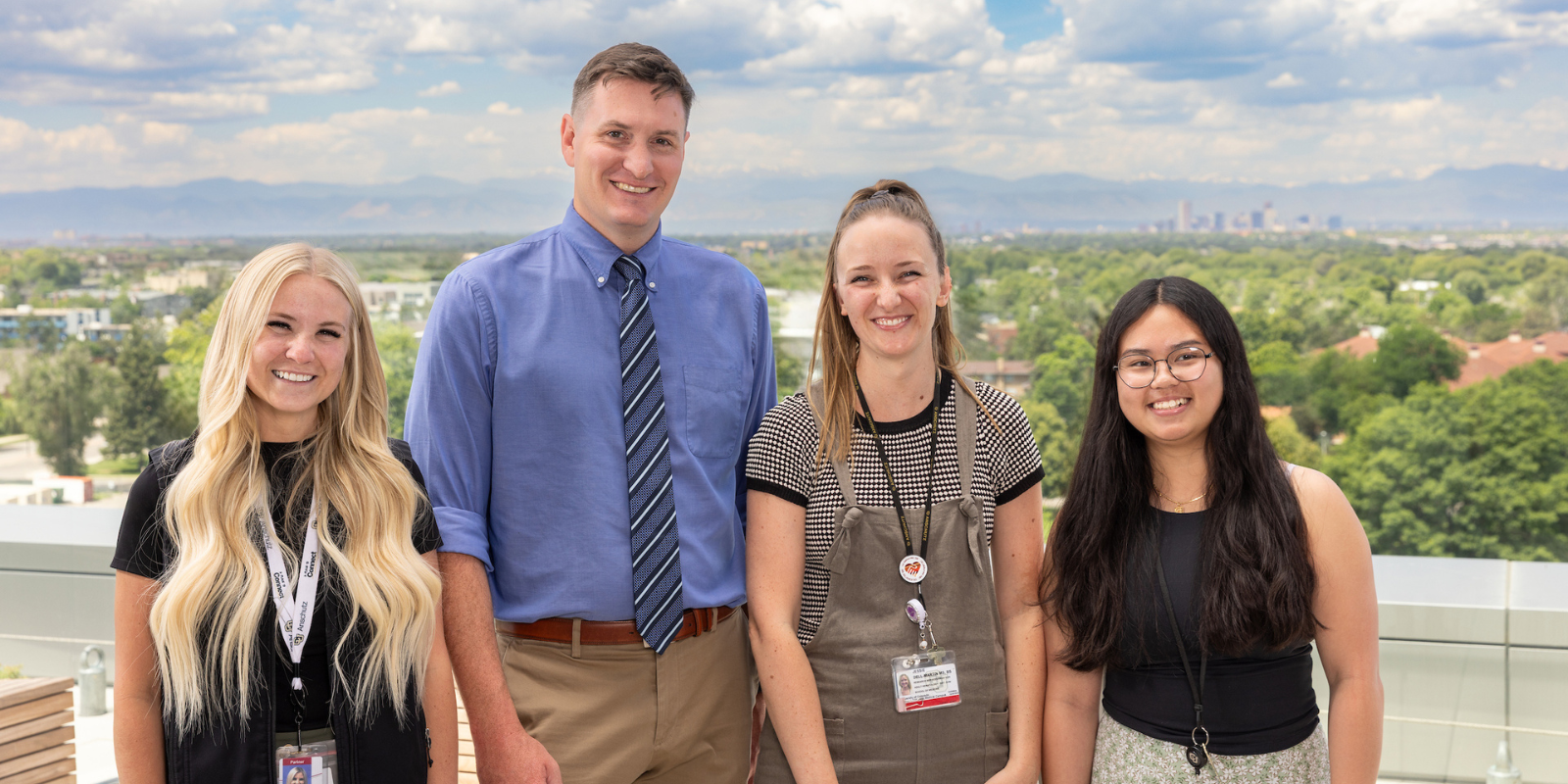
 Andrew Kent, MD, PhD, smiles while chatting with team members at the CU Anschutz Medical Campus. Image taken by Justin LeVett Photography.
Hope for a new standard of care
The clinical trial, “Mitoxantrone for Venetoclax Resistant Acute Myeloid Leukemia,” has started as a phase 1 trial, meaning it is testing what the appropriate dosage of mitoxantrone is in patients. Afterward, Kent and his colleagues will investigate the biology of how mitoxantrone affects patients and if it mimics similar results as the lab did.
“Hopefully, we will be able to see if patients respond well and if this is worth pursuing in future larger clinical trials,” Kent says. “We aim to conclude with phase 1 by the end of this year, and then we’ll move on to doing research in expansion cohorts in the next couple of years. I expect final results will be published about four or five years after we started, which is a typical timeline for a trial.”
One of the expansion cohorts will specifically focus on investigating the timing of treatment, he explains. When patients are treated with venetoclax and azacitidine, even when the treatment is effective, essentially all of the patients will eventually experience a relapse of their cancer. It prompted Kent and colleagues to wonder if it may be best to offer patients treatment while they are in remission, when the cancer is weaker, rather than waiting until the cancer relapses.
“If we can see that the patient has this phenotype that would potentially be susceptible to mitoxantrone therapy, based on having an elevated mitochondrial calcium uniporter level, then it may be best to treat them when they are in remission and there is a low level of leukemia left in their body, which is called measurable residual disease,” Kent says. “If that proves effective, that could lead to a paradigm shift in leukemia therapy in general.”
The Leukemia and Lymphoma Society awarded a $1 million grant to support the clinical trial, and most of the funding came from a donor in Boston who Kent met with.
“They are extremely invested in this research and its potential impact, and they decided to give another $100,000 based on how they saw our research progressing,” he says. “It’s great to have people who care about this because without these generous benefactors, this type of research would not be possible.”
Ultimately, Kent hopes that the results of the clinical trial will show that mitoxantrone is well tolerated in patients and it increases the effectiveness of venetoclax and azacitidine in treating AML among patients who have had previous resistance to it or who have relapsed after treatment.
“Because so many patients will relapse at some point, there is a huge area of need. And although there has been a trend toward investigating drugs that specifically target mutations in specific genes in leukemia, the majority of relapsing patients don’t have targetable gene mutations and they have basically no other options,” Kent says. “This clinical trial has the potential to create a new standard-of-care option for patients. We’re really optimistic, but even if this trial is not effective, there are so many new trials and therapies being developed to address this cancer that will hopefully help us get to the cure that we’re looking for.”