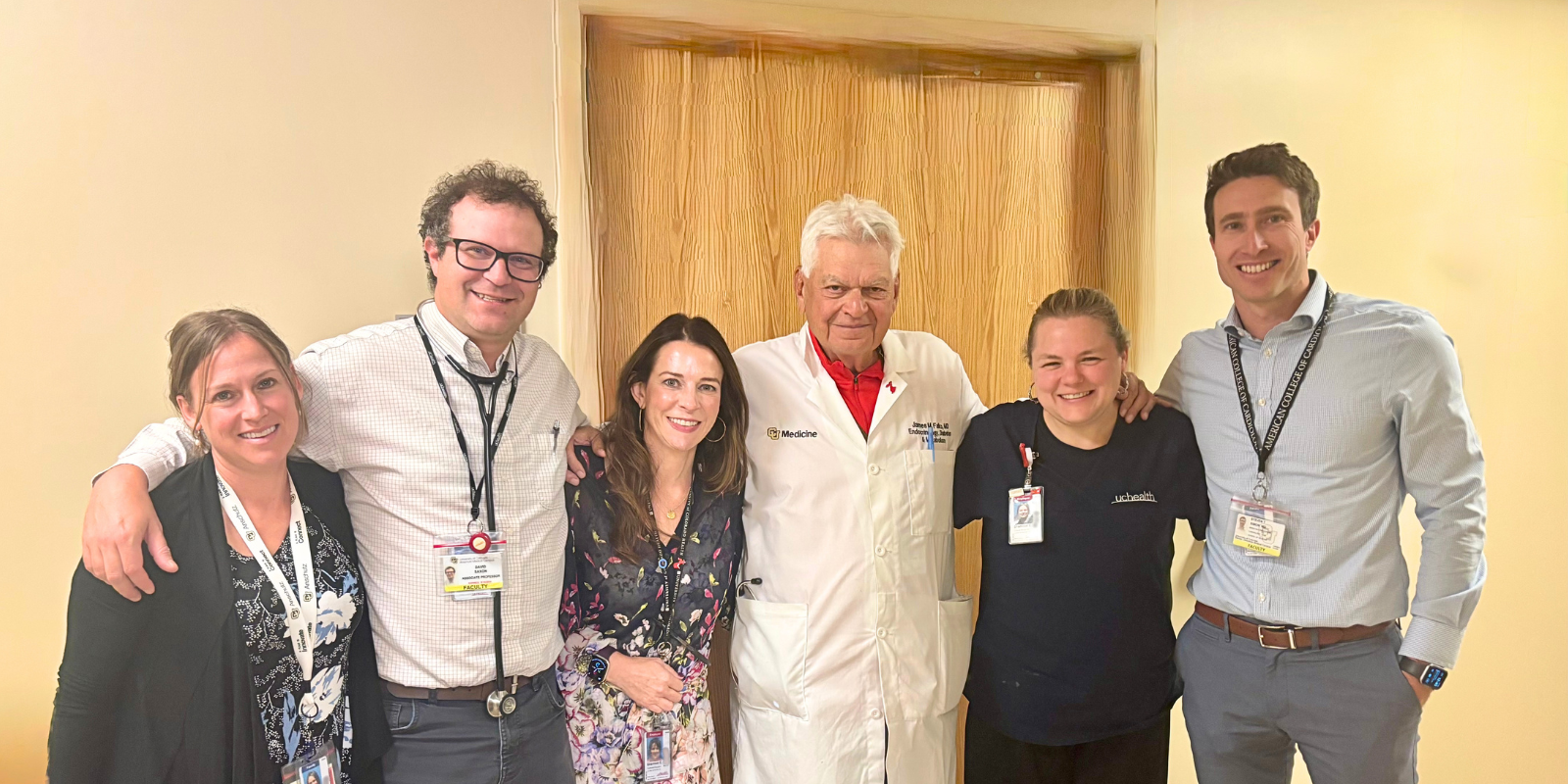
Driven by an interest in income inequality and the role health care plays on the growing wealth gap in the United States, Risha Gidwani, DrPH, associate professor in the University of Colorado Department of Medicine’s Division of Health Care Policy and Research, has spent more than 15 years studying health insurance’s influence on quality of care and patient financial burden.
“Insurance fascinates me because there are so many variations on its structure, which has an outsized impact on how people receive care and their subsequent financial health,” Gidwani says. “I’ve studied many different chronic conditions, and the commonality is that these people all require regular access to health care. I'm really interested in understanding the extent to which insurance supports or impedes that access.”
Gidwani has transformed her interest into a successful research career, publishing over 40 articles — 24 as principal investigator. She is currently exploring the impact of high-deductible health plans on patient health care utilization through a NIH RO1 grant by using a large database — MarketScan — that provides claims details for approximately 25 million individuals and their families who are enrolled in employer-sponsored health insurance.
Impact on chronic disease management
High-deductible health plans (HDHPs) — which cover nearly 60% of families with employer-sponsored insurance — are designed to reduce unnecessary health care utilization by requiring patients to pay most costs upfront if their deductible has not been met.
In 2023, deductibles in HDHPs averaged $2,418 for individuals and $4,674 for families. The trade-off when choosing these plans versus one with a lower deductible is that the premium — or amount an individual pays each month to have insurance — is much lower, in some cases by hundreds of dollars. This makes HDHPs a good choice for healthy individuals but costly for those needing frequent care.
Gidwani wanted to know whether people with common chronic conditions who were enrolled in HDHPs and did not have the option to change their coverage used less health care services. Her latest paper, published in JAMA Network Open in April 2025, details findings that show individuals on HDHPs were not meeting their basic care requirements. Her team, which consisted of physician-investigators from the University of California, San Francisco and Stanford University, derived these care requirements from evidence-based clinical practice guidelines. Gidwani and her team then used these guidelines to determine whether people enrolled in HDHPs received them.
“We're talking low levels of care — one visit to a doctor per year if you have diabetes or heart failure,” Gidwani says. “And we found that, no, these health plans are not meeting the needs of people with chronic conditions, regardless of whether it's hypertension, diabetes, heart failure, asthma, or depression.”
Research has shown that over half of Americans aged 35 to 64 have chronic illnesses that require regular care, which translates into a large number of people negatively affected by enrollment in HDHPs. Gidwani hopes her research will help inform employers’ decisions when choosing which health insurance plans to offer employees.
“So far this paper has gotten the attention of employer benefits groups and Fortune 100 companies,” Gidwani says. “We hope that they will use this information to be evidence-based and thoughtful about the insurance options they present to their employees.”
Shift in telehealth policy highlights cost-sharing impact
Prior to publishing the JAMA Network Open paper, Gidwani studied what happens when an abrupt policy change eases financial barriers to health care access for those with chronic conditions who are enrolled in HDHPs.
As a result of the COVID-19 pandemic, the majority of health care insurers shifted to $0 cost-sharing for telehealth visits, meaning that patients on HDHPs could meet virtually with a health care provider for free, even if they hadn’t met their deductible.
Gidwani’s study, published in Health Services Research, found that people with chronic conditions on HDHPs used free telehealth services more often after cost-sharing was removed — more so than those on lower-deductible plans. This was true across different health conditions, suggesting that lowering out-of-pocket costs may help people with chronic illnesses get the care they need. Her study was the first to use a policy shock to study the effect of HDHPs.
“If we can share data like this with the public — not just academic audiences and policymakers — then individuals can make more informed choices based on their health needs,” Gidwani says.
A look at health insurance literacy
A secondary research focus for Gidwani is health insurance literacy, which refers to how well people understand and are able to navigate their coverage.
“Health insurance in this country is hard to navigate,” Gidwani says. “It’s hard to select, it's hard to use properly, and the coverage can be hit or miss. While policy change is hugely important, it’s slow to come to fruition. I think it's important for us to create patient-facing interventions as it relates to health insurance and health insurance literacy while we wait for that policy change to occur.”
Gidwani is also researching whether people make financially smart health insurance choices based on their medical needs. As part of her RO1 grant, she is using MarketScan data to see if people newly diagnosed with cancer or coronary artery disease switched out of HDHPs, an economically rational choice.
“If you're diagnosed with cancer, you know that your treatment costs for the next couple of years are going to be really high,” Gidwani says. “And we know that people don’t fund their health savings accounts properly to offset their deductibles. So, do you switch out of a high-deductible health plan because it's in your best financial interest? We're studying the extent to which they actually make the right health insurance decision.”
Policy implications and future direction
Gidwani’s findings, along with work from other health economists, add to the growing evidence base that could support policies like the federal Chronic Disease Management Act — a bipartisan bill that would exempt chronic disease care from the deductibles of HDHPs.
Gidwani’s RO1 grant is funded through 2026. In addition to her study on whether people diagnosed with cancer switch out of HDHPs, she plans to publish two additional papers exploring HDHPs and health care utilization.
“Health care insurance touches so many aspects of people’s lives,” Gidwani says. “My goal is to explain the findings of my research to people who make policy and programmatic decisions in a way that helps them understand the impact this has on individuals and how it could inform broader policy and programs.”
Photo at top by Justin LeVett Photography.
.png)