The Division of Plastic and Reconstructive Surgery in the University of Colorado Anschutz Department of Surgery is raising its training profile in 2026. In July, the division welcomed its first-ever fellow in microsurgery.
“As our program here has grown and our volume has grown, we felt that we had the breadth of cases to provide a robust educational experience to plastic surgeons who are interested in going into this field,” says Katie Egan, MD, assistant professor of plastic and reconstructive surgery, who is overseeing the yearlong fellowship. “We will cover the whole breadth of what's expected during microsurgery trainings.”
Learning — and teaching — experience
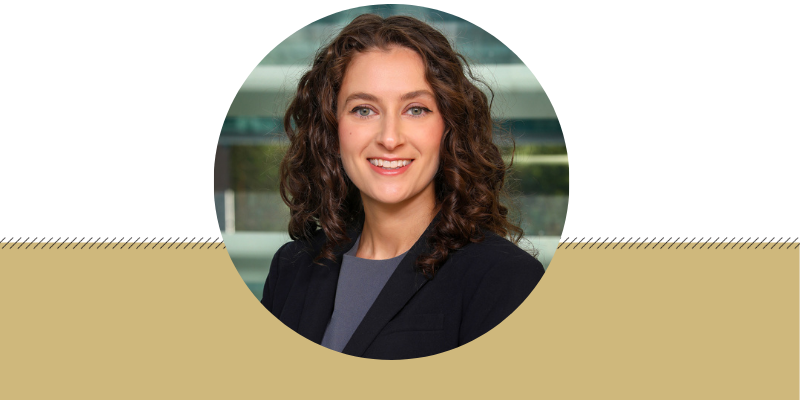
Victoria Wickenheisser, MD, who recently completed her plastic surgery residency at Duke University in North Carolina, is the inaugural microsurgery fellow at CU.
“It is an incredible honor to be the inaugural microsurgery fellow with the amazing faculty who are delivering the highest level of microsurgical reconstruction here at CU,” Wickenheisser says. “So far, the experience has been amazing — full of a variety of cases, busy weeks, and welcoming faculty, staff, and residents all around. I am looking forward to all I will learn over the course of the year, and I hope to be able to contribute to the education of students and residents as well.”
While the microsurgery fellowship primarily consists of clinical training, Egan says, Wickenheisser — as a fully trained plastic surgeon — also has an appointment as an instructor in the division. She can oversee her own cases outside of microsurgery, and she will help with teaching our residents and participating in their curriculum.
“It's a great opportunity for her to start working on becoming a teacher and working with residents and operating independently, while having the support of the faculty that are guiding her fellowship,” Egan says.
Microsurgery explained
Microsurgery, Egan explains, involves taking tissue from one part of the body and transferring it to another part of the body to fill a defect, often after cancer surgery or trauma.
“We're typically doing some type of reconstruction after patients have either had something removed for cancer surgery or have lost part of their tissue because of trauma,” Egan says. “For tissue to survive when we transfer it from one part of the body to another part of the body, it needs to have blood flow. Microsurgery involves dissecting out blood vessels that feed specific areas of tissue or muscles and reconnecting them to other parts of the body. Usually those vessels are somewhere between one and three millimeters, so we use high-powered microscopes to dissect them out and hook them back together.”
Welcoming a fellow in the specialty, Egan says, indicates how much the Division of Plastic and Reconstructive Surgery has grown in recent years.
“It shows how much has been invested in growing the division and making sure that our breadth of training is covering all the areas of complex reconstruction and plastic surgery,” she says. “We want to make sure that we're balancing the needs and the education of our residents with bringing in a fellow, and that we have enough diversity of cases and volume of patients to support all of our trainees. So far that's been going great, and I think everybody's really enjoying the experience.”
The microsurgery fellowship is the second launched by the Department of Surgery this year; the Division of Surgical Oncology also recently started a breast surgical oncology fellowship.
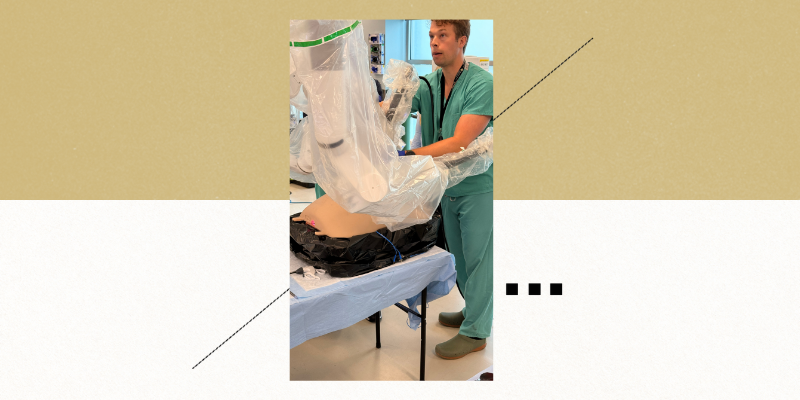
Featured image: Inaugural microsurgery fellow Victoria Wickenheisser, MD.