

A cancer diagnosis offers many lessons, but for lung cancer survivor Sherry Wardlaw, one stands out above the rest — listen to your body, and advocate for what it’s telling you.
A nodule is discovered
It’s a lesson that Wardlaw, 71, first learned in 2023, when she went in for a routine heart scan. The results were normal, but something told her she also needed a calcium score test — a scan of the heart that reveals how much calcium is in your coronary arteries.
“I'm a Christian, and I believe everything happens for a reason,” she says. “The doctor wouldn't order it, but God kept putting it on my heart to get the calcium score. After three months, the doctor finally ordered it for me, and it showed what it needed to show for my heart, but because it also took an image of the top portion of my lung on the right side, it found a ground glass nodule.”
Wardlaw met with a pulmonologist, who explained that ground glass nodules — nodules on the lung that have the appearance of frosted glass — can be early, slow-growing cancers. The standard protocol for nodules like the one found on her lung, he said, was to wait six months, then do more imaging to see if the nodule had grown.
Again, Wardlaw listened to her body.
“I said, ‘I want it removed,’ because I felt very blessed to find it as early as I did,” she says. “Their process is to get a biopsy, because it's possible it could be benign. It was so incredibly small that they couldn't attain a biopsy, and I didn't want to wait and just continue to do imaging. Why put it off? Why not deal with it right now?”
Connecting with a CU surgeon
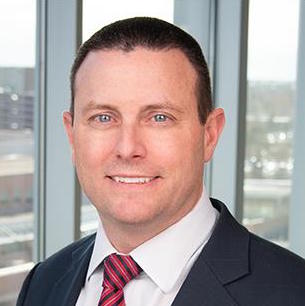
That’s when Wardlaw was connected with University of Colorado Anschutz Department of Surgery faculty member Robert Meguid, MD, MPH, professor of cardiothoracic surgery in the CU Anschutz School of Medicine, who agreed to perform a surgery to remove the nodule.
“Dr. Meguid is incredible,” Wardlaw says. “I drilled him with questions, and bless his heart, he answered every one of them. He explained to me that the nodule was in the middle lobe of my right lung, and he was going to go in and do a wedge resection.”
The wedge resection — a surgical procedure that removes a triangle-shaped area of tissue, as opposed to an entire lobe of the lung — was possible because Wardlaw’s nodule was so small, Meguid says. Because the surgery was performed robotically, with very small incisions, Wardlaw only had to be in the hospital for two days following the procedure. Within three months, she felt back to normal.
“Sherry was great to work with,” Meguid says. “I absolutely love taking care of patients with lung cancer, especially when we have an opportunity to provide them a possible cure for their cancer.”
Wardlaw also felt fortunate and was glad she had insisted on the surgery because when Meguid sent the nodule to the lab to be biopsied, it came back as adenocarcinoma, a type of cancer that can occur in the lung. He also removed several lymph nodes around the tumor to see if the cancer had spread to them; fortunately, it had not.
“If I had not had it removed, it might have spread to my lymph nodes,” Wardlaw says.
Pushing for wider screening
She isn’t sure what caused the lung nodule, but Wardlaw suspects a number of causes — the second-hand smoke she grew up inhaling from her parents, both smokers; the particles she may have inhaled during a home renovation 14 years ago. Whatever the cause, she wants never-smokers like herself to be eligible for lung cancer screening, something that is not currently the case.
“I started talking to Dr Meguid about it, and I said, ‘I've never smoked, and how many other people are in the same position that I am?’” she says. “With mammograms and colonoscopies, they do preventative care for things that people normally get, in hopes that it's caught before they become symptomatic. But there's nothing for lung cancer, unless you're a smoker.”
Wardlaw is reaching out to insurance companies and legislators in an effort to change the lung cancer screening guidelines to include people who have been exposed to secondhand smoke and environmental toxins.
“It's a horribly long process, and the more people who are involved in that, the better,” she says. “You're saving lives, and you're educating people. I want to get the word out there, just like we do with mammograms and colonoscopies.”
Meguid adds that even among those who are eligible for lung cancer screening, only 10% actually undergo it.
“It’s important that we spread the word about the need for lung cancer screening and early detection, as this is what will save the lives of patients with lung cancer,” he says. “Barriers include awareness by patients and their providers, as well as access to care. This is especially the case for patients in rural settings and those with limited access to reliable health care.
“Current guidelines do not provide screening for patients who are never smokers, despite environmental factors or family histories significant for lung cancer,” he continues. “Advocacy work is necessary to change these paradigms.”
‘I feel very blessed’
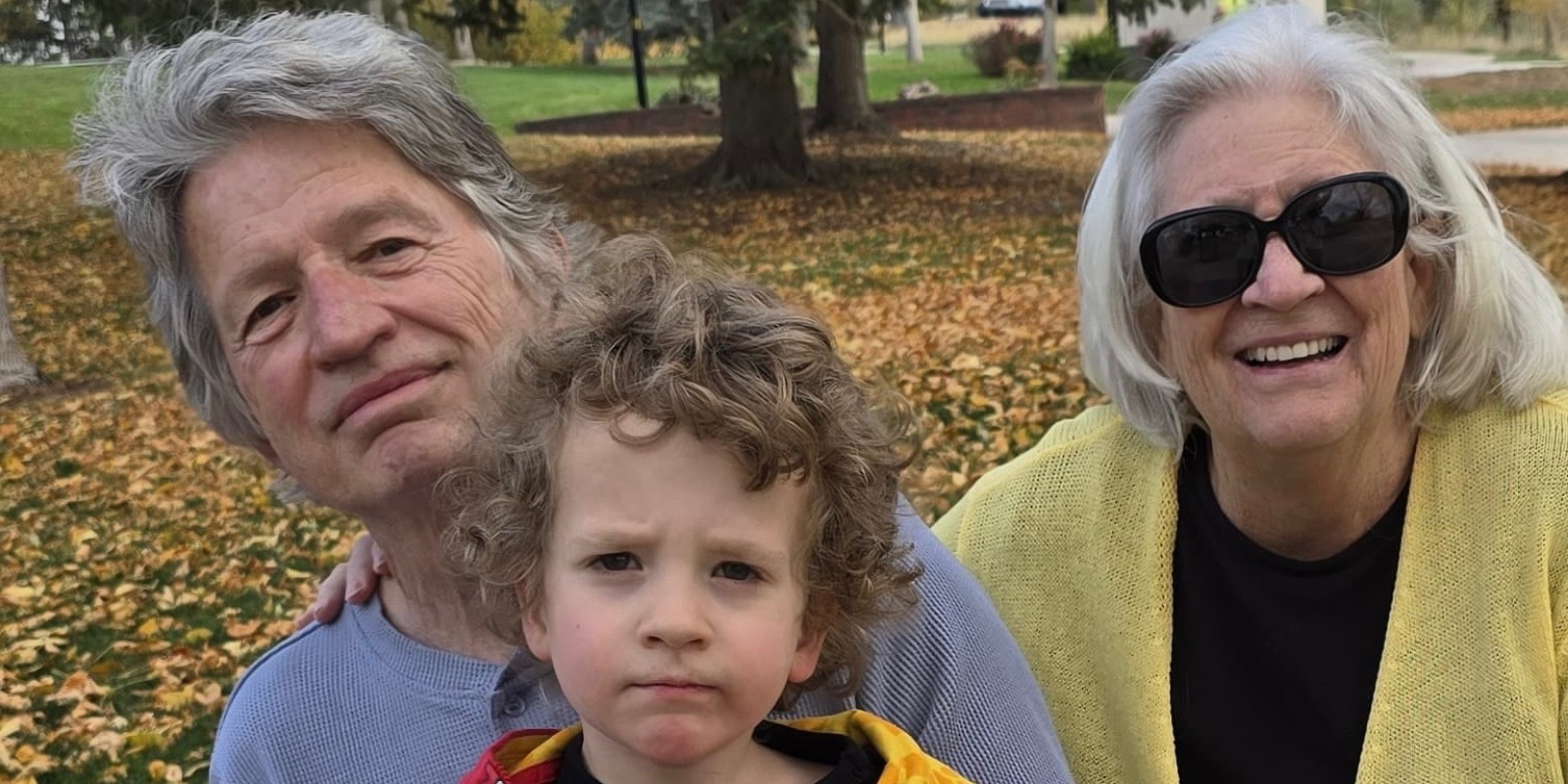
In addition to her efforts to change screening guidelines, Wardlaw’s life after surgery continues with the things she and her husband love to do — biking, hiking, playing golf, and spending time with their children and grandchildren. She sees Meguid regularly for checkups to make sure there are no additional signs of cancer; so far, there are not. There could be signs of other cancer down the road, but for now, Wardlaw is not concerned about it.
“I don't worry about my health,” she says. “I found the nodule through God's grace, and I'm not going to worry about it. There's a reason I found it, and obviously he still wants me here. My last three-month scan and six month-scans were clear. There might come a time when they’re not, but I'm not going to worry about it. I'll deal with it when it happens. I feel very blessed.”
Featured image: Sherry Wardlaw with her husband, Sam.