
Teresa Taylor had no symptoms. No coughing, no chest pain, no shortness of breath. She never would have known about her lung cancer if it hadn’t been spotted by an alert radiologist during a routine heart scan.
"They said, ‘Your heart looks good, but you've got some nodules on your lungs," Taylor recalls. “They said, ‘Lots of people have them, but we'll just keep monitoring it.’ There were two or three of them, and then one started changing a little bit.”
Keeping on top of the changes
As that nodule kept growing and changing shape, Taylor’s primary care doctor referred her to specialists at the University of Colorado Anschutz Cancer Center, where she was urged to get a biopsy to see if the nodule was cancerous.
“I didn’t feel sick, so I canceled it a few times, but the team at UCHealth is great, and they kept following up,” says Taylor, a longtime resident of Golden, Colorado. “I said, ‘I don't know — is a biopsy really necessary?’ And one of the physician assistants said, ‘Let me put it this way: If you were my mom, I would make you do it.'”
Taylor finally got the biopsy, and she was glad she did, as it showed the nodule was cancerous — and it was caught early enough that she could go directly to surgery, without having to undergo chemotherapy or radiation therapy.
“She had a biopsy that showed that it was a lung cancer, and then she came through our thoracic oncology multidisciplinary clinic, which is staffed by thoracic surgeons as well as pulmonologists, interventional pulmonologists, medical oncologists, and radiation oncologists,” says Alison Mungo, MD, assistant professor of cardiothoracic surgery in the CU Anschutz Department of Surgery.
“I felt like I had a whole team behind me,” Taylor says. “There were four or five people, each with a different job, and they talk you through the pre-surgery stuff, the post-surgery stuff, all your options. The whole team is fantastic.”
Smaller operation
Mungo performed a robotic right upper lobe segmentectomy — an operation to remove a section of the lung, rather than an entire lobe — in June 2026, and Taylor spent just one night in the hospital before going home to Golden.
“We were able to do a smaller operation than a full lobectomy on her because of the size and location of the tumor, but it was still a very good oncologic operation,” Mungo says.
Taylor says she noticed some compression in her chest and some lessened breathing capacity following the operation, but it’s getting better as she continues to recover. When she goes to the mountains to do favorite activities like hiking and fishing, or when she goes to visit her son who lives in Steamboat Springs, she feels grateful that her cancer was caught at an early stage where it was able to be surgically removed.
“I feel very thankful,” she says. “You see all these other people with cancer who are going through chemo and radiation, and I didn't have any of that. Surgery was tough, and it was a long recovery, but compared to what you watch other people going through, I still look the same. I feel the same.”
Curative intent
Taylor is now considered cured of her cancer, Mungo says, and she will remain under surveillance — starting with CT scans every six months for two years, then annual scans after that — for the rest of her life.
“The U.S. Preventive Services Task Force recommendation is to do it for 10 years, but we continue screening for the rest of their life,” she says.
Rates rising in women
Mungo says rates of lung cancer among women, like Taylor, who don’t have a smoking history, are on the rise, making it all the more important for women, in particular, to follow up and remain mindful about any unusual symptoms or any abnormal imaging found during scans for other reasons.
“Right now, there are no screening tests recommended for people who don’t have a smoking history,” she says. “But if there's anything going on, or if you're found to have a nodule incidentally on a screening CAT scan for some other reason, you really need to follow it up. Early-stage lung cancer is curable with surgery.”
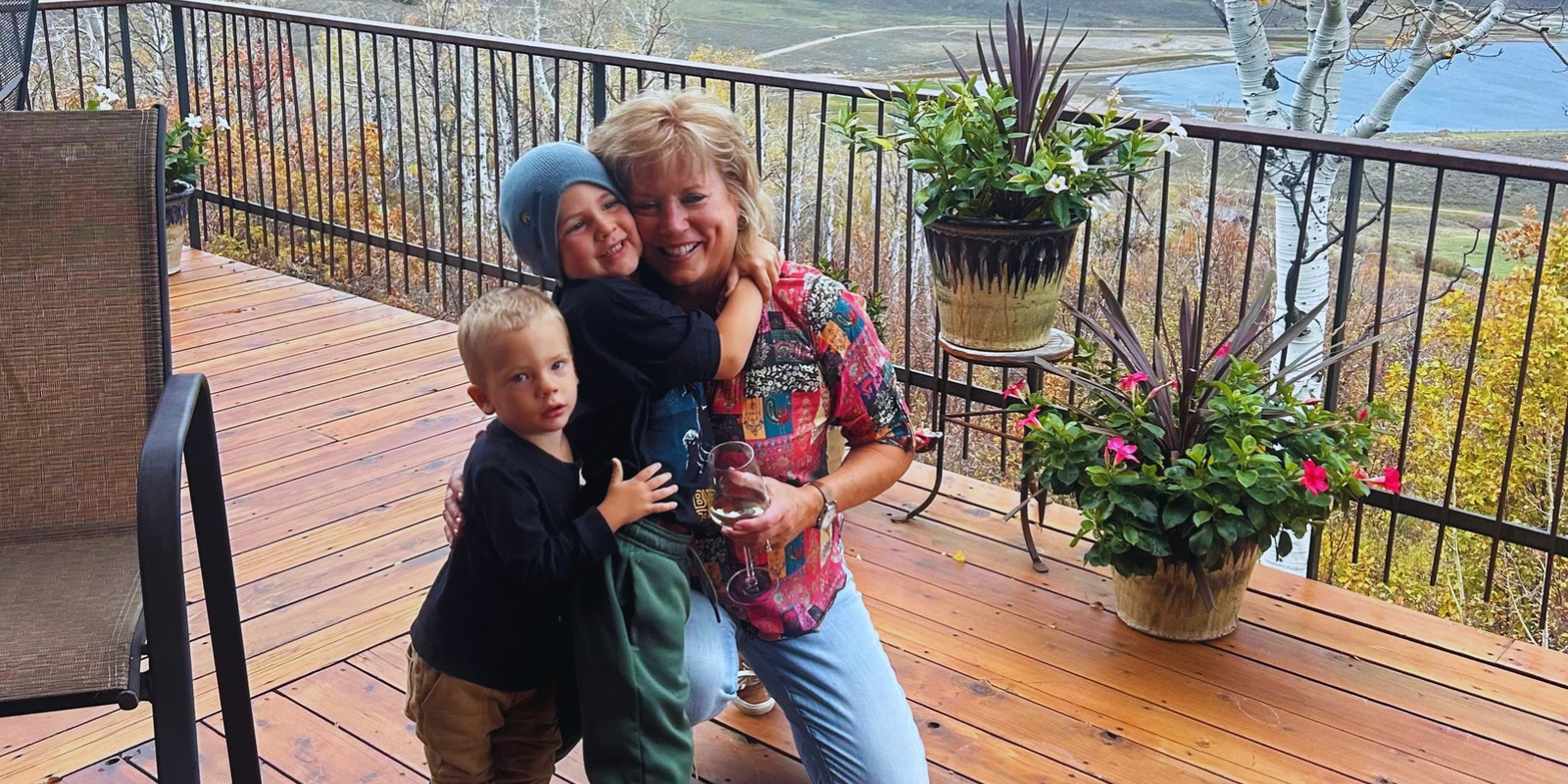
Featured image: Teresa Taylor with her grandchildren.