How would you assess the state of the Department of Emergency Medicine today?
The department is very strong. This is now one of the top emergency medicine departments – one of the highest-performing, most execution-focused departments – in the United States. We’re fast, we’re driven to make an impact, and we have unity and purpose. We work hard, and we do it because we’re very mission-focused on what we do for our community and our patients.
That’s in the ethos of our department, which is why it’s grown so quickly. We’re very proud of that, and we’ll continue to build on that success.
You mentioned patients. How do they fit into the department’s mission?
We’re always very patient-centered with everything we’ve done and plan to do. Without the patients, we wouldn’t be here – working or teaching or researching or innovating. That’s what we’re here for.
Emergency medicine is the front door of health care. Folks from all walks of life come into the emergency department. You have cancer? Are you facing domestic violence? Pneumonia or a bad infection? We’ll take care of you. And we want that front door to be wide open, welcoming patients in their most stressful moments, no matter where they came from or who they are.
How would you describe Dr. Zane’s contributions as your predecessor as chair?
Dr. Zane really built this department. He positioned this department to be the gold standard of the United States, and his leadership got us where we are today. He made innovation our ethos and focused on operational efficiency and on partnerships across campus, with other departments, and with industry.
He also focused on data-driven care before it was common to do that – understanding data as a way to improve what we do, decreasing variance, and improving quality. We’re ahead of the country in that space. And he also taught us a lot about taking calculated risks when that was less common in academic medicine. He made bets on the research program, the COMBAT center, and informatics as a tool for improving health care when other folks were not doing that.
Dr. Zane has done an amazing job, and now we’re going to take it to the next level.
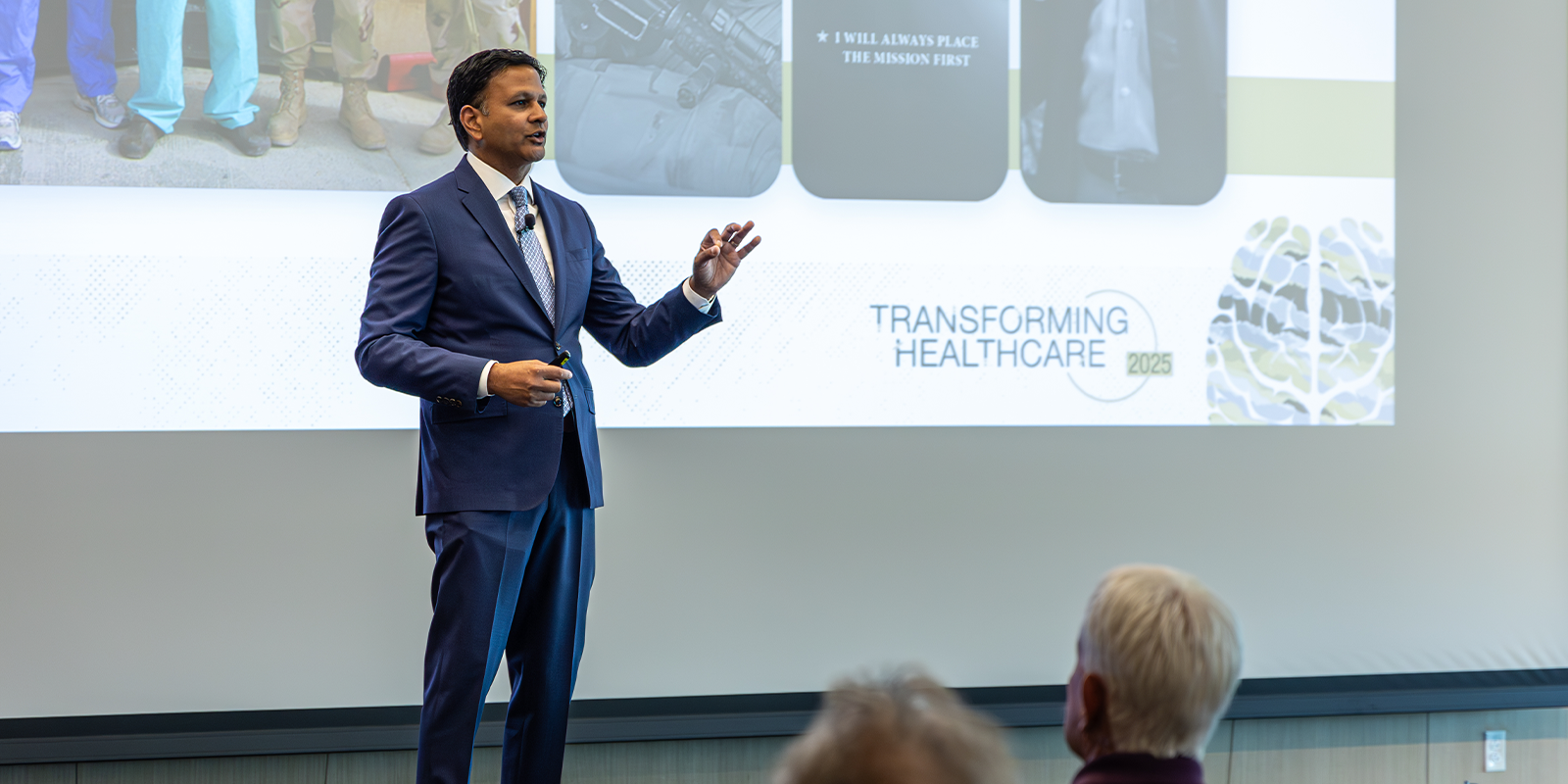
Vik Bebarta, MD, presents the mission and impact of the CU Center for COMBAT Research during the University of Colorado Anschutz Transforming Healthcare lecture series in June 2025.
What are your key goals for the department?
We are focused on top 10 in 10 – and in some areas, we are already there. We’re in the top five in many of our clinical care components and our residency program, and near the top 10 in our National Institutes of Health funding. We’re definitely top 5 in the U.S. in Department of Defense funding, and we’re building our industry funding.
The landscape is changing, and support is increasingly tied to performance in clinical care, education, and research, which means alignment and organization matter more than ever.
There are several areas I’d like to build on. One is around clinical trials – expanding our trials, building our capability, making discoveries, and getting them to the bedside.
Another focus is informatics and artificial intelligence (AI). We’re ahead in applying data science to clinical decision-making and are using large language models in research and patient visits. We’re now expanding these efforts to reduce administrative burden, increase administrative efficiency, and improve patient care and quality.
There’s also educational innovation – using tech-driven education to improve how we teach students and residents and maintain physician and provider skills in a personalized way. Innovation includes teaching while on shift, which can be pretty busy, so we have to be able to teach while we’re taking care of patients.
Another priority is department culture – creating a place where people can continue to thrive. We want to be the destination for the top talent in the nation to come to and build their careers, feel they’re delivering the best care for their patients, and feel that they can train students, residents, and fellows in a way they can’t achieve anywhere else.
Philanthropy is another way we can scale what we can do, especially in areas like mental health, innovative education, military medicine, EMS and first responders, climate health, brain health, clinical excellence, and community violence.
It all comes back to unity and purpose, connecting with the community, urgency, and impact. That’s why people get into emergency medicine. They want to solve problems.
When you talk about the department’s initiatives, you use the word “impact.” What do you mean by that?
We need to make sure our research is impactful – not just science for science’s sake, or projects just for publication. Impact means to change care, change training, and change practice.
Impact also means that our skills, capabilities, and strengths are not limited by the four walls of an emergency department. They scale far outside that. The work we’re doing in public health, with suicide mental health, with training combat medics and first responders, with global health, the military – all that benefits our trauma centers here, too.
We also have to do a better job telling our story so our partners, funders, and future recruits understand the full impact of what we do.
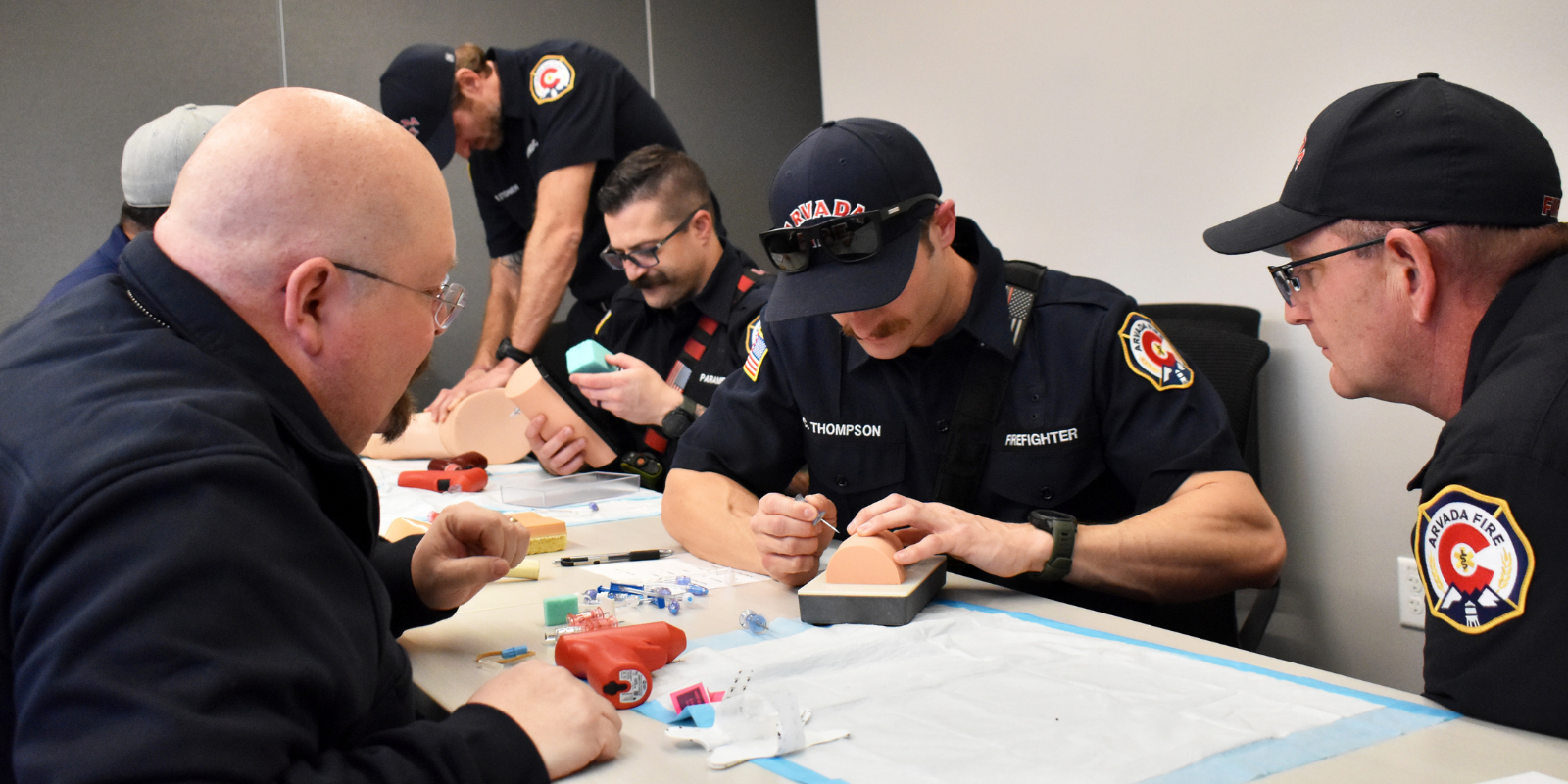
Our people go into the community to teach high school students how to do CPR. We find ways to work with gun shops to reduce suicide. Our team is in the ambulances helping EMTs and medics at homes, and training military medical teams in our local military bases. We’re defined by the impact we can have outside of the department.
You mentioned Dean Sampson’s goal for the School of Medicine to be ranked in the top 10 nationally in education, research, and clinical care in 10 years. What does that look like at the Department of Emergency Medicine?
Our department should be the nation’s top destination for emergency care, research, and innovation. We’re advancing the frontier of emergency medicine in civilian and military care. Part of that mission is building a culture among our researchers, staff, nurses, doctors, advanced practice providers, and others, so they all feel they can thrive.
At the same time, we’re getting the best from our people and holding one another accountable. Kindness does not mean weakness; we support colleagues through challenges while maintaining clear standards.
Reaching the top 10, top five, or No. 1 requires the best people and the greatest impact.
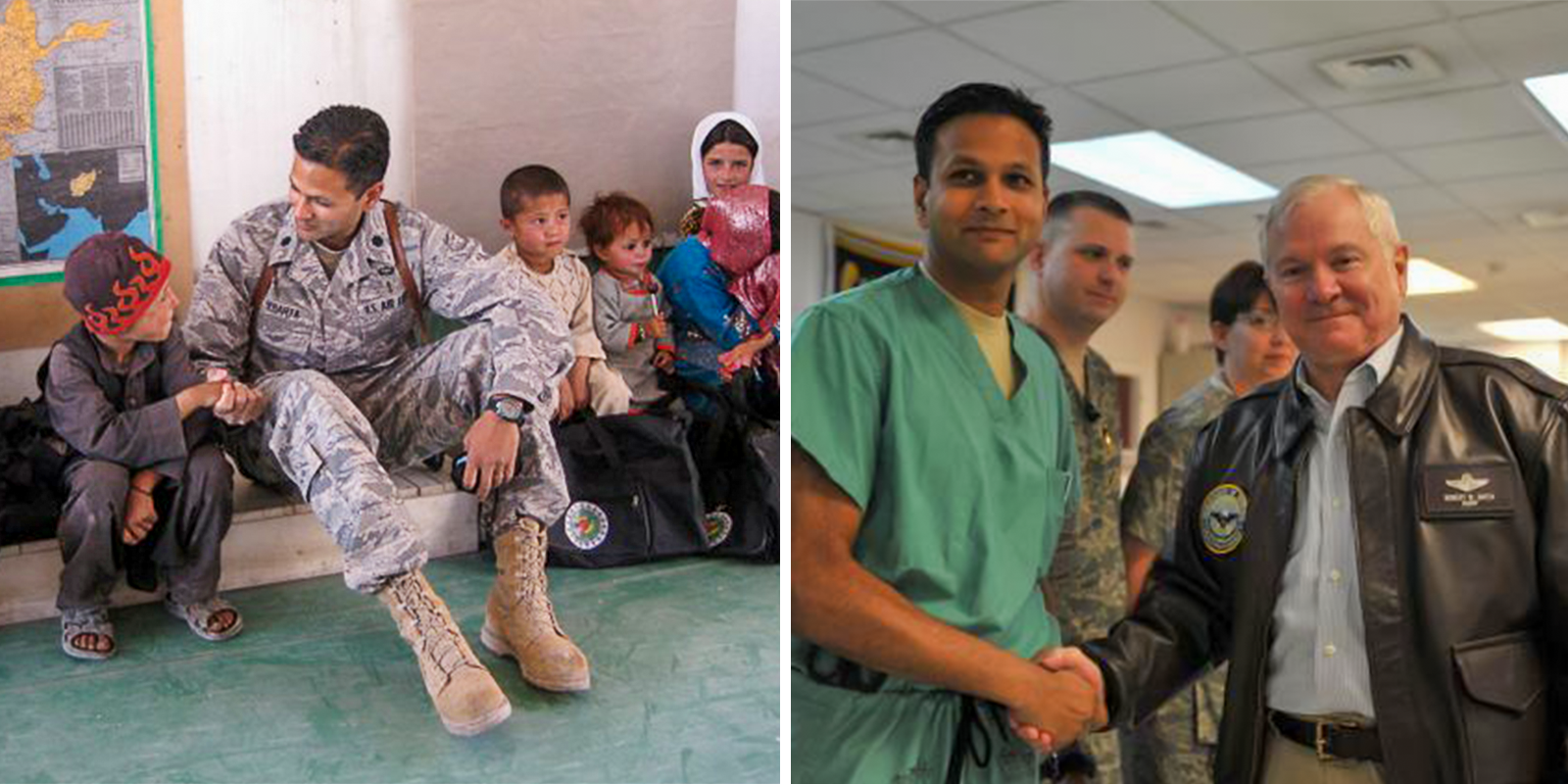
Left: Vik Bebera, MD, meets local children during a deployment in Afghanistan in April 2011. Right: Bebarta meets then-U.S. Defense Secretary Robert Gates in 2007 during an deployment in Iraq.
What are some elements of your background and training that will be most useful in your new role?
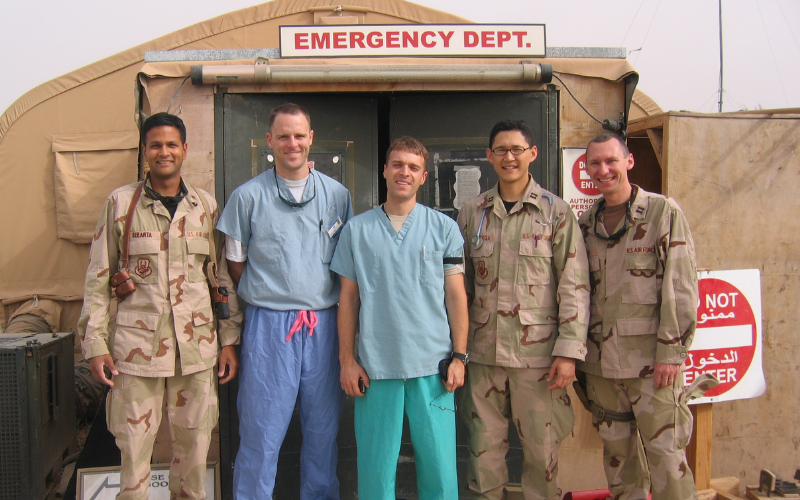
A lot of my leadership training before here was in the military. I graduated from the Air Force Academy and served 14 years on active duty, including combat deployments in Iraq and Afghanistan. Whether you’re in a war zone or at an academic health center, core leadership principles are the same – which is why the DoD is effectively a leadership academy for many in academic medicine and over a dozen emergency chairs in the last decade. You build teams to solve problems and aim for an enduring impact.
My background helped me build programs before I arrived here. At the Brooke Army Medical Center in Texas, we had a research innovation lab before innovation was cool, with the Army focused on improving emergency care based on battlefield needs. I then grew the Air Force En Route Care Research Center from two researcher members to 25, making it one of the largest programs of its kind across the DoD, and a leader in innovation, research and practice change.
Two things guide us in military leadership as well as here: mission and people. With a clear mission and energized people, you can make a lasting impact.
You’ve been with the department for 10 years and have held leadership positions here. What are some of the accomplishments you’re most proud of?
That includes developing my NIH-funded translational drug development lab, Translational Research, Innovation, & Antidote Development (TRIAD); founding and building the COMBAT Center from zero to the largest of its kind in the U.S.; and, at the chancellor’s request, helping to reimagine and reinvigorate the Marcus Institute for Brain Health, which is now one of the busiest institutes of its kind. I also served as Vice Chair for Strategy and Growth, working on recruitment and communications and helping raise the department’s national profile. All of this work draws on my experience in building programs, energizing people, and forming teams to solve problems and deliver impact at scale, whether that comes through policy changes, practice changes, or in people’s lives.
What set you on the path to emergency medicine?
When I was young, my father was seen in an emergency department and was ultimately diagnosed with a terminal illness. He was very confused at the time, and his doctor explained the situation to my mother in simple terms. She’s very smart, with two PhDs, but didn’t know much about medicine. The doctor said, “It’s almost like a plumbing issue, there was a blockage in a pipe, which is why fluid was not leaving his brain.” That explanation put her at ease – “OK, now I understand.”
That moment of humanity toward someone in great distress drew me to medicine, and I modeled my early career after that doctor. As smart as he was, and as many publications and titles as he had, he could walk into a room and talk about complex medical issues as simply as if he were someone having a beer or a cup of coffee with you.
The impact of that experience also led me to emergency medicine. At a moment when patients face their biggest, scariest nightmare, someone can come in and relieve them, help them, and counsel them. I value that connection.
Over time, that perspective has deepened. I’m married and the father of three young adults, and between my experiences at home and my time in combat zones, I’ve learned to bring the weight of those experiences to the problems we face in emergency medicine. Those experiences shape how I lead and how I care for patients.
When I was deployed, we took care of thousands of casualties. We spoke with patients and called their families from Iraq or Afghanistan. The ability to help in those moments, amid the stress of war, was profoundly connecting and showed me what emergency care can be.
Emergency medicine is where skill, science, and compassion meet. It demands excellence and empathy because we are with patients in their hardest moments. Emergency physicians, like combat medics, run toward danger and challenge, not away from it.