In an era of lower public trust in health institutions and widespread misinformation that disrupts the influence of health experts, public health professionals must seek more persuasive ways to convey the value of their work, engage with the public, and make “the invisible visible,” said a thought leader in health communication in an April 23 presentation on the University of Colorado Anschutz Medical Campus.
“I view the information landscape we’re in right now as a dark storm. It reminds me a lot about COVID, about weathering a dark storm then, too. But I don’t think it’s necessarily all gloom and doom. There are many things we can do,” said epidemiologist and data scientist Katelyn Jetelina, PhD, MPH.
Jetelina is founder and CEO of the popular Your Local Epidemiologist newsletter on health issues, co-founder of the Health Trust Initiative with Duke University, and a former science-communications consultant to the U.S. Centers for Disease Control and Prevention.
Jetelina’s presentation was co-sponsored by the CU Department of Emergency Medicine’s Firearm Injury Prevention Initiative (FIPI), the Injury & Violence Prevention Center at CU Anschutz, and the Colorado Department of Public Health and Environment’s Office of Gun Violence Prevention. She also presented a workshop before her talk.
VIDEO: Katelyn Jetelina, PhD, MPH, presents her talk on "Making the Invisible Visible: Communicating the Value of Public Health in a Changing Landscape" on April 23 on the CU Anschutz Medical Campus.
‘Way too late to the game’
Jetelina delivered a stern message, saying public health professionals have been “way too late to the game” in engaging the public on the importance of their work. As a result, she said, public health has left an opening for unreliable sources to dominate the conversation about health issues, from vaccination to masking to funding.
“We’re really good at speaking to other scientists through peer-reviewed articles, through conferences, and through peer interaction,” she said. “What we’re really terrible at is speaking in plain language to the audiences we serve.”
Jetelina outlined strategies for effective communication with the public, including using plain language, good storytelling, and addressing concerns proactively.
She also stressed the importance of advocating for institutional support of efforts to enhance public health engagement. And she encouraged her audience to “lean into politics” and explain to the public how threatened funding cuts for health programs could impact people.
People are curious
Jetelina’s Your Local Epidemiologist newsletter translates public health science trends and developments for the public.
She said that the seed for the newsletter was planted five years ago when she was on faculty at the University of Texas Health Science Center at Houston, in the early days of the COVID-19 pandemic. She was asked to send out a daily internal email update for staff, faculty, and students to satisfy a hunger for information about the virus. Students later asked her to post the updates online so they could share them on social media.
In 2021, when the newsletter was hosted on Facebook, her account was “hacked by anti-vaxxers,” Jetelina said, so she moved to another platform.
Today, Your Local Epidemiologist has more than 365,000 subscribers on Substack and has reached more than half a billion views from readers in 132 countries. Last year, Time magazine included Jetelina on its “Time100 Health” list of the most influential people in health.
The popularity of the newsletter is one sign that people are curious about health matters, Jetelina said. “People are interested in not being told what to do, but they want to explore, they want to question for themselves, they want to debate, and they want to understand for themselves. I don’t think this is a problem to fix. It’s more of a reality of this moment, and we have to embrace it if we want to succeed in public health.”
Communications lessons
In her talk and workshop, Jetelina noted that in the changing information landscape, fast and chaotic noise dominates. “While the world has changed, public health communication has not,” she said.
Jetelina offered several “lessons” on improving communications:
- “People remember how you made them feel more than what you say”: Messages about health should be relatable, believable, and understandable, she said. There is an overabundance of statistically based communications, while narrative, anecdotal evidence is better received.
- “Build a two-way street”: Listening builds trust, and engaging works better than lecturing, Jetelina advised. For example, she suggested regularly talking with “MAHA moms” – mothers who support U.S. Health and Human Services Secretary Robert F. Kennedy Jr.’s “Make America Healthy Again agenda – to better understand them, because “we have much more in common in our health care beliefs than we realize.”
- “Meet people where they are”: Be where people are having conversations about health and safety, such as social media and pro-gun channels on Reddit, Jetelina She advised understanding the audience and tailoring messages to different groups: “One message will not work with everyone.”
- “Be proactive, not reactive”: Start opening conversations on challenging topics before crisis strikes, and build relationships early, Jetelina She said the COVID-19 pandemic was a period of muddled messaging on mask wearing and a failure to anticipate public concerns about vaccination.
- “Embrace politics”: Avoiding political topics, such as threatened funding cuts, restricts public health’s reach, so lean into politics strategically. “We have to be brave. We have to put our necks out there,” she said.
Jetelina also said that better health care communications should be supported by academic and medical institutions, recognized as a scholarly activity, and integrated into grants. She emphasized a need for a cultural shift in public health communication to prioritize impact and trust.
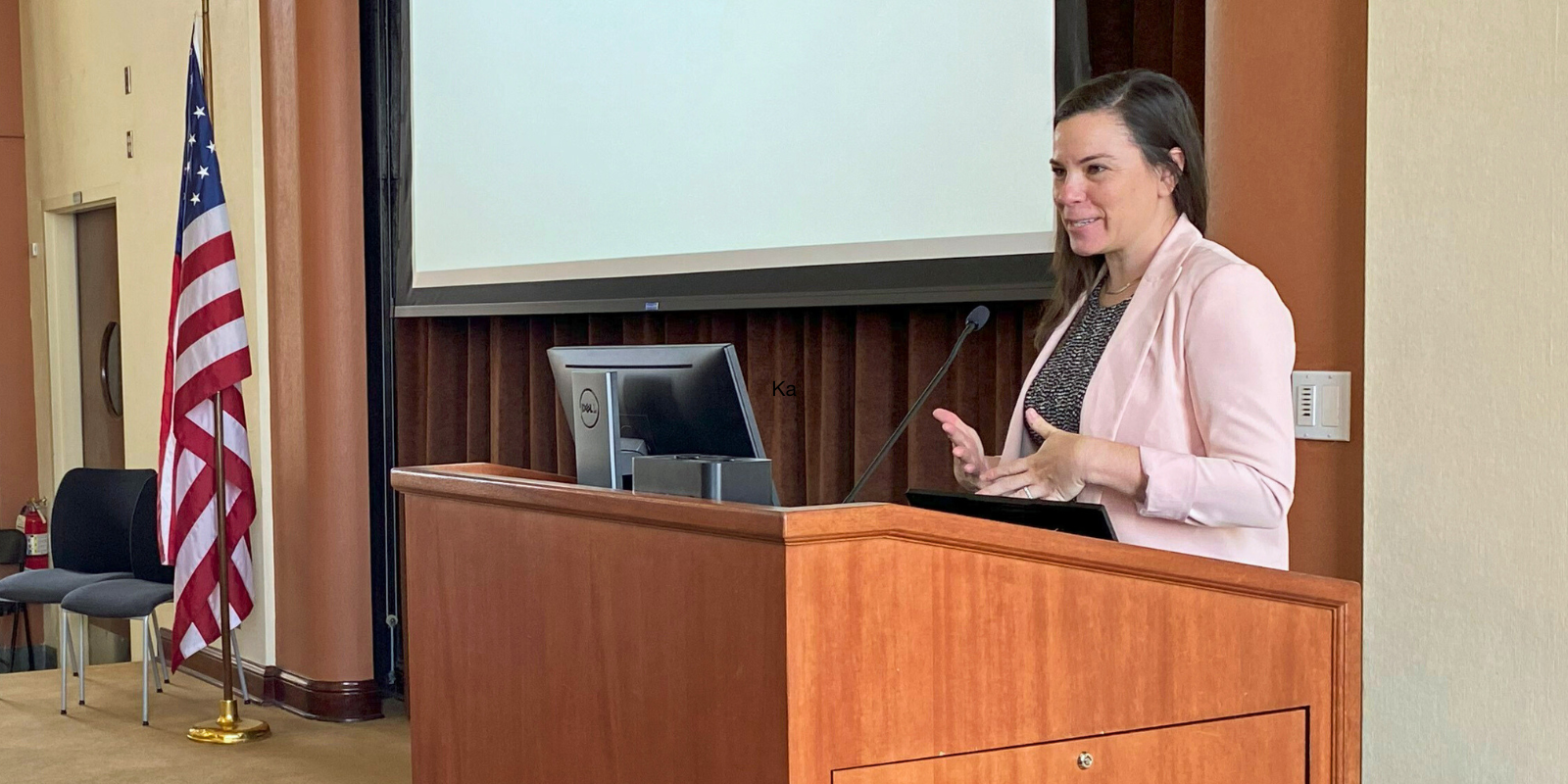
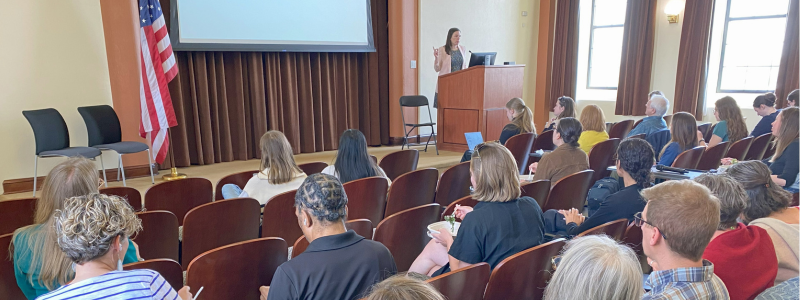
Photos: Katelyn Jetelina, PhD, MPH, speaks at a program on public health communications co-sponsored by the CU Firearm Injury Prevention Initiative on April 23, 2025, on the CU Anschutz Medical Campus. Photo by Mark Harden for the CU Department of Emergency Medicine.