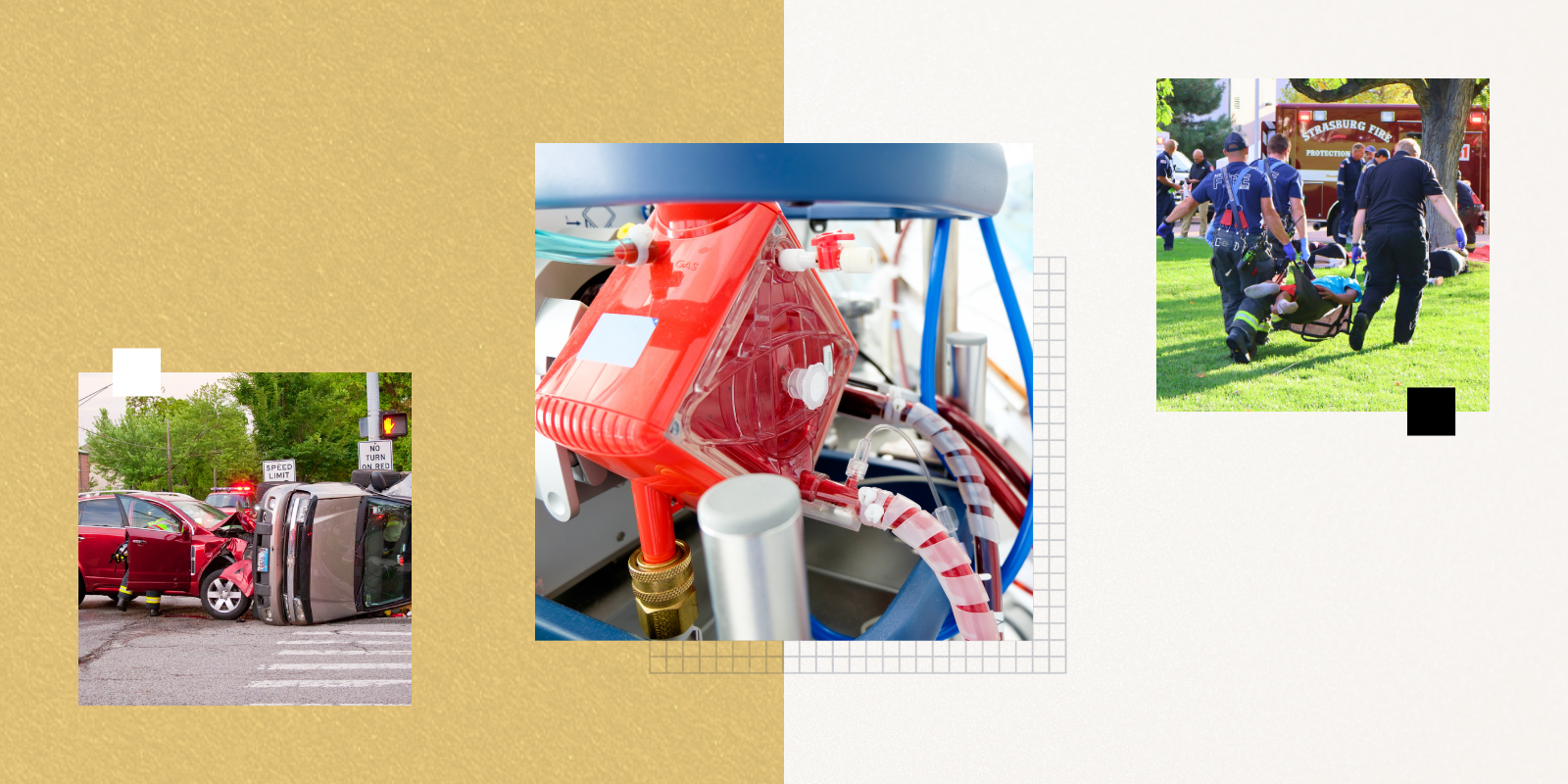
On a battlefield abroad or in an ambulance or helicopter at home, many ill or injured patients need supplemental oxygen. Today, that usually means an emergency medical services (EMS) clinician must manually monitor oxygen levels and twist knobs under high-stress conditions to deliver just the right amount of oxygen.
The challenge is that real-time manual adjustment of oxygen levels takes mental and physical bandwidth away from other critical interventions for patients, while possibly leading to periods of under- or over-oxygenation and potentially wasting scarce oxygen supplies.
Automating the process may be the answer, says Adit Ginde, MD, MPH. And now he’ll lead a two-year, multisite research project to test a way to do just that, culminating in a yearlong medical trial.
“The more that we can automate, the more we can free up the hands and minds of providers to do the things only they can do,” says Ginde, professor and vice chair for research in the University of Colorado Anschutz Department of Emergency Medicine. He says an automated oxygenation system developed by a company called O2matic ApS has the potential to save more lives, use less oxygen, and reduce medic burden compared to manual adjustment.
The project goes by the name Autonomous Unmanned Resuscitation and Oxygen Research for Austere operations (AURORA), and it recently received $4.7 million in U.S. Department of Defense funding.
AURORA is a collaboration of CU Emergency Medicine; the CU Center for Combat Medicine and Battlefield (COMBAT) Research, which seeks to solve military medical challenges and translate those discoveries for use in civilian settings; the Airway, Trauma, Lung injury, and Sepsis (ATLAS) Research Program, which Ginde leads; the U.S. Air Force; and O2matic.
Prehospital settings
An earlier trial led by Ginde investigated the use of the O2matic equipment in hospitals to help critically ill trauma patients. With that trial nearing conclusion and showing encouraging results, AURORA will now test the technology in “prehospital” settings – care during a 9-1-1 response or while a patient is being transported to the hospital.
After a year of development, simulation, and training, a yearlong clinical trial will use the O2matic technology in ambulances and medical helicopters carrying real adult patients.
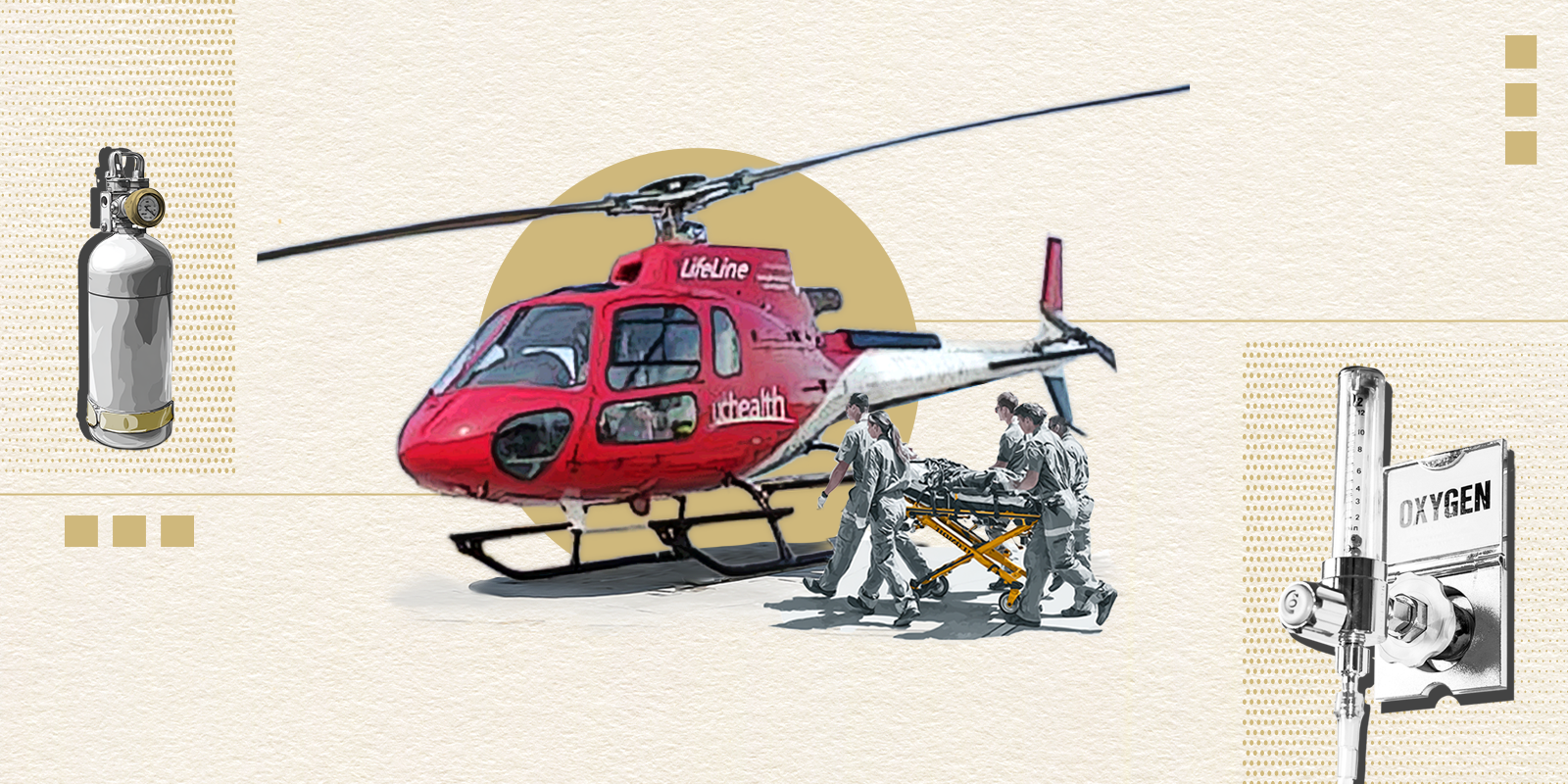
The trial will involve the UCHealth LifeLine critical care ground and helicopter air ambulance system, serving most of Colorado and parts of neighboring states; and Morgan County Ambulance Service, in a mostly rural area of northeast Colorado.
Given the challenges of caring for patients in prehospital settings, especially when long transport times are involved, automating oxygen delivery is all the more crucial, Ginde says.
“In a hospital, we have the luxury of having respiratory therapists, critical care nurses, and physicians right there,” he says. “But with prehospital personnel, there are so many things they need to do by themselves in addition to managing oxygen.”
Years of oxygen research
Ginde is also senior associate dean for clinical research at the CU Anschutz School of Medicine and assistant vice chancellor for clinical trials at CU Anschutz.
He has spent years researching oxygen titration – the process of adjusting oxygen delivery to a patient to maintain an optimal blood oxygen saturation level.
In research published in March as part of the Strategy to Avoid Excessive Oxygen (SAVE-O2) study he led, Ginde and his colleagues reported that targeting oxygen saturation levels from 90% to 96% – slightly lower than the previous norm for supplemental oxygen – had similar, and sometimes better, outcomes for adult trauma patients.
Ginde sees his parallel research into titration automation as a way to better ensure that patients don’t get too much or too little oxygen.
Advancing care
Ginde says AURORA is a two-pronged initiative to solve a pair of oxygenation problems: The military needs technology that can automatically adjust oxygen levels for wounded soldiers, especially when evacuation takes a long time or medics are overwhelmed with mass casualties. And civilian prehospital crews and helicopter air ambulance services caring for acutely ill or injured patients need automated oxygen delivery to take a key job off their hands.
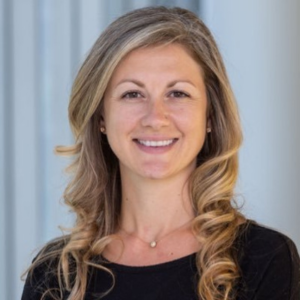
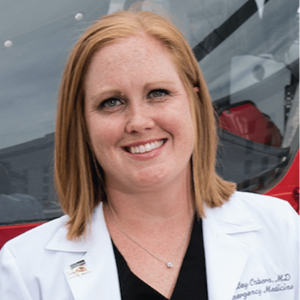
Two CU Emergency Medicine faculty leaders in EMS – Andra Farcas, MD, and Lesley Osborn, MD – are co-leads of the AURORA project. Farcas is medical director of Morgan County Ambulance Service and other rural EMS agencies, and Osborn is medical director of UCHealth LifeLine.
“Time and resources are often the limiting factors when it comes to prehospital resuscitation of critically ill and injured patients,” Osborn says. “My hope in putting this device on our helicopters and our critical care ambulances is that it will allow my flight nurses and flight paramedics to cognitively offload this task and allow them to focus on other important components of resuscitation.”
“By studying this device in a rural prehospital setting, we can really help advance the care paramedics and EMTs provide to patients in low-resource settings,” Farcas says. “Prehospital research is a blossoming area of scientific investigation, but studies often focus on urban, high-volume agencies. One of the most exciting and innovative aspects of this trial is that we are working with a rural agency and advancing care in an otherwise often overlooked patient population.”
Farcas adds that with “many rural areas seeing a population increase over the last few years, agencies like Morgan County Ambulance Service are experiencing an increase in demand for emergency medical services, making a technology like this especially beneficial in areas with prolonged transport to definitive care.”
Making modifications
The AURORA project will test a modified version of O2matic’s PRO automated oxygen delivery device. Once a target range of blood-oxygen saturation is set, the O2matic system uses pulse oximetry – a monitor that’s usually clipped to the patient’s fingertip – to constantly measure saturation levels and automatically adjust oxygen flow.
First, the O2matic PRO will be “ruggedized” for use in moving vehicles, Ginde says. “The device is meant for a stationary hospital setting, so we’ll work with O2matic to make certain modifications to handle vibration or going up into the air.”
Then, next fall, the clinical trial will begin, with patients using UCHealth LifeLine and Morgan County Ambulance services randomly assigned to use either the automated system or manual oxygen titration.
Investigators will track how often each patient stays in the target blood-oxygen saturation range of 90% to 96%, how much oxygen is used, and how soon patients can be taken off supplemental oxygen.
Broader potential
Meanwhile, the U.S. Air Force will conduct research into military applications for the technology at Joint Base San Antonio, Texas, which has special training facilities that mimic battlefield conditions. That research is led by the 59th Medical Wing Air Force En Route Care Research Center’s Maj. William Tyler Davis, MD, who is affiliated with CU COMBAT. This work is being conducted in partnership with The Geneva Foundation.
Military medics will be trained to use the automated device, then will take part in mass-casualty simulations, including “prolonged casualty care” situations lasting several hours.
The military testing will determine if automated oxygenation can reduce medics’ workload so they can focus on other critical tasks, especially in mass-casualty war-zone situations with limited available oxygen supplies and prolonged waits to evacuate patients.
Osborn says the research in Colorado will also have applications in military settings.
“When we look at the future fight that is facing the United States military, one of the challenges to caring for our wounded service men and women will be the lengthy patient transport times to military medical facilities,” Osborn says. “In these forward phases of care, oxygen supply is critically limited. Being able to test this device in our civilian ambulances and helicopters in Colorado will allow us to simulate the combat environment, with many of our patient transports being greater than an hour and with a similar limitation of oxygen supply on our civilian EMS vehicles, especially the helicopters.”
If AURORA’s results are favorable, the goal is to secure federal approvals and get the technology into the hands of military medics and civilian paramedics as quickly as possible, Ginde says.
This effort was funded by the Defense Health Agency Research & Engineering Directorate, Combat Casualty Care Portfolio under MTEC solicitation (W81XWH-15-9-0001). The views and conclusions contained herein are those of the authors and should not be interpreted as necessarily representing the official policies or endorsements, either expressed or implied, of the U.S. Government.