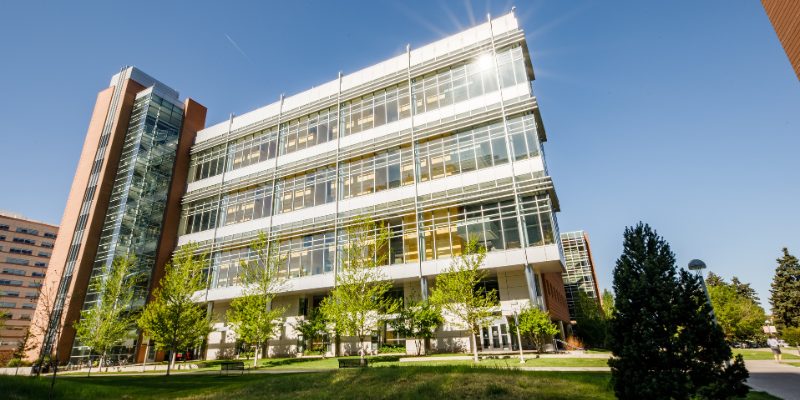
This year marks an exciting new chapter for the CU Anschutz Department of Family Medicine (DFM) as we welcome the Center to Advance Community Health (CACH) into our Department. Together, we will build on our shared commitment to community-centered research, creating new opportunities to strengthen partnerships and improve health outcomes across Colorado.
Formerly known as the Center for Health Equity, CACH transitioned from the Office of the Chancellor to the DFM to further advance its research mission and broaden its impact across Colorado. The move reflects a strategic effort to align the Center with evolving federal priorities while strengthening its role as a regional leader in health parity research.
The idea emerged during discussions last July between Chancellor Donald M. Elliman, DFM Chair Myra Muramoto, MD, MPH, FAAFP, and CACH Director and Interim Vice Chair for Departmental Engagement Deborah Parra-Medina, PhD, MPH. Together, they recognized the DFM as a natural home for the Center, given their shared commitment to improving health outcomes through education, research, and clinical care.
“The Chancellor approached me to discuss the opportunities for integration with CACH, as he believed the DFM was the School of Medicine department that was the best fit and most logical home,” said Dr. Muramoto. “We are strongly aligned with the Center's mission of advancing health parity and eliminating health disparities, and this move supports a more strategically driven and equitable approach to institutional funding.”
Get to Know CACH
Founded in 2021, the Center was established as a long-anticipated addition to CU Anschutz, dedicated to advancing community health and wellness. Since its inception, the Center has worked to address structural sources of inequity and create opportunities through learning, service, research, and advocacy.
Today, CACH works closely with the Office of Access and Engagement, the Aurora Wellness Community, and local community partners to improve health outcomes across the region.
“CACH advances community health by building partnerships that address the social drivers of health and co-create solutions with the communities most affected by them through community-engaged research, evaluation, education, and policy work,” said Dr. Parra-Medina. “Rather than designing solutions for communities, our approach centers on co-creating them with communities.”
When asked how the Center will evolve under its new name and academic home, Dr. Parra-Medina views the transition as building on the strong foundation established by the Center for Health Equity.
“Our new name reflects a broader mandate to advance community health across the Rocky Mountain region—but the core mission hasn't changed: build mutually beneficial partnerships, co-create solutions with communities, and use evidence to improve health outcomes. Being housed within DFM gives us a stronger clinical and operational foundation to grow that mission... I see this as an evolution, not a reinvention: the relationships, research priorities, and community trust the Center for Health Equity built over the last several years carry forward into CACH. Moving forward, we remain committed to our community partnerships and shared goal of enhancing health outcomes for all.”
Shared Goals & New Opportunities
The partnership sparks meaningful opportunities for collaborative research by aligning CACH’s expertise in community engagement and evaluation with DFM’s clinical and community-focused work.
Dr. Parra-Medina is particularly excited about working with several DFM programs, including CAMPHIRE and the Community-Centered Clinical Excellence (C3E) Program. CACH is already teaming up with C3E to develop an evaluation approach for its efforts to advance health parity in DFM's primary care clinics. Additional areas for collaboration include practice-based research, rural health, and chronic disease prevention, including diabetes management, healthy lifestyle promotion, and maternal health.
Dr. Muramoto views CACH’s integration into the DFM as a catalyst for growth across multiple areas of the Department.
"The DFM has a long-standing commitment to health parity and improving health outcomes for all patients, woven throughout our research, clinical practice, education, and community work. Bringing the center into the DFM is a tremendous opportunity to grow our health parity work across all our mission areas, especially research, strengthen existing community partnerships, and develop new ones."
She added that combining the Center's community-engaged research expertise with DFM's nationally recognized Rural Program opens the door to deeper partnerships with rural communities that experience limited access to healthcare.
Looking Ahead
As CACH enters this new chapter, Dr. Parra-Medina envisions the Center as a trusted bridge between Colorado communities and the CU Anschutz research enterprise. A key priority will be securing major grant funding to expand CACH's research team and deepen its impact across the Rocky Mountain region. She is also enthusiastic about the public launch of CACH's new Evaluation and Data Services Core and recruiting faculty whose work aligns with the center's community-focused mission.
"Over the next five years, I see CACH producing research that informs policy and practice in Colorado—not just publishing findings but putting them to work," she said. "Most importantly, I envision a CACH that our community partners point to with pride—not as 'the University Center that studies us,' but as 'our partner in the work.'"
The DFM proudly welcomes CACH to its new home. Together, we are poised to create a lasting impact through community-engaged research that strengthens the communities and families we serve.

-1.png)