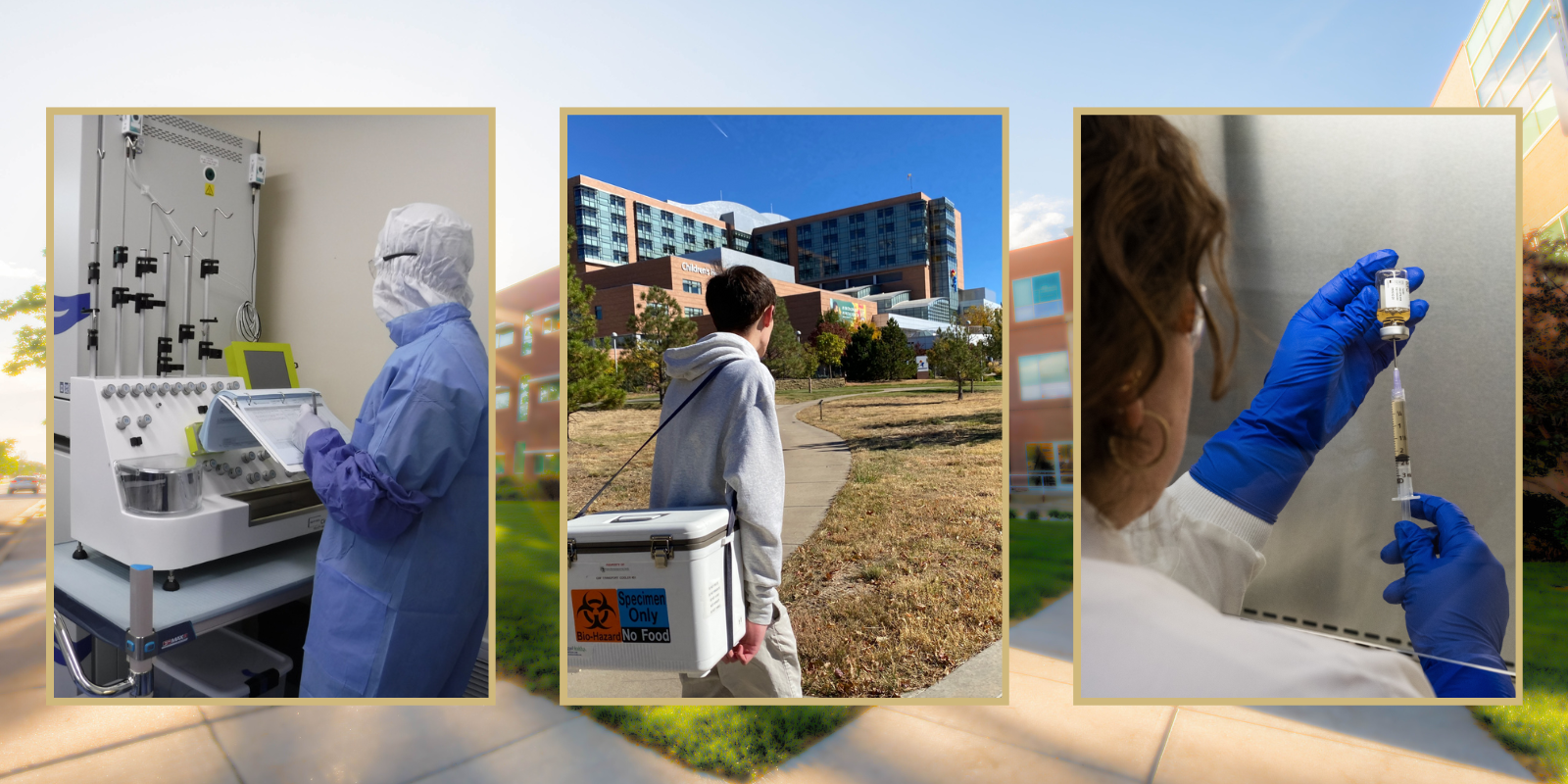
In July, the Gates Institute provided chimeric antigen receptor (CAR) T-cell therapy to the 50th patient enrolled in an investigator-led clinical trial at University of Colorado Anschutz. A pediatric patient received this individualized treatment at Children’s Hospital Colorado – in a phase 1 study open to patients with B-cell acute lymphoblastic leukemia (B-ALL) who have relapsed or whose disease didn’t respond following standard of care with chemotherapy or bone marrow transplants.
“This milestone is a triumph for the Gates Institute, and especially for the Gates Biomanufacturing Facility (GBF),” said Gates Institute Executive Director Terry Fry, MD. “But it’s also a credit to the campus and its commitment to research.”
“When I arrived at CU Anschutz in 2018, the campus was just beginning to develop a clinical CAR T-cell research program,” said Fry, a professor of pediatrics, hematology and immunology in the CU School of Medicine and CU Cancer Center member. “It’s been a privilege to watch this research take off here and is a testimony to the collaborative spirit on this campus. The campus has tremendous potential to be a leader in the field, given the proximity of two world-class hospitals and the robust research infrastructure at CU Anschutz.”
The FDA first gave approval to CAR T-cell therapy in 2017 for the treatment of childhood B-ALL in patients up to age 25 – one of the rare times the FDA approved a novel treatment for children before adults. The initial treatment targeted a receptor called CD19 commonly found on leukemia cells, bringing remission to about 75% of patients in clinical trials. Since then, much research has been done to determine the optimal timing and dosage of CAR T-cell therapies, and clinical trials have expanded to engineer CARs targeting different receptors for other forms of cancer.
The GBF has ramped up to meet the growing demand for this synthetic cell, genetically engineered to detect cancer. The GBF is a pillar of the Gates Institute, which was launched in 2023 to provide support for cell and gene therapy trials.
Other pillars of the Gates Institute, including the regulatory and clinical operations teams, also share credit for this key milestone. The regulatory team plays a crucial role in securing approvals and ensuring strict adherence to evolving guidelines, enabling novel cell and gene therapies to reach patients safely and efficiently. Meanwhile, the clinical operations team expertly manages the logistical and operational aspects of each patient’s journey — overseeing trial site coordination, protocol implementation, and patient follow-up — to guarantee seamless, high-quality care.
Patient Impact
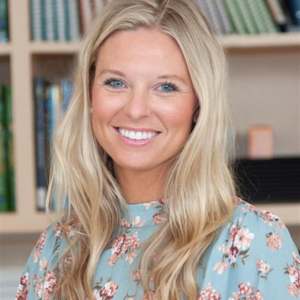
“Fifty isn't just a number; it's 50 patient lives that are being directly impacted,” said Felicia Lanzarone, senior manager of cell therapy manufacturing at Gates Biomanufacturing Facility. “These are patients who might not have had access to other treatments” after failing chemotherapy or bone marrow transplants.
Each dose of CAR T-cell therapy represents a labor-intensive effort, tailored for each individual patient. The process begins with collecting the patient’s white blood cells, specifically T cells. At the GBF, scientists and engineers genetically modify the cells to express a receptor – or CAR -- enabling them to recognize and attack cancer cells. The modified cells are then expanded, tested for safety and potency, and prepared for infusion. The biomanufacturing process plays out over about two weeks, requiring close coordination across clinical, laboratory, quality and clinical trial support teams, ensuring that each therapy meets rigorous standards.
From Relapsed/Refractory to Renewed Hope
Gates Institute is currently supporting four investigator-led trials of CAR T-cell therapy at CU Anschutz. These trials enroll patients with “relapsed or refractory” cancer, words that carry heavy meaning in oncology.
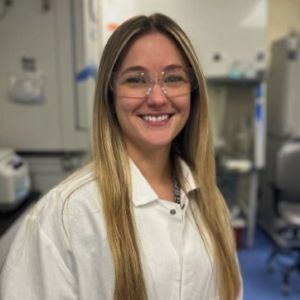
Vanessa Fabrizio, MD, MS, principal investigator for the CD19x22 study for pediatric patients with B-ALL, said that patients with B-ALL who have relapsed once have less than a 50% chance of long-term survival, and the rate decreases further with each relapse.
The patients enrolled in the pediatric trial had either previously received chemotherapy, previous single-antigen CAR T-cell therapy, or bone marrow transplantation and relapsed, or have been refractory to standard therapy or prior CAR T-cell therapy, said Fabrizio, assistant professor of pediatrics-hematology, oncology and bone marrow transplantation in the CU School of Medicine and a CU Cancer Center member.
This CAR T-cell therapy targets two receptors on the cell surface – CD19 and CD22. Patients whose cancers are CD19-negative and “CD19-weak” are also able to receive treatment to target the CD22 receptor on the cancer cells, which a lot of other centers can't offer, Fabrizio said.
Situated in the Bioscience 1 building in the Fitzsimons Innovation Community, the Gates Biomanufacturing Facility is one of just a handful of such facilities operating near an academic medical campus – and is the only one near an academic campus in the Rocky Mountain Region. The proximity to campus fosters close collaboration for technology transfer from a researcher’s lab to the biomanufacturing facility, Lanzarone said. When a patient at CU Anschutz receives CAR T-cell therapy manufactured at the GBF, staff members can physically walk over to deliver the final product.
Fabrizio said that the GBF’s proximity has been a plus for patients at CU Anschutz.
“Leukemia patients tend to come in quickly and we don’t always have a lot of time,” Fabrizio said. “There’s a willingness of everyone to adjust schedules on short notice and make things work, which has a positive impact on patient outcomes.”
The GBF has come a long way since producing its first CAR for a trial at CU Anschutz in 2018, Lanzarone said. “The team now operates like a well-oiled machine,” producing up to four CARs in one month, she said. GBF staff come in on weekends and holidays, operating round-the-clock when necessary to meet patient needs.
“I’m so proud of all the work we’ve been able to achieve together at the GBF and throughout Gates Institute,” Lanzarone said.
.png)