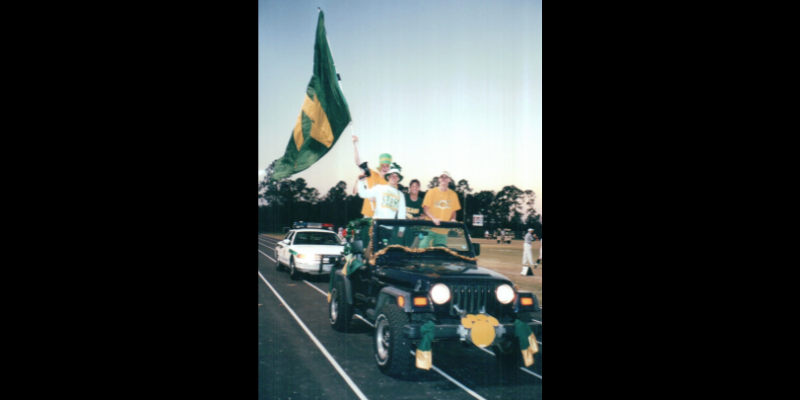
“Which high school did you go to?” is a favorite clinical icebreaker of mine. Practicing in a hospital full of trainees from around the country in a city that most people have tried to find their way out of in adulthood, I am the somewhat rare exception of a physician who grew up in the area, trained at the hospital, and stayed on as faculty instead of seeking a better paying community position. Most of the patients I treat in the emergency department seem to be from the area, destined by societal and financial pressures to live and die close to where they grew up, receiving care in the same facility they were likely born in. I will admit that most of my patient encounters in our busy and hectic department don’t include extremely thorough and narrative-driven interviews with the patient, but on the rare occasion they do, I always bring it back to where they went to high school.
In an acute care setting, especially one filled with chronically decompensated medical and psychiatric conditions, long wait times, and little privacy, it is often hard to make a true human connection. I am at an advantage, being the academic attending, in that I can pick and choose who I talk to; it could be the family of the critically ill patient, the older woman with a funny t-shirt, or, more often than not, the disruptive patient who no one else can seem to get through to. When these kind of less-desirable interactions occur, such as the latter, we are immediately placed in a hierarchical power dynamic, which usually doesn’t lead to effective communication. The patient is causing a problem, probably due at least partially to feeling ignored, and I am the “boss” of the department who is here to set them straight. I have seen time and time again how this dynamic completely erodes good communication, and I am a firm believer in the power of engaging in a bidirectional sharing of personal narratives to help soothe the situation.
I am not naive enough to think that these interactions are on the same level as a deep, formal, and structured gathering of a full patient narrative, but they are an opportunity to share at least a small part of the patient's story and my story, and see if somewhere in there we can meet on common ground. And that brings me back to “which high school did you go to?”. No matter what town or city you’re from, you have some idea of the local high school scene and a feel for stories and cultures associated with each school, as well as an understanding of rivalries. In my case, I was very active in multiple sports, so at some point along the line I likely swam or ran at most of the schools in the area. Additionally, my parents both grew up here, one a “beach bum” and the other a “townie”, so between their experiences and mine I can bob and weave my way through discussions of schools and random social connections. When I find out a patient grew up in the area, I then ask about their high school, and do my best to find a connection. Little things like “Oh I ran at the Bob Hayes track meet there” or “Didn’t so and so play football there?” help to form quick connections that lead to a more inviting social environment.
I witness bad interactions between patients and providers during every shift. No doubt, many of these are due to untreated psychiatric conditions and patient intoxication, but many are also due to simple miscommunications. More often than not, both sides dig in and put up barriers of self-protection. It’s the experienced provider who sees this happening, changes course, and finds a way to make a personal connection. Translating this to the practice of palliative care, many difficult patient and family interactions lie ahead for me. It will be my job to analyze the objective data in front me and make recommendations, but to leave it at that would be a disservice and would not meet the expectations of a provider who is dedicated to relieving suffering and helping patients and families navigate the most difficult parts of lives. To do this well, the objective must be given equal weight to the subjective. Instead of digging in I will need to dig deeper, receive the narrative and be expected to share mine, and continually search for common ground on which to move forward together.
Want to know more about our Palliative Care Education programs? Click below: