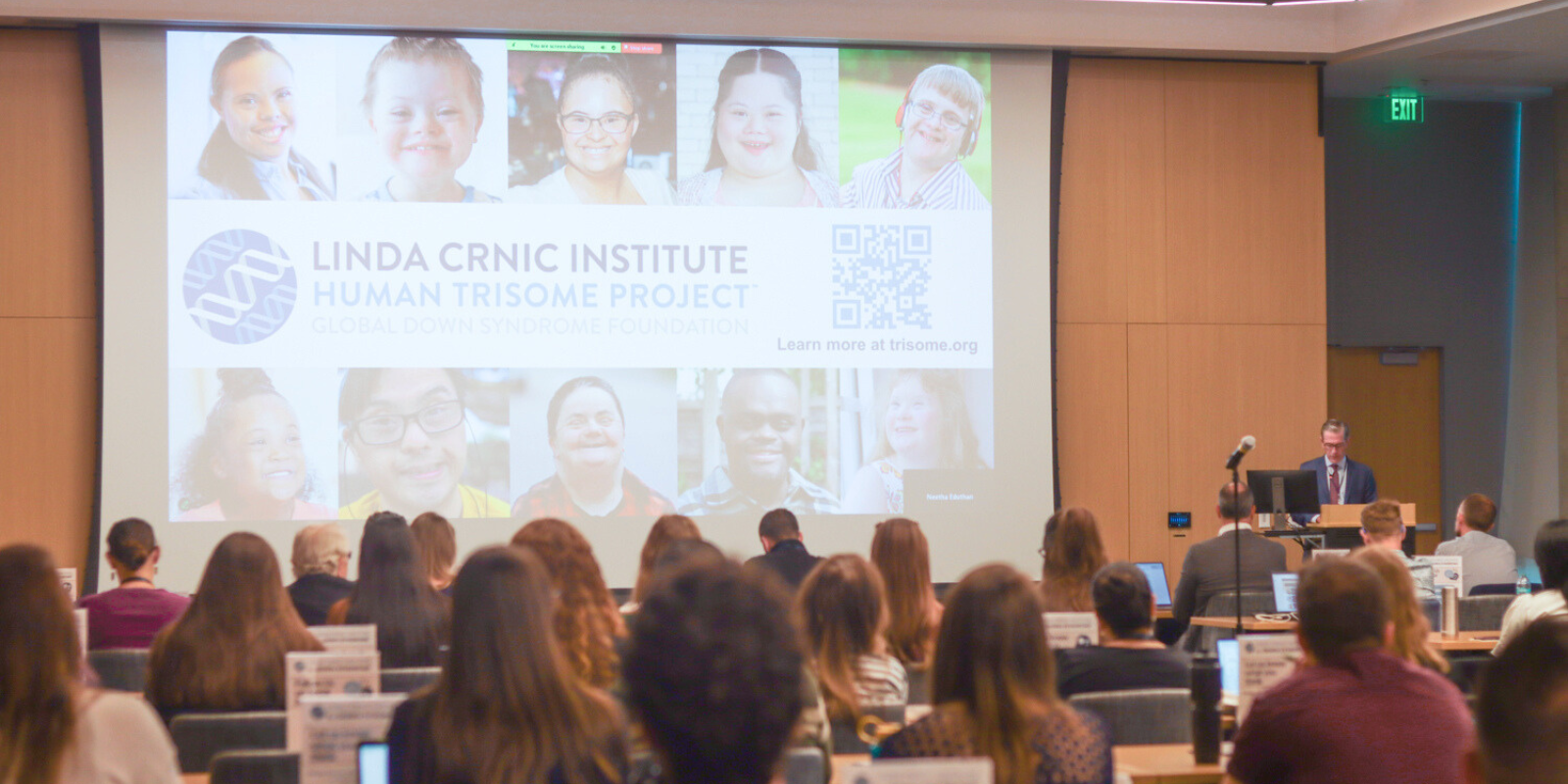
This year’s Crnic Institute Down Syndrome Research Symposium celebrated breakthroughs advancing Down syndrome research, featuring presentations from innovative leaders in the field. The Crnic Institute was honored to have Dr. Nicole Baumer, MD, MEd, director of the Sie Center for Down Syndrome, serve as the keynote speaker. Her presentation, entitled “Shaping Neurodevelopment in Down Syndrome: Innovations That Optimize Health, Learning, and Development,” explored the wide variability in medical conditions and neurodevelopmental outcomes among individuals with Down syndrome.
Dr. Baumer discussed how this heterogeneity presents challenges for clinical care, particularly given the current limitations of non-specific diagnostic and treatment approaches and emphasized the need for individualized strategies to better predict and support developmental outcomes. She proposed a coordinated clinical research strategy focused on three key areas: improving developmental screening and diagnostic procedures tailored specifically to individuals with Down syndrome; identifying novel biomarkers and underlying mechanistic pathways through imaging, omics, and translational research; and developing targeted interventions to support the delivery of precision therapies and personalized care. Dr. Baumer stressed that meaningful progress requires strong partnerships among clinicians, scientists, individuals with Down syndrome and their families, and advocacy organizations. These collaborations are essential to inform priorities, guide research directions, and ensure that advances reflect the real-world needs of the Down syndrome community.
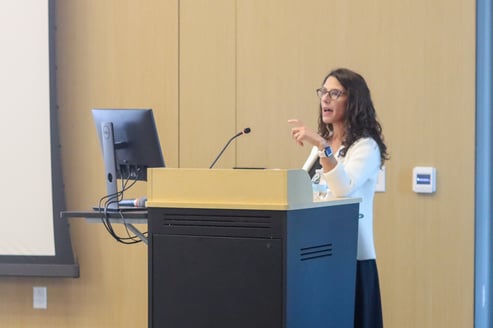
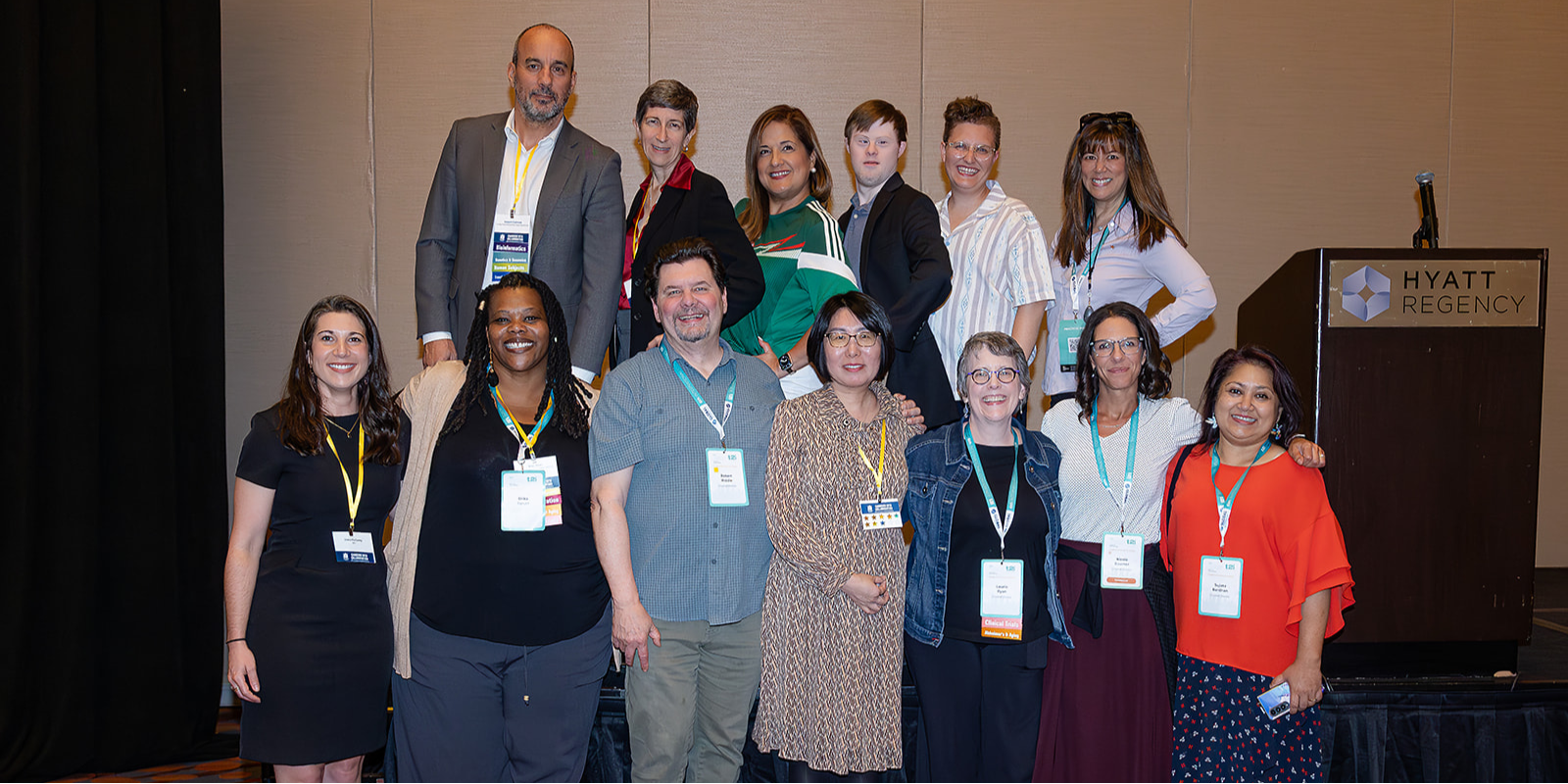
From basic science presentations on Trisomy 21 and hearing loss, to innovative talks on translational research on behavior and Alzheimer’s disease, our symposium covered a wide range cutting-edge topics in Down syndrome research. Thank you to this year’s presenters:
- Charlotte Macchione (PhD Candidate, CU Anschutz): Polycomb dynamics in Trisomy 21
- Matthew Galbraith, PhD (Associate Professor of Research, CU Anschutz): Altered TNFɑ Signaling in Down Syndrome
- Cong Tian, PhD (Research Scientist, Creighton University): Hearing Loss in a Down Syndrome Mouse Model
- Janelle Posey, MS (Research Services Professional, CU Anschutz): Hypoxia-induced Platelet Activation and Pulmonary Hypertension are Exacerbated and IFNR Copy Independent in the Dp16 Mouse Model of Down Syndrome
- Huntington Potter, PhD (Professor, CU Anschutz): Detecting and Halting Accelerated Brain Aging in Down Syndrome
- Elena Woods, PhD (Research Associate, CU Anschutz): Deciphering the Immune-Stromal Landscape in Down Syndrome using Spatial Transcriptomics
.jpg?width=494&height=329&name=Symposium%20Speakers%202025%20(1).jpg)
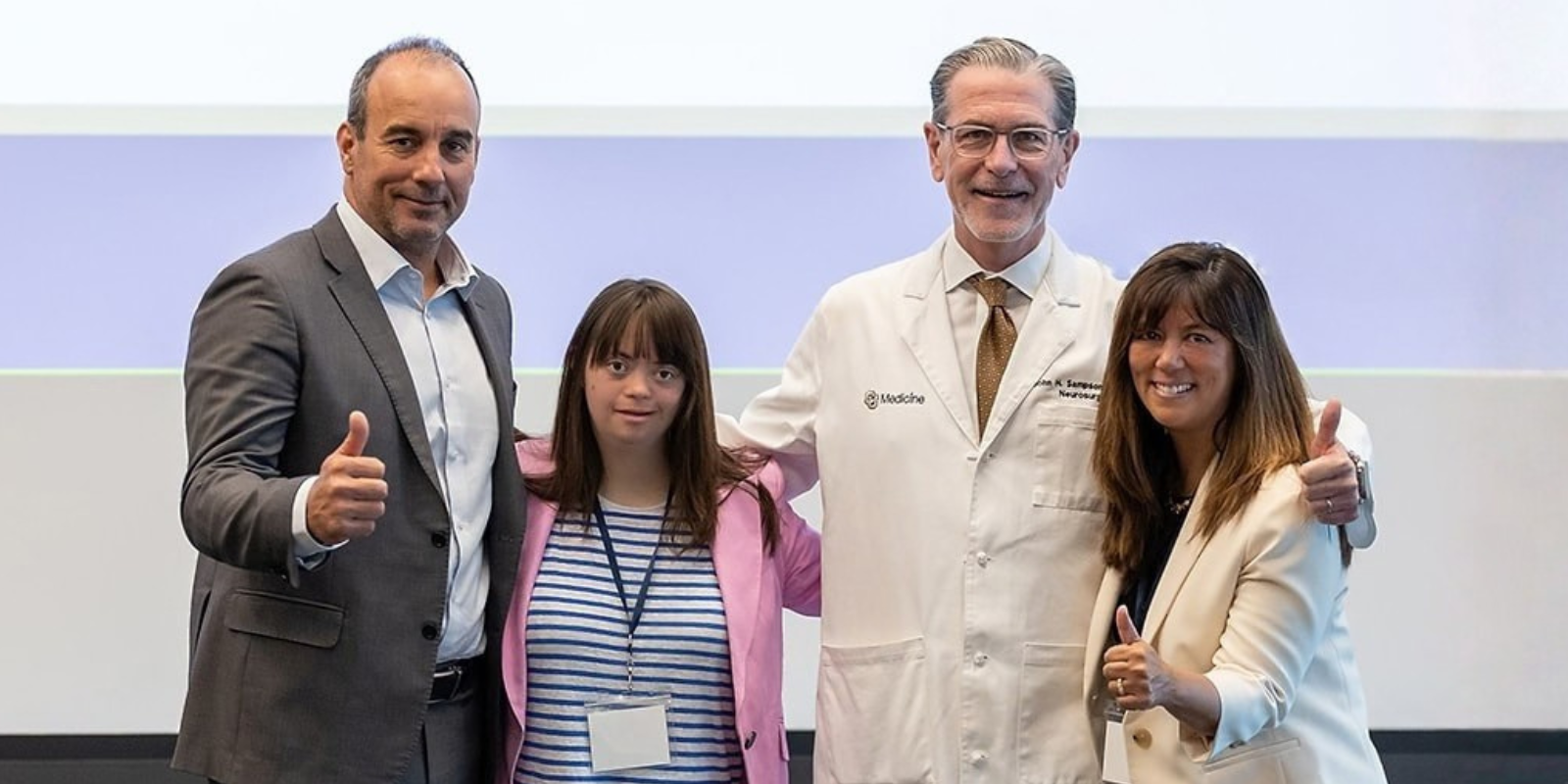
In addition to showcasing innovative science, the symposium also featured the Global Down Syndrome Foundation (GLOBAL), a nonprofit organization dedicated to improving the lives of individuals with Down syndrome through research, medical care and advocacy. We were thrilled to have Taylor Shelsta, a self-advocate, Michelle Sie Whitten, MBA, GLOBAL co-founder, president and CEO, and Bryn Gelaro, MA, GLOBAL vice president of research and medical presented the importance of advocacy in Down syndrome research at our symposium. Without the support from GLOBAL for our research, the work we do would not be possible.
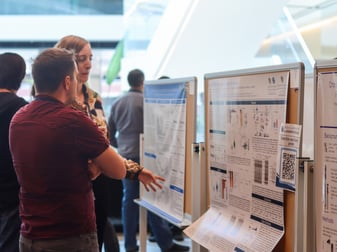
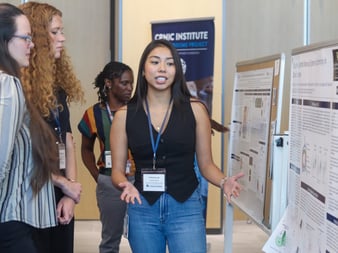
Each year, the symposium also includes a poster session, allowing collaboration and networking across the research community.
Congratulations to this year’s poster session winners!
First Place: Abigail Cozart, PhD candidate, CU Anschutz, for Altered TNF-⍺ Signaling in Down Syndrome
Second Place: Cristina Lau, PhD candidate, CU Anschutz, for Deciphering Central Nervous System Autoimmunity in Down Syndrome
Third Place: Isabella Perrin, student, CU Boulder, for Attribute Rank Enrichment Analysis (AREA) Finds Significant Established and Novel Gene-Disease and Metabolite-Disease Linkages in Rankable Datasets
The Crnic Institute team thanks speakers, presenters and attendees for making this year’s symposium such a success. We look forward to what the next year holds for Down syndrome research.
 .
.