An estimated 38 trillion bacteria live in the human body — and only a small fraction of these are harmful to our health. However, the ones that are harmful can cause serious illness, especially when the bacteria develop resistance to antibiotic drugs.
To overcome drug resistance and fight severe, hard-to-treat infections, researchers are turning to a type of virus found in nature that only infects bacteria: bacteriophages, or “phages” for short.
A team of University of Colorado Anschutz School of Medicine researchers has spent the last 15 years steadily compiling a library of phages to target especially stubborn bacteria that naturally live in the intestines.
“Phages have been used historically for decades as tools to understand molecular biology, but there's been a resurgence in interest in them due to the rising incidence of antibiotic-resistant bacterial infections,” says Breck Duerkop, PhD, associate professor in the Department of Immunology & Microbiology. “We can isolate viruses against infections that are difficult to treat, and some of the viruses will kill the bacteria very readily.”
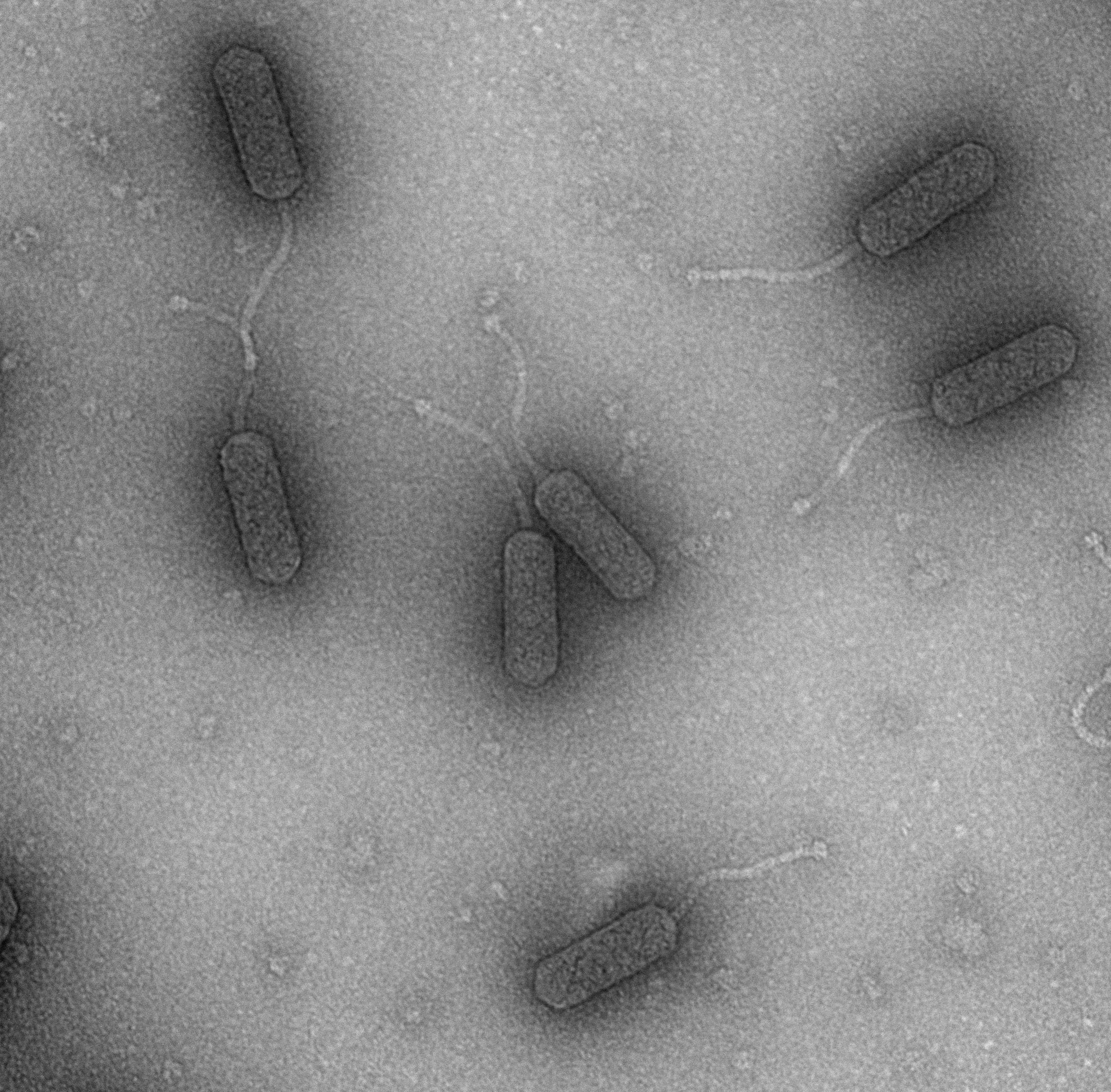
An electron micrograph showing phages. They have a typical structure with heads attached to tails. Photos courtesy of Breck Duerkop.
How viruses work — and how Duerkop’s team isolates them
Just like human cells, bacterial cells can be infected by viruses. Duerkop says nearly all bacteria have viruses that infect them, so phages are found in practically any environment where bacteria live. Viruses generally aren’t considered living things, but they do contain genetic material (DNA or RNA), and they can use host cells to make copies of themselves.
In human cells, according to the National Human Genome Research Institute, a virus gets inside a host cell by binding to a receptor on the cell surface, much like a key unlocking a door. Once inside the cell, DNA or RNA from virus particles take over cellular functioning and use materials in the cell to create more virus particles, which can then go on to infect other cells. Viruses disrupt cell activity and damage their host cells, sometimes to the point of killing them.
Phages can poke holes through cell walls and inject genetic material directly into the bacterial cell. Importantly, phages can’t infect human cells, but they can wreak similar damage and destruction inside bacterial cells as other viruses do in human cells.
Duerkop’s research group finds and isolates phages to study how they kill bacteria, how bacteria may become resistant to them, and how the phages can be combined with FDA-approved drugs to treat people with serious bacterial infections.
These researchers are especially interested in treatment-resistant bacteria. They primarily study Enterococcus faecalis and Enterococcus faecium, two highly drug-resistant bacterial species that normally live in the human gut without causing issues but can cause severe infections, especially in people with compromised immunity. Other antibiotic-resistant bacteria, including emerging pathogens like Enterobacter hormaechei and Klebsiella oxytoca, have also piqued the team’s interest.
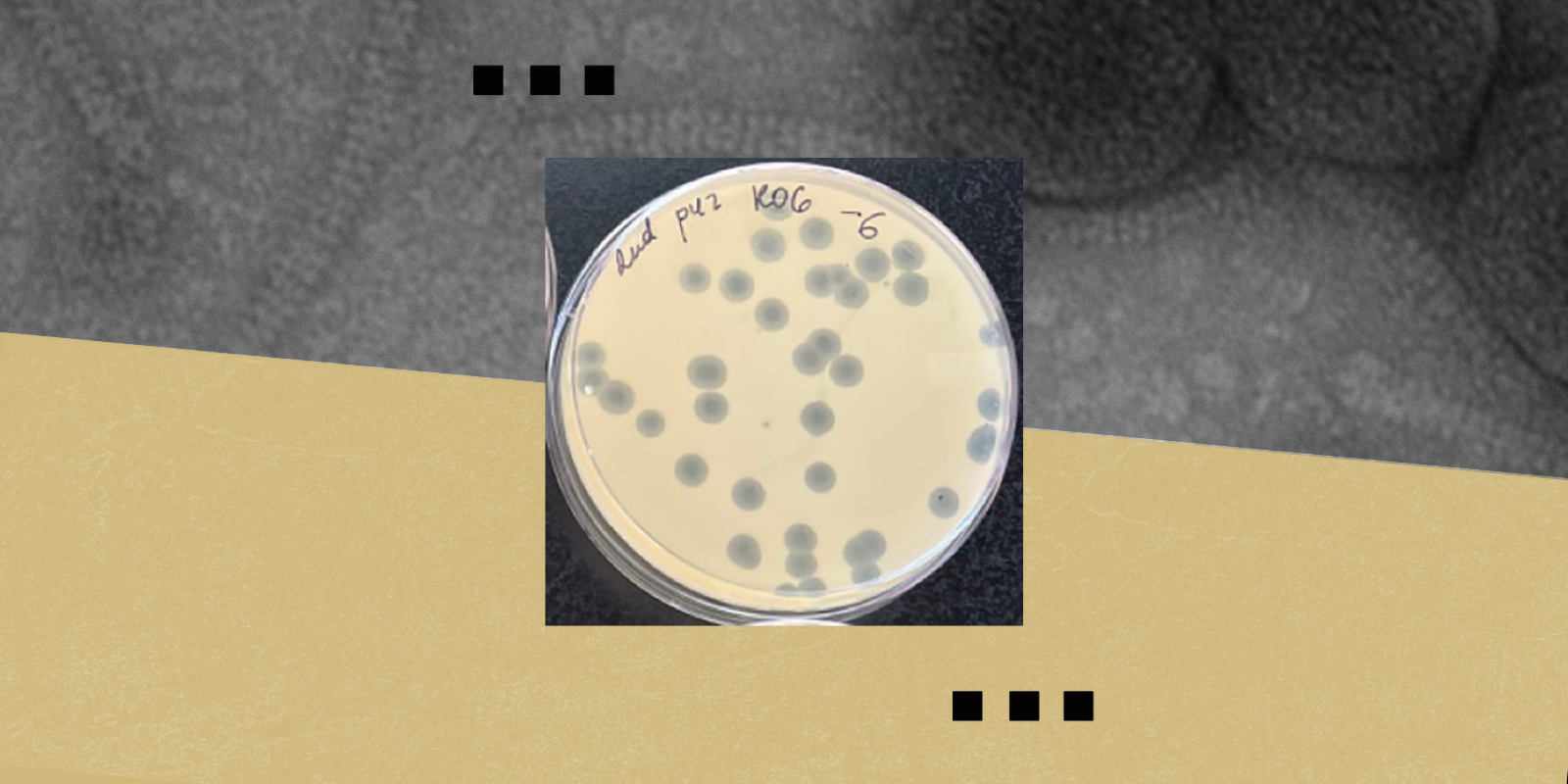
To find the right phages, the team gathers the viruses from untreated wastewater, which is full of these and other types of bacteria that make up the gut microbiome. After exposing the bacteria they’re trying to target to the wastewater, the researchers grow the bacteria on agar plates (known as bacterial lawns). They wait a little while, then extract phages directly from the round plaques that form within the bacterial lawns.
From there, the team uses a centrifuge to purify the phage samples and then stores the phages in buffers in the refrigerator, where they are stable and have long shelf lives.
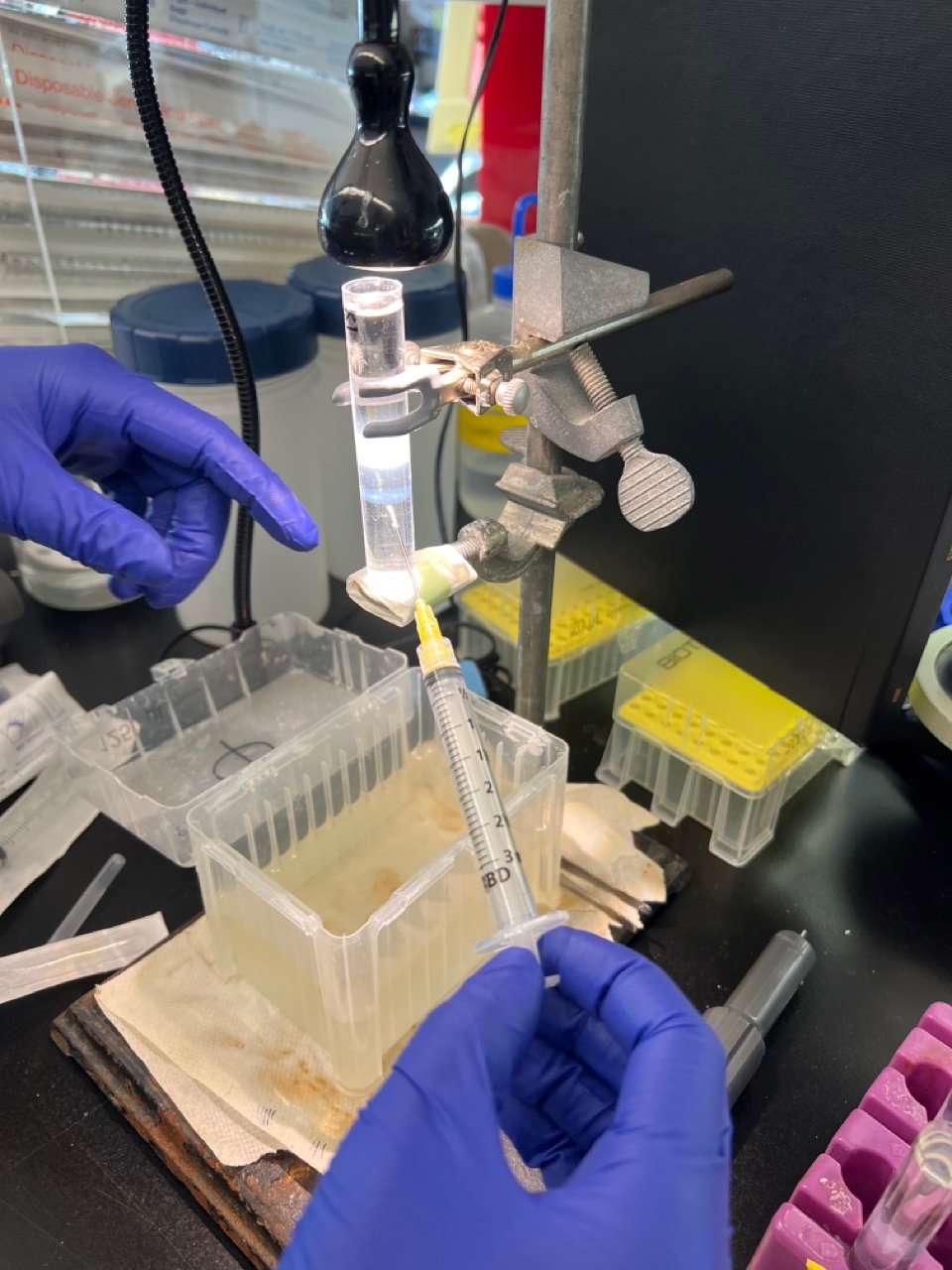
A researcher uses a syringe to extract phages from a sample.
Duerkop says he aims to keep a variety of different phages on hand that can infect their bacteria of interest. His team currently has a store of more than 30 different viruses that infect the enterococcal bacteria and roughly 15 to 20 that infect Enterobacter and Klebsiella.
“The idea of generating a library is you want some diversity,” says Duerkop. “Not every phage infects every type of bacteria. They’re very specific.” Phages can broadly infect strains of a particular bacterial species or be very specific to only a single strain, making them very precise.
A promising treatment for infections
Phages have shown promise as a treatment for these types of infections. They can be combined with standard antibiotics and be delivered orally or directly into the bloodstream via an IV, especially if the patient has a blood infection (septicemia). Phages have even been used topically to treat infected burns and other injuries on the skin.
Duerkop’s team supplied phages to help treat a 57-year-old woman with a persistent E. faecium infection that had entered her bloodstream. Standard antibiotics didn’t help, but the phage therapy cleared her blood infection within 24 hours. Although her infection later came back, the phage therapy worked well for several months and helped her to feel well enough to travel with her family.
Phages aren’t a cure-all, and bacteria can also develop resistance to the phages themselves, but they can be an effective option in cases where traditional antibiotics on their own aren’t working. Duerkop says antibiotic-resistant bacterial infections aren’t going away anytime soon, so it’s essential to continue research into what phages can do.
“It’s imperative that we explore creative ways to use phages in combination with antibiotics to target antibiotic-resistant bacteria,” says Duerkop. “We are just beginning to scratch the surface on the diversity of phages that have therapeutic potential. By continuing to study the biology of these phages, we stand to learn more about our natural world and the role of phages in it.”