The 2021 NCAA rule change that allows college athletes to profit from the use of their name, image, and likeness (NIL) has ramifications for all the professionals in charge of guiding a young athlete’s trajectory — coaches, trainers, and teachers, as well as physicians.
In a commentary published in January in the journal Sports Health, University of Colorado Anschutz School of Medicine student Michael Nocek writes of the “new reality where financial rewards are playing a greater role in both athlete behavior and medical management.” Sports medicine physicians, he writes, “must now contend with complex considerations that span the disciplines of health care, law, and commerce.”
Working with experts
Nocek, who recently completed a research year at the Steadman Philippon Research Institute in Vail before returning to CU Anschutz for his fourth year of medical school, collaborated with Vail-based orthopedic surgeon Peter Millett, MD, and CU sports medicine expert Eric McCarty, MD, professor in the Department of Orthopedics, on the commentary.
“As a medical student, I am still gaining experience caring for athletes,” Nocek says. “Having Dr. Millett and Dr. McCarty as mentors to go to and ask, ‘What are you seeing? What do you recommend?’ was very helpful. I was a Division 1 alpine ski racer in college, so I was also thinking about my experience and how it would affect me if I were in that situation.”
Return-to-play concerns
Overall, Nocek says, the new NIL rule is a boon for college athletes, but it creates added pressures for the team physicians and orthopedic surgeons who regularly treat them. One of the biggest concerns is when to safely return an athlete to play after an injury.
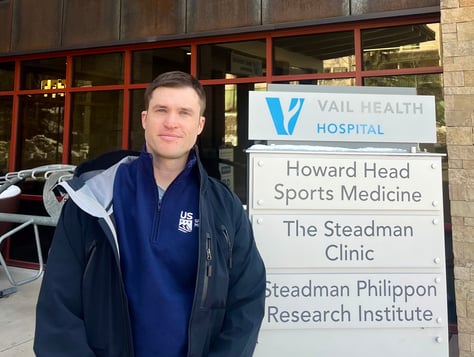
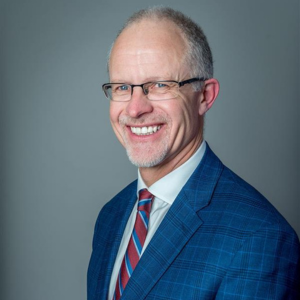
Michael Nocek
“Before NIL, the athlete mindset was, ‘I'm injured. Somebody might take my spot for a couple of weeks, but I can probably come back. Worst case, I’d have to earn my spot back, but it's more about my long-term health, because I want to play at the next level,’” Nocek says. “Now, with sponsorships or business partnerships in the mix, there’s more pressure to be visible and available. Time away matters more, because it can affect exposure and earnings, and that can accelerate return-to-play timelines toward coming back sooner. It may also affect how readily athletes report symptoms.”
A new world of pressures from social media and online sports gambling also means physicians must be more vigilant than ever about the mental health of athletes in their care, Nocek says.
“Say you have a bad game and lose,” Nocek says. “You’re a 19-year-old athlete still developing the executive functioning and emotional regulation skills needed to put things in perspective. You’re juggling school, relationships, and family pressures, and then you see a wave of criticism online. That can really undermine confidence at a time when many young athletes are especially vulnerable to outside feedback. We need to make sure athletes have access to mental health support so they can be safe and able to manage those pressures.”
Points to consider
Nocek ends the commentary with a list of recommendations, adapted from a presentation McCarty delivered to the American Orthopaedic Society for Sports Medicine. They include implementing clear return-to-play protocols, establishing protocols for coordinating outside medical care, creating formal systems for medical record sharing between institutions (particularly important in the era of the transfer portal), and above all, providing athlete-first care.
“Dr. McCarty always says, essentially, do the right thing,” Nocek says. “Always keep the athlete’s well-being as priority number one, above all else. Prioritize their long-term health and don’t put them at any undue risk for a potential financial benefit.”
Proud mentor
McCarty, who also is head team physician for the CU Buffaloes, says NIL is changing the way physicians work with college athletes.
“I don't think the concept of NIL is bad; it's just the way it’s being conducted that is causing a problem,” he says. “There aren't many rules or guardrails over it yet, and you have a kind of wild West of players and agents trying to get the money that's out there. It could be done in a better way.”
McCarty says he was pleased to advise Nocek on the paper, and proud of his mentee for putting all the information together.
“It speaks to Michael’s overall academic understanding to write something like this,” he says. “He took the bulk of the project on himself, and he did a great job of assimilating the thoughts of several of us that worked with him.
“The fact that this is a prominent journal and he's the first author says a lot to the quality of person he is, and it also says a lot about the quality of the medical students we have at the University of Colorado.”