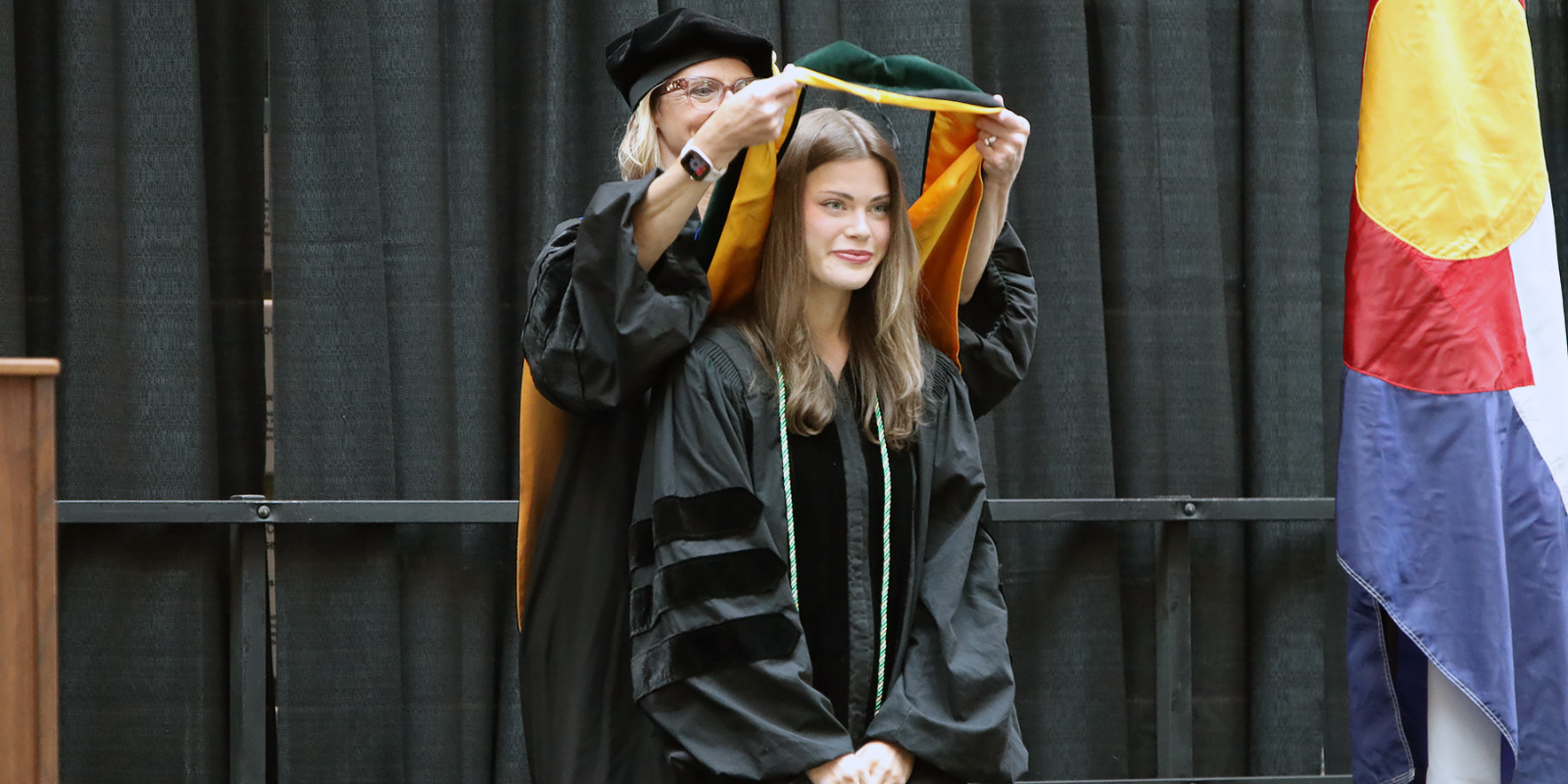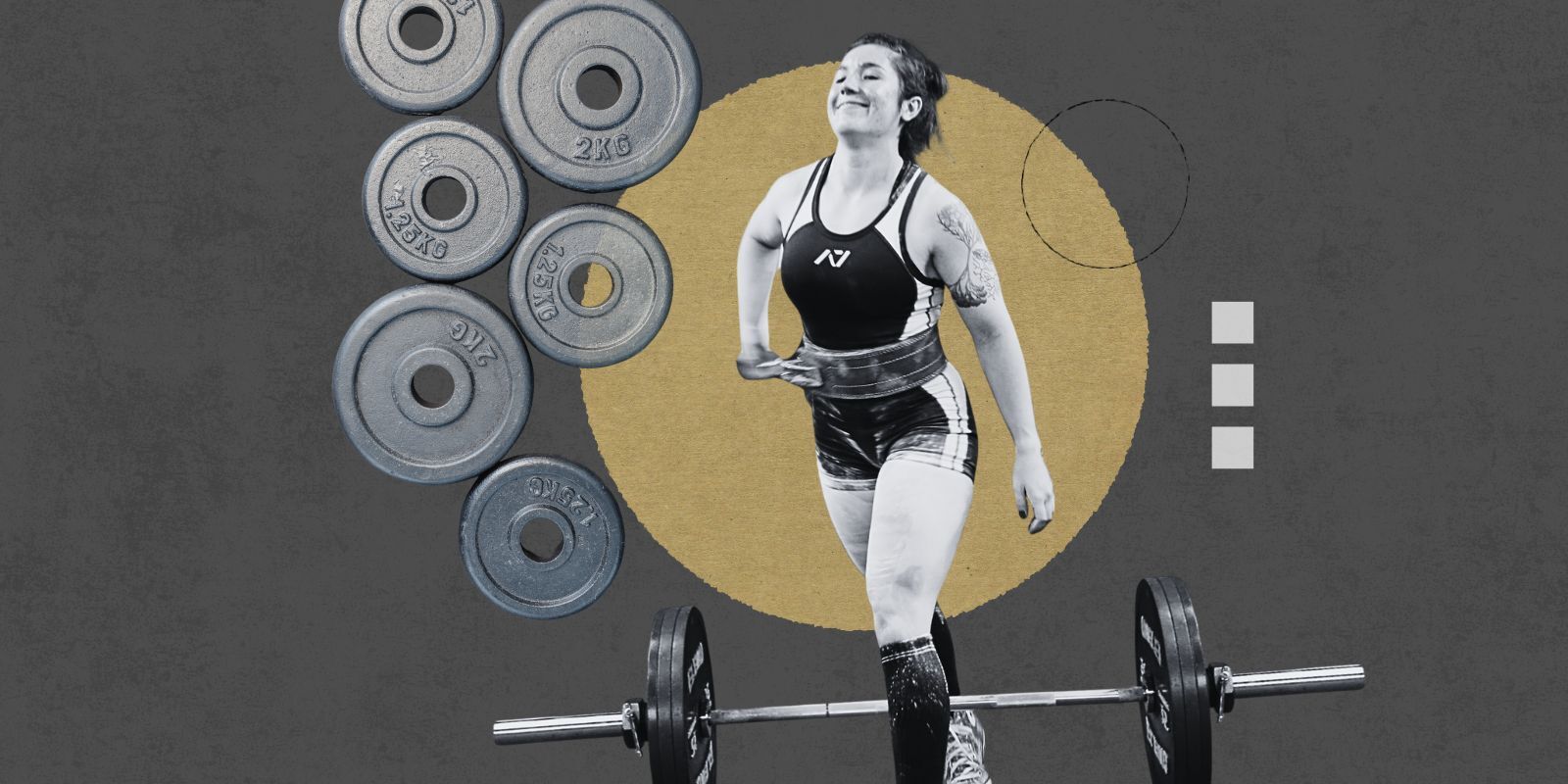
Go to school. Go to practice. Do homework. Study. Go to bed. Wake up and do it all again.
That’s how Tessa Petersell remembers her childhood as a gymnast. “I wouldn’t want to do life again without it,” says the University of Colorado Anschutz School of Medicine student. “It truly made me who I am today.”
Not much about that routine has changed for Petersell, who is in her second year at the Fort Collins Regional Medical Campus, a branch of the CU Anschutz School of Medicine. Except these days, her time in the gym is focused on powerlifting and her time studying revolves around the human body.
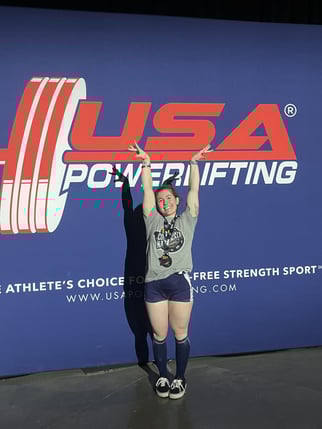
Her dedication has paid off. In April, Petersell will compete in the USA Powerlifting Collegiate Nationals meet in Louisiana. Last year, her first time at nationals, was only her second meet ever. Her first was what qualified her for the national competition.
Last year at the national meet for college students, Petersell’s best squat was 336lbs, her best bench was 209lbs, and her best deadlift was 380lbs – all personal bests in a meet.
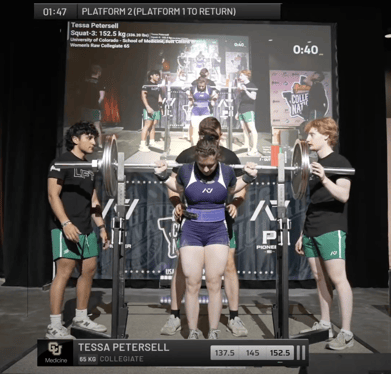 Gymnast-turned-powerlifter Tessa Petersell's first meet out was to qualify for a national tournament. Photos courtesy of Tessa Petersell.
“I’ve been lifting for about seven years. I took one class in high school because I needed a physical education credit and kept lifting after retiring from gymnastics,” she says. “It wasn’t officially powerlifting, but I really liked it and I was decently good at it.”
Friends at the gym kept nudging her to compete. Finally, last year, she says she bit the bullet, “I signed up for a meet without any coach or anything. I told myself I’ll figure it out. I'll read the rule book. It'll be fine.”
Heavy lifting
Petersell competes individually, which means she must lift more weight — approximately 920lbs among squat, bench, and deadlift — to qualify for the national competition than if she did as part of a team.
“My classmates are always joking about how much I can lift,” she says.
Already, Petersell has set a regional record on the bench in the collegiate atmosphere. She benched 95kg, which equates to about 210lbs.
Lifting that much takes a lot of practice, dedication, and training. So does getting through medical school.
“Medical school is hard, but it’s rewarding. Powerlifting is hard, but it’s rewarding,” she says. “Doing them together is super hard, but I love it. It’s definitely my personality.”
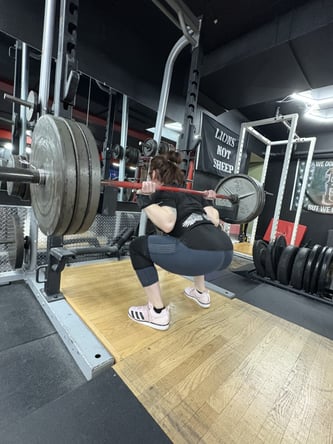
Petersell now has a coach, a national referee who she met at her gym, and a community that she says keeps her motivated, in powerlifting and in school.
“Everybody that learns I compete in powerlifting and go to the gym as often as I do asks how I do it,” she says.
Petersell often trains five days a week, making time after her clinic hours and squeezing in studying, sometimes in five-minute increments, between sets at the gym.
“It’s just a priority for me,” she says. “I have to spend that much time at the gym to be at the level I want to be at. I have to make the sacrifice and study at the same time.”
Sports and medicine
In many ways, Petersell says her life as a gymnast was a segway into medical school and powerlifting.
“I was always hurt as a gymnast. Most of my friends were, too,” she says. “I went to the doctor so many times for injuries and so I started thinking about my injuries, my friends’ injuries, and our treatment plans. It picked up from there.”
Petersell would like to stay in the realm of sports medicine after medical school. The specialty sits at the intersection of her two passions.
“I had a high school teacher who said diet and exercise are the Jesus of biology and that’s always stuck with me,” she says. Now, when she’s working with patients as a medical student, she finds herself thinking about how lifestyle changes can make a big difference and how everybody can find a way to augment exercise that works for them.
Studying medicine has its perks in powerlifting, too.
“I’m always thinking about how to optimize a lift for how my body works. Everybody wants to do the perfect squat, but there is no perfect way because everybody’s anatomy is different. But if you think about the physics and how your body moves, there’s a perfect squat for you," she says. "Find the way that your feet can drive the most force through the ground or exert the most power against the bar. The same way medicine should be individualized to the patient, exercise should be individualized to the athlete.”
.png)