

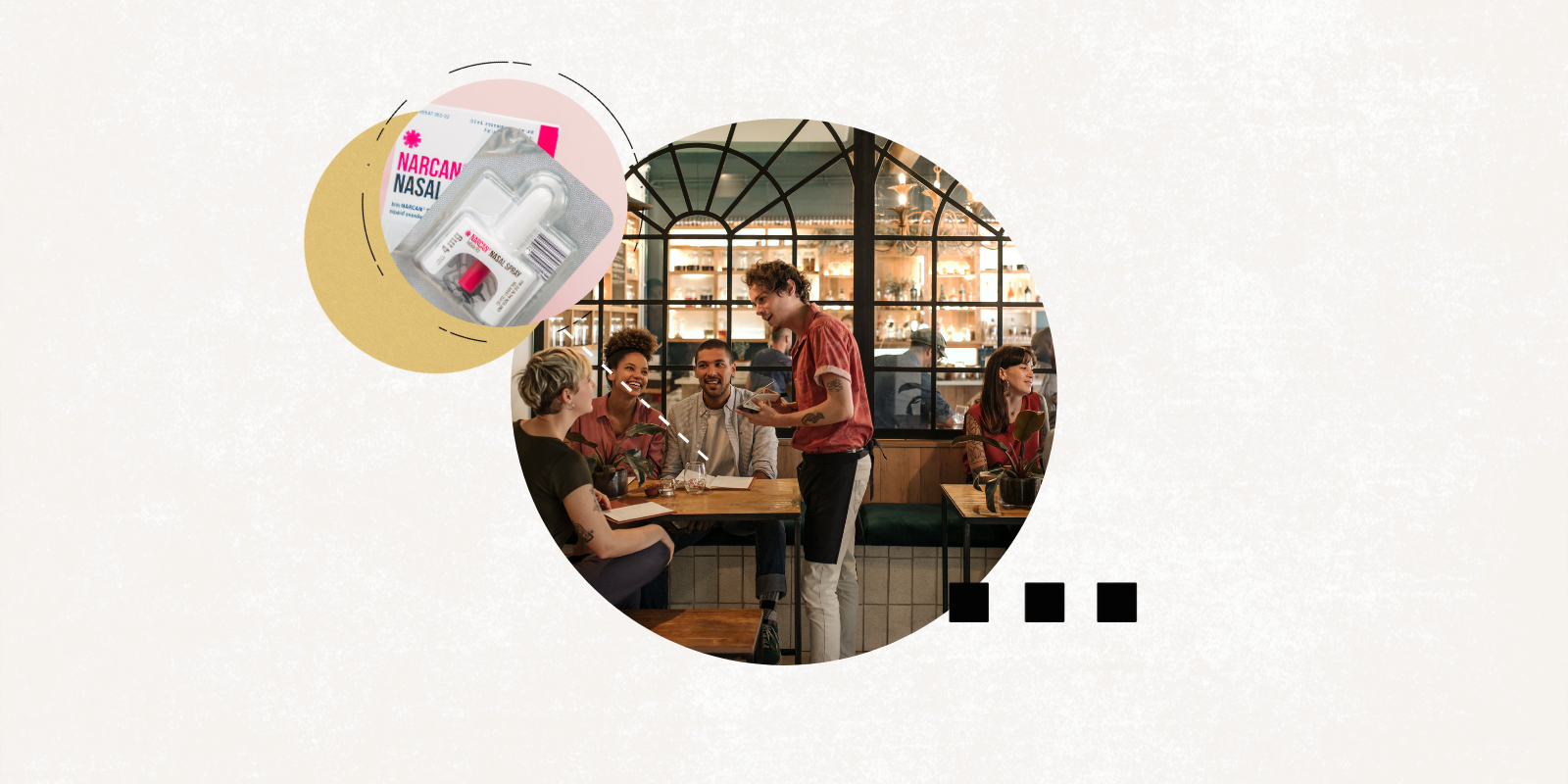
Drug overdoses have risen more than 20% in Denver through July of this year, pushing the city toward its highest overdose levels since 2023, when nearly 600 people died from drug use. Restaurant workers are often at the center of the deadly opioid crisis, either personally as a high-risk group or as observers at the hub of the city’s social scene.
Now, thanks to a Centers for Health, Work & Environment-led community collaboration, these workers are being given a simple tool with an immense power – the ability to slam shut death’s door at the threshold.
“The hospitality industry is both vital to Colorado’s economy and deeply impacted by the overdose crisis,” said David Shapiro, assistant director of programs and partnerships at the Centers for Health, Work & Environment at the Colorado School of Public Health.
In response, Shapiro collaborated with CHOW – Culinary Hospitality Outreach and Wellness – a nonprofit that helps hospitality workers with mental health and substance misuse. Together, they are providing 15 hospitality businesses across Colorado with an overdose emergency cabinet equipped with Narcan (naloxone) – a nasal spray that can be easily administered to rapidly reverse an opioid overdose.
“Our collaboration with CHOW is helping to equip workplaces with lifesaving tools and education, to promote safety, resiliency and care,” Shapiro said.
Normalizing harm reduction in public spaces
Hospitality workers find themselves in a unique position. Workers in the food and beverage industry have front-row seats to people experiencing substance use and mental health issues based on geographic location alone. Take the restaurant group Olive & Finch, which recently opened a location in Denver’s Union Station – a downtown, high-traffic area where people from all demographics and experiences converge.
“Having this kit means a lot to us – not just because of the diverse guests we encounter, but also because it supports our team as they navigate those interactions,” said Nokkie Lipsey, director of brand and experiences for Olive & Finch.
As a demographic, food and beverage workers experience higher rates of illicit drug use and substance use disorders than other industries, according to a study by the Substance Abuse and Mental Health Services Administration.
It’s something Jasmin Parks-Papadopoulos understands through her own experiences as a third-generation hospitality worker and daughter of a chef. She credits CHOW for helping her find better balance and health in 2020. Today, she serves as the organization’s chief growth officer, ensuring her peers in the hospitality industry have access to mental health, substance-use recovery and general wellness support.
Her role includes listening to the stories of so many impacted by the COVID-19 pandemic.
“We haven’t even begun to unpack the global trauma food and beverage workers faced after being deemed ‘essential’ workers, who weren’t compensated or treated as such,” she said. “We knew the negative experiences these front-line workers in food, beverage and hospitality were having, but we’re only just realizing the scope.”
Helping people unpack their experiences through weekly meetings provides industry workers space to acknowledge pain, outside of screaming or crying alone in a restaurant’s walk-in cooler.
Harm reduction is a public health strategy that helps minimize negative health consequences of drug use. It aims to meet people “where they are” without judgment, and includes a range of health and social services, centering around safety and dignity.
Community care as an antidote
Historically, the food, beverage and hospitality industry has relied heavily on community care. The restaurant industry is one of the largest private sector employers, representing approximately 10% of the U.S. workforce.
It’s also a demographic of marginalized and underrepresented – and largely uninsured. Without access to healthcare, Parks-Papadopoulos fears many people are lost.
“Standing shoulder to shoulder and empowering folks with resources and education is a way to create community care,” she said. “It’s also a way we’re working to shift the culture and rally in times of crisis.”
Creating space for cultural shifts is part of this public health collaboration. It’s CHOW’s goal to make Narcan and other harm-reduction tools as normal and expected as bandages and sanitizing wipes in restaurants and bars throughout Colorado.
“We haven’t even begun to unpack the global trauma food and beverage workers faced after being deemed ‘essential’ workers, who weren’t compensated or treated as such. We knew the negative experiences these front-line workers in food, beverage and hospitality were having, but we’re only just realizing the scope.” – Jasmin Parks-Papadopoulos
Bringing attention to a public health crisis
In addition to lifesaving medication, each overdose emergency cabinet will be paired with a community pledge to promote cultural change, encouraging judgment-free, empathetic communication and education for guests and hospitality workers alike.
“Together, we can create protected spaces where there’s no judgment, centered in education and empathy for anyone who walks through the door,” Parks-Papadopoulos said.
For Karla Dechamps, restaurant manager for Cart-Driver in Denver’s RiNo neighborhood, having an emergency overdose cabinet in their space is like having a fire extinguisher in the kitchen. You hope you don’t have to use it, but you’re glad it’s there, just in case.
“Hopefully, we’re never in a situation where we need to administer Narcan, but having access to it as a safety net is an important message we want to bring to our staff and community,” she said.
She understands that ignoring the opioid crisis won’t make it go away.
“We can’t just hope it’ll never happen in our spaces," Dechamps said. “We have a responsibility to make sure that we are doing everything we can to make sure people are as safe as possible.”
Like Lipsey, Dechamps believes having a visible harm-reduction kit lets people in their communities know they are safe and that they care.
Connection is said by many in recovery communities to be an antidote to addiction.
“When we create these small hubs of connection, we trust in the ripple effect they have across our communities. The impact extends beyond food, beverage and hospitality – these cabinets occupy a physical place in a neighborhood, and we believe they will help spark meaningful change,” Parks-Papadopoulos said.
What are opioids, and what are signs of overdose?
Opioids are natural or synthetic drugs that reduce pain signals to the brain by attaching to receptors in the central nervous system. Commonly used opioids include pharmaceuticals such as oxycodone and morphine and illicit drugs such as heroin and fentanyl. Opioids are highly addictive, and in high doses depress the body’s natural urge to breathe, which can lead to brain damage and death. Signs of overdose include:
- Unresponsiveness to voice or touch
- Slow, irregular or stopped breathing
- Inability to be woken up
- Snoring or gurgling sounds
- Blue lips and fingernails
- Pale or clammy skin
Related: A CU Doctor Explains Why You Should Learn How to Administer Narcan
.jpg)
.png)