
<img height="1" width="1" style="display:none" src="https://www.facebook.com/tr?id=799546403794687&amp;ev=PageView&amp;noscript=1">

How Dementia with Lewy Bodies Is Diagnosed: A Neurologist Explains Symptoms, Testing and New Treatments

Understanding the gray areas that come when exploring the gray matter of the brain

minute read

by Matthew Hastings | September 1, 2026
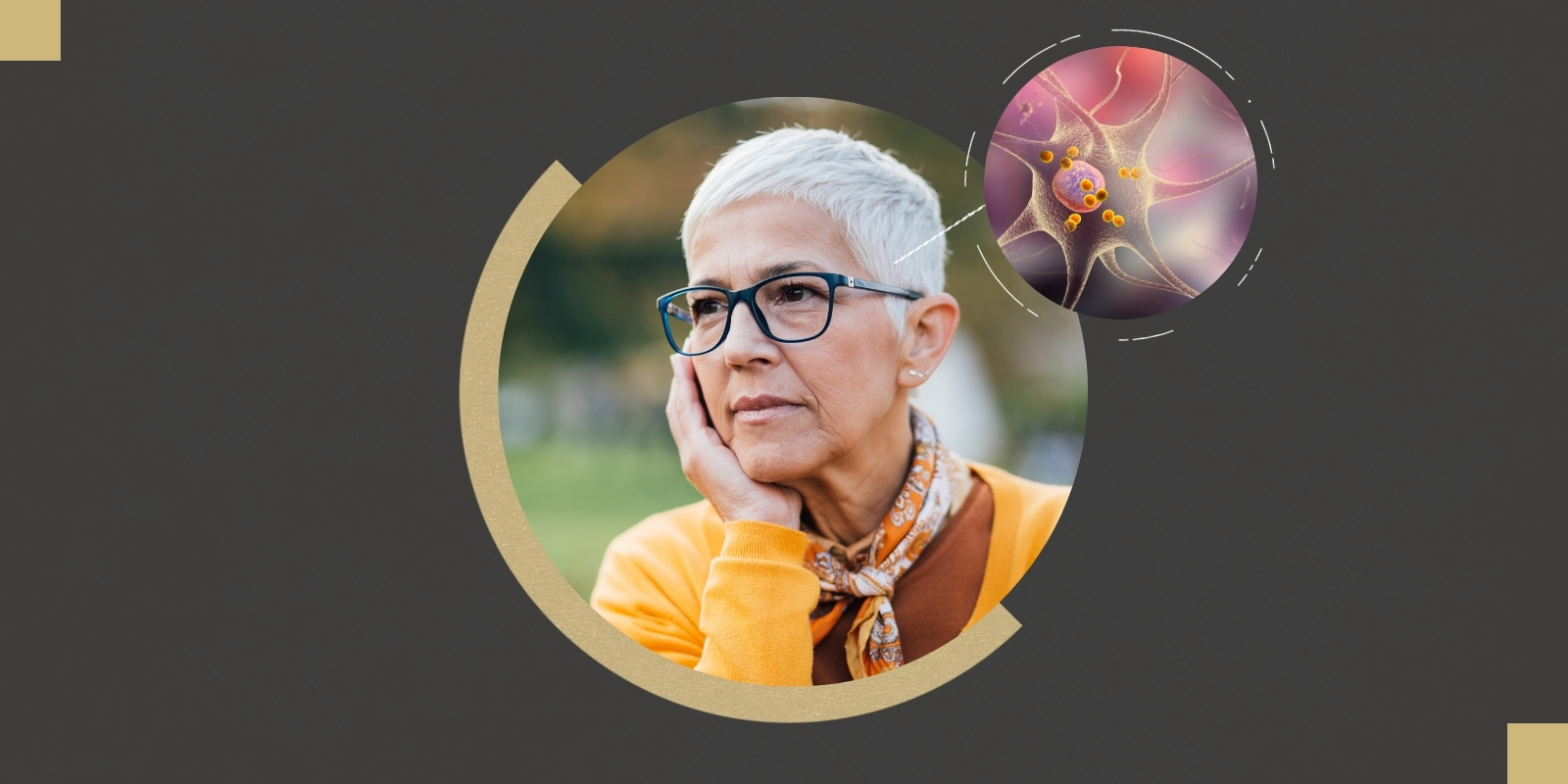
An older individual in a yellow sweater holds their cheek in their hand. A stylized bubble pops out from next to hear to show a neuron affected with Lewy body.

The takeaway: Lewy body dementia accounts for up to 20% of dementia cases and is closely related to Parkinson’s disease due to the buildup of a protein in neurons in the brain. It can be difficult to diagnose, but new tests and approaches, combined with new drugs, are improving treatment and care. A neurologist recommends seeking help if you are having trouble with thinking and memory to identify the specific cause.  

Getting to the bottom of dementia symptoms for an accurate diagnosis takes a particular kind of detective.

Enter Samantha Holden, MD, associate professor of neurology, cognitive and movement disorders neurologist and director of the Lewy Body Dementia Association Research Center of Excellence at CU Anschutz.

“Dementia is a general, umbrella term that is defined by a decline in a person’s thinking and memory that is abnormal for that individual, affecting their daily independence and day-to-day life. It can't be a baseline impairment or a cognitive disability. Under that umbrella of dementia, there's probably dozens of different causes.”

But identifying those impairments and their causes is often a puzzle, one that gets more complex when discussing dementia with Lewy bodies – caused by a buildup of a particular protein in neurons – that can have symptoms both typical of dementia and Parkinson’s disease.

“Patients that have what we would now describe as dementia with Lewy bodies were going into Alzheimer’s clinics looking for answers,” Holden said. “Doctors and specialists would be confused by the presentation of their symptoms, since it varied so much from Alzheimer’s disease. And if you're not seeing the full picture and addressing and evaluating all those pieces, you might come to the wrong conclusion if you're looking at it from a different angle.”

In the following Q&A, Holden describes how the field of Lewy body dementia is improving diagnostics and patient care through enhanced screening, new drugs and therapeutics, and a personalized care approach.

Q&A Header

What are the main types of neurodegenerative dementia?

There are three main categories of neurodegenerative dementia:

  • Alzheimer's disease is the most common, accounting for 60 to 70% of neurodegenerative dementias. It’s characterized by plaques and tangles building up in the brain. It causes brain cell loss primarily in the short-term memory center early on, which usually shows up as forgetfulness and difficulty with keeping track of dates and times and appointments.
  • The second most common is Lewy body dementia, accounting for about 10 to 20% of dementia cases. This is an umbrella term that includes both dementia with Lewy bodies and Parkinson’s disease dementia. The only difference between the two is the prominence and the timing of trouble moving your body (Parkinson’s) versus trouble with thinking and memory (dementia with Lewy bodies). Common features in both conditions are slowness of body movements, visual hallucinations and acting out of dreams.
  • And finally there is frontotemporal dementia, which is less common overall, accounting for 5-10% of cases. It manifests as personality, behavior or language changes rather than memory changes.

What causes Lewy body dementia?

A Lewy body is a small protein-filled bubble inside your neurons. They’re small collections of abnormal protein – called alpha-synuclein – inside the neuron. We’re still trying to figure out why these develop.

Both people with Parkinson's disease as well as with dementia with Lewy bodies have Lewy bodies in their brains. I think of these conditions on more of a disease spectrum rather than split them apart. Really the overlap between Parkinson's and dementia with Lewy bodies is very significant in terms of both symptoms and underlying brain changes.

However, the difference between Parkinson's and dementia with Lewy bodies is twofold: where those Lewy bodies are accumulating in the brain and how that affects you. In Parkinson's disease without dementia, the Lewy bodies affect the body movement areas first; in dementia with Lewy bodies, they affect the thinking and memory areas first.

Dementia with Lewy bodies is a newer diagnostic term first published in 1996. For comparison, Alzheimer’s was first described at the turn of the 20th century, and Parkinson’s disease was formally described in the early 1800s.  

Are there tests in development to assist with expanding the dementia diagnosis toolset?

There are now more easily obtainable biomarkers for the likelihood of amyloid positivity associated with Alzheimer’s disease – a blood test called PTau217. It's been out for a little over a year now, and it was FDA-approved to screen people who have a clinical syndrome consistent with Alzheimer's – progressive, short-term memory loss, with no other good reason for it, over the age of 50.

However, the tests have to come with broader evaluation. What do we do with this information? Does this mean you have to go see the neurologist or not? What additional tests should be used for confirmation and planning? I think the science is moving very quickly, and the clinical practice is not moving as fast right now.

There are so many gray areas in neurology. We’ll have to balance these new tests with complete evaluation as things move forward.

“How does this little lump of meat inside your head make you who you are and all the things that you've experienced, learned and been exposed to in your life that have made you this really unique human being? We work with patients to really get to the core of what makes us ‘us’ and then try to figure out why things are changing and how we best preserve who you are as a person.” – Samantha Holden, MD 

Does dementia diagnosis include both testing and a relationship-building aspect?

Correct. Because we don’t have a way to open up the hood and look and say, "Oh, it's 100% this change in your brain;” we can’t directly examine brain tissue that closely while you are alive. That’s slowly changing as there have been advancements in identifying new biomarkers that will show us where alpha-synuclein is, such as skin biopsies. The goal is to have a blood test for alpha-synuclein for Lewy body diseases, like we now have with PTau217 for Alzheimer’s.

We also use brain MRIs, other blood tests, spinal fluid tests and PET scans to understand what is changing in a person’s brain. Alongside that, we go through a battery of questions when we get to know a person. Do we see these changes on cognitive testing? How is it affecting their day-to-day life? Is there something else going on that's stressing this brain out secondarily that we could potentially fix for them?

The better we know our patients over time and seeing if, and how, things change helps us be more confident that we're on the right track.

Are there any other screening and prevention gaps that are frustrating that you're working on trying to fix.

There’s three main issues that need to be addressed:

  • A lack of access. At CU Anschutz, we have one of the biggest groups of memory specialists in the country, and there are only six of us. There’s only around 500 behavioral neurologists and neuropsychiatrist specialists in this particular discipline in the entire country. There’s 10 million people living with dementia in the United States. So the question becomes: How do we extend our reach?
  • An educational gap. There is a large disconnect between those people who are informed and aware of what they should be looking out for with their cognition versus the people who think, "Nope, it's just getting older. Brush it off. I don't need to see anybody," or even, "Well, why bother? There's nothing they can do about it anyway."
  • A need for a public health approach. There’s so many pieces of the puzzle that are either being ignored or downplayed or that put all of that responsibility onto the individual to take care of themselves. Sure you should get good sleep, stay active, eat a healthy Mediterranean-style diet and keep your blood pressure and blood sugar under control. But there really needs to be more of a public health approach to reduce dementia. Air and water pollution, pesticides and herbicides, where you are living, where you grew up, what you did for a living all play a role in your future dementia risk.

What are you working on now to improve things for patients with Lewy body dementia?

There are a few things we’re working on to be more proactive, preventative and more personalized in our diagnoses and treatments:

  • A fellowship training program: We need more people joining this field of medicine, realizing we’re on the precipice of something really revolutionary here – it's not all doom and gloom.
  • New therapeutics: We have two anti-amyloid therapies approved for use in people with early Alzheimer’s and my close colleague, Dr. Tara Carlisle, has developed the Advanced Therapies in Neurodegenerative Diseases Clinic at CU to be able to offer these treatments, as well as any future additional disease-modifying therapies for dementia. We have about 70 people who have been actively receiving those drugs. And while their benefits are modest, they slow progression down a bit, by about 30%.
  • Personalized treatments: I think cognitive neurology and neurodegeneration is where oncology was 15 years ago – killing good cells alongside cancer cells. And now therapies can be so tailored and precise and personalized for your specific cancer. I think that's where we're going to be hopefully no more than 15 years from now in neurology where we're able to have this precision medicine approach. We are setting the infrastructure and foundational work for this future with the current anti-amyloid therapies.
  • Improving prevention: We have a healthy brain aging clinic that is mostly done via telehealth. Working with people who don’t have cognitive changes but have a family history of dementia or the APOE4 gene, we can do some baseline assessments and counseling to work toward better early intervention. Additionally, we’re partnering with the cardiometabolic clinic where they're seeing people for midlife cardiovascular and metabolic risk factor modification, which is when a lot of that risk for future dementia is laid down.

Holden notes it’s helpful to place these therapies and their development in context. Between 2003 and 2023 there were only four FDA-approved drugs, and they were only mildly helpful for the symptoms of memory loss but didn’t change the brain, she says. “And now to have two new drugs that do change the trajectory, even slightly? We'll take it.” 

How do you work with the challenges of the role?

Would I rather people never needed me at all and that this never happened to them? Absolutely. But I’m always glad they find their way to me and we can do our best to understand what is going on in their brain and how to take care of it together.

I find hope to be therapeutic itself. And it doesn’t have to be a hope just for a cure. It can be hope for symptom control, for getting to a grandson's wedding.

What I have found is that most people living with these conditions do still want to hear what's going to be coming in terms of new information and research, even if it won’t personally benefit them. We have to show up for them and promise to continuously improve for them and those who come after.

Key points:

  • Dementia with Lewy bodies is caused by a protein buildup in neurons. It is closely related to Parkinson’s disease.
  • A new blood test called PTau217 can be useful alongside other diagnostic tools and criteria to help determine the likelihood that Alzheimer’s disease is the cause of memory changes.
  • The field of care for dementia with Lewy bodies and other cognitive conditions is at a point of great transformation, similar to cancer care 15 years ago, with the potential for personalized treatments to help patients.

Featured Experts
Staff Mention

Samantha Holden, MD