

Just as every human body starts with one cell, every healthcare advancement begins with basic science. No matter how amazing the end result is, scientific success stories generally originate with a single idea in a single lab and take decades of persistent teamwork to become something of note – if they ever even do.
Take today’s leading weight-loss drugs, for example. These suddenly widely known medications are transforming the treatment of diabetes, obesity and more, yet few people know the unusual, decades-long story of how they came to be.
“We’ve all seen the headlines about GLP-1 drugs,” said CU Anschutz Chancellor Don Elliman, kicking off the program during the 2026 Transforming Healthcare lecture series on April 28. “They’re often described as overnight breakthroughs. “But as you’ll hear tonight, breakthroughs like these are anything but overnight.”
The drugs – such as Ozempic and Wegovy (semaglutide) and Mounjaro and Zepbound (tirzepatide) – are transforming healthcare. The medications that started as a treatment for diabetes, regulating patients’ insulin and blood sugar with a weekly injection, have evolved into what some are calling wonder drugs.
Addiction, Alzheimer’s, rheumatoid arthritis and cardiovascular disease are just some of the areas beyond obesity and diabetes showing potential as GLP-1 targets and igniting research around the globe – all due to the underrecognized power of basic science.
Below are brief highlights from the lineup of CU Anschutz researchers who shared their work (related and unrelated to GLP-1s) as part of the Transforming Healthcare event followed by a full video of the presentation.
Lori Sussel, PhD, associate vice chancellor for basic science at CU Anschutz and research director at the Barbara Davis Center for Diabetes, shared the history and mechanisms of GLP-1s.
- In the 1980s, Joel Habener, MD, discovered a gut hormone – GLP-1 (glucagon-like peptide-1)–that had the potential to stimulate insulin secretion when glucose was elevated, a process generally performed by the pancreas that fails in people with diabetes.
- Daniel Drucker, MD, then a postdoctoral fellow in the Habener lab, characterized the enzymatic activity of GLP-1, while Jens Juul Holst, MD, at the University of Copehagen, simulatenously discovered GLP-1 regulated insulin secretion.
- Several investigators attempted to develop diabetes drugs based on GLP-1, but the natural hormone broke down too rapidly.
- In the 1990s, investigators learned that Gila monsters – a venomous lizard – produced a hormone similar to GLP-1.
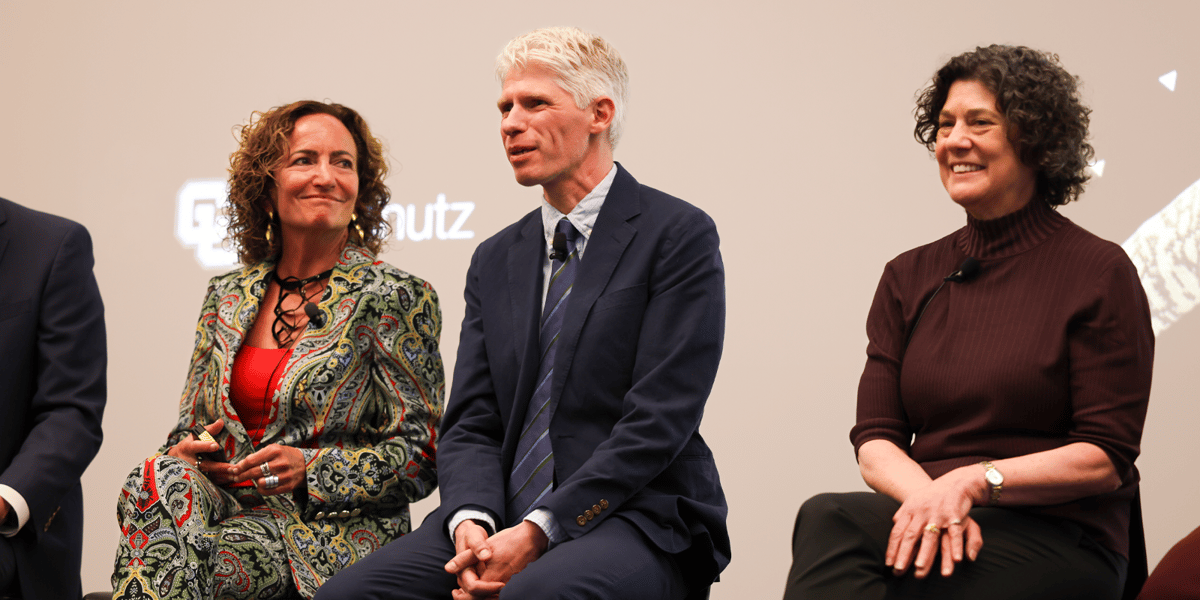
- After obtaining the lizard’s DNA, Lotte Knudsen, DMSc, at Novo Nordisk developed a long-acting form of GLP-1 that became the drug that mimics the human hormone.
- In 2005, more than 15 years later, the first GLP-1 drug for diabetes was approved.
- Soon, weight loss and improved cardiovascular health were noted in patients taking the breakthrough medication for diabetes, sparking approval of related drugs for obesity.
- Today’s mass use of GLP-1s has opened the door for scientists to explore other potential treatment uses for the drug, including for addiction, Alzheimer’s and liver, kidney and autoimmune disease.
- Unknowns and downsides exist, including potential side effects, high cost, weight regain after stopping the drug, non-response by some people and possible muscle and bone density loss.
Joseph Schacht, PhD, associate professor of psychiatry, talked about GLP-1s’ psychological effects and potential as an addiction treatment.
- GLP-1s have helped raise awareness that obesity and addiction are biological diseases rooted in the body and the brain rather than character fllaws.
- In the brain, GLP-1s reduce appetite and cravings (the fundamental mechanism of addictive disease).
- Alcohol use disorder (AUD) is the third-leading cause of preventable death in the United States, yet there are only three modestly effective drugs for treatment, the last one approved in 2006.
- Studies have shown GLP-1s reduce the desire to drink in people taking them for other conditions.
- In his own clinical trial on campus, Schacht found semaglutide notably reduced drinking in a group of severe AUD patients compared to placebo.
- Recent funding from the Congressionally Directed Medical Research Program will support a multi-site study that should kick off by the end of the year, and Schacht suspects approval of a GLP-1 drug for AUD in less than three years.
- Osteoarthritis (OA) is a degenerative disease of the cartilage (the tissue that cushions the joints) and a top cause of disability.
- Sports-related and other injuries plus normal wear and tear on joints can lead to OA.
- Cartilage has no blood vessels or nerves, and its cells divide very slowly, leaving it unable to heal itself on its own.
- Pain progresses as the cartilage loss increases, requiring stronger pain-relief options and leading to disability or joint replacement once those options run out.
- In collaboration with scientists at CU Boulder and Colorado State University, Payne’s lab is part of a moonshot project funded by the federal government aimed at developing a regenerative approach to cure OA.
- Made up of small particles of biomaterials that are engineered to release little bursts of the regenerative drug over a long period of time, the injected drug aims to jumpstart cells to produce new cartilage tissue in the lab and possibly someday in humans.
- For those with more advanced OA, the researchers are working to develop a regenerative “hydrogel" to fill the cartilage gaps. The hydrogel contains a cocktail of proteins that recruit a patient’s own cells to the gap and help return damaged cartilage to a healthy state.
- The technology could transform care for the 32 million Americans living with the disease.
Julia Promisel Cooper, PhD, professor of Biochemistry and Molecular Genetics and CU Medicine Endowed Chair, highlighted the campus’s pioneering work on telomeres.
- A single cell divides trillions of times in order to form a human, a process that continues constantly throughout life.
- The job descriptions for those cells are contained inside the chromosomes, which also duplicate with each division.
- On the ends of chromosomes are telomeres, structures that act like protective bookends, protecting DNA from being worn down or incorrectly joined with other chromosomes.
- As we age, telomeres shorten, leaving the information crucial for healthy cell function vulnerable.
- When cells undergo mitosis, the process that normally leads to perfect duplication and distribution of chromosomal information to each cell, vulnerable chromosomes can get pulled apart and fragments mismatched, leading to misinformation.
- Cancer, aging and an unknown number of other changes can ensue.
- Many top experts on campus are working to better understand telomeres. Their work can further research into aging, cancer, Alzheimer's, fertility, degenerative diseases and more.
“We’ve all seen the headlines about GLP-1 drugs. They’re often described as overnight breakthroughs. But as you’ll hear tonight, breakthroughs like these are anything but overnight.” – Chancellor Don Elliman
Michael Holers, MD, Faculty Ventures director at CU Anschutz Innovations and Smyth Professor of Rheumatology, shared a story of his own research that illustrates how far back basic science can go – and how CU Anschutz is helping move its scientists’ ideas forward faster.
- With antibiotics yet to be invented, scientists in the 1890s pioneered the field of immunotherapy by injecting bacteria into horses and then extracting the antibody-rich serum to use as treatment for humans.
- When studying how the serum worked, the researchers identified antibodies and another factor called complement — a complex blood-borne immune defense network designed to fight infection.
- In the 1980s, Holers theorized that the complement system might be activated not just during infection but with other diseases, such as arthritis, lupus, lung disease and Alzheimer's.
- In subsequent years, he and his colleagues were able to find evidence that the same system used to fight infection could be mobilized and redirected to attack healthy tissue, leading to autoimmune disease.
- More recently, his team was able to develop a targeted drug for lupus that goes directly to the site of inflammation to halt the misguided attack.
- With the help of CU Anschutz Innovations, the research team launched a startup to further advance these new therapies and will soon find if their fundamental discovery works.
- Within CU Anschutz Innovations, there are funding mechanisms and business development operations that allow faculty with promising ideas to move their discoveries rapidly forward to improve health and well-being.
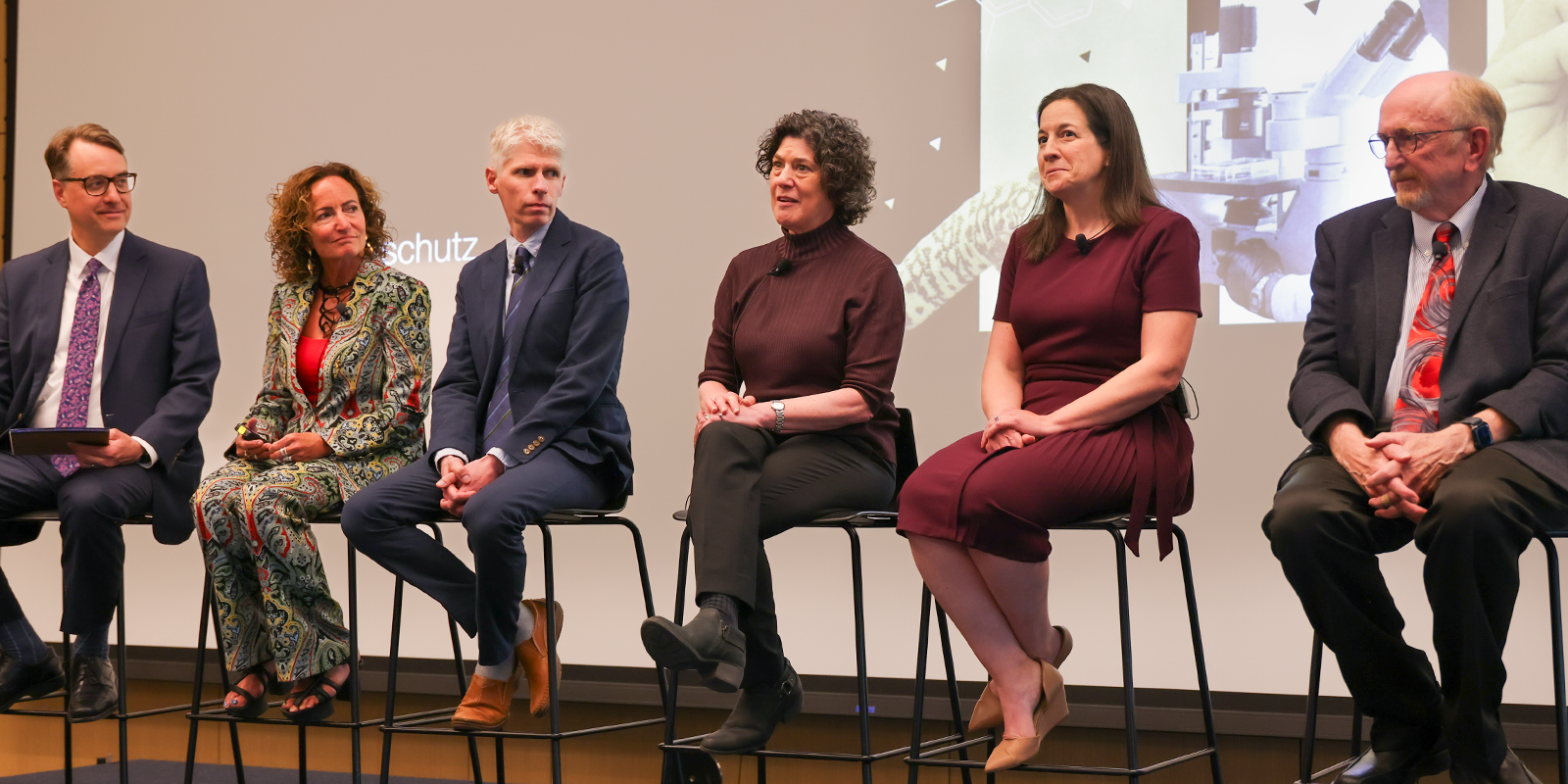
Photo at top: From left to right: Thomas Flaig, MD; Julia Promisel Cooper, PhD; Joseph Schacht, PhD; Lori Sussel, PhD; Karin Payne PhD; and Michael Holers, MD, answer audience questions at the end of the 2026 Transforming Healthcare event.
Watch the full video of Tranforming Healthcare: From Lizard Venom to Life-Saving Medicine presentation:


%20(1).png)

.jpg)