<img height="1" width="1" style="display:none" src="https://www.facebook.com/tr?id=799546403794687&amp;ev=PageView&amp;noscript=1">

How Multiple Sclerosis Affects Women During Pregnancy, Periods and Menopause

Top MS experts at CU Anschutz can guide patients through life’s reproductive stages using new medications and strategies

minute read

by Debra Melani | March 16, 2026
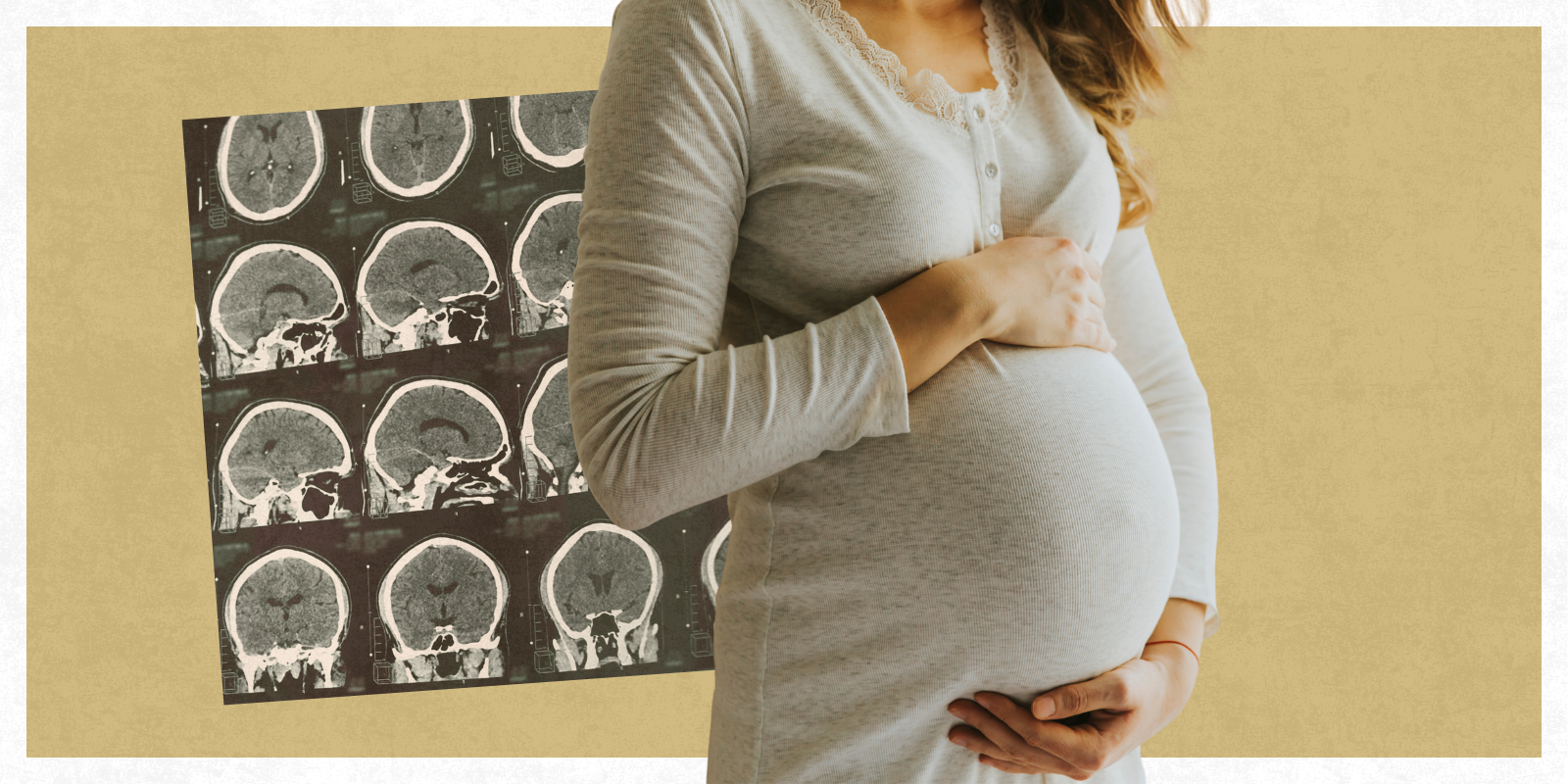
A pregnant woman cradles her round belly. A scan with multiple brain images is in the background

Many women diagnosed with multiple sclerosis (MS) worry that pregnancy and hormones will worsen their symptoms. Sometimes, these women give into those concerns and choose not to have children, despite always having wanted a family. It’s a reality that one CU Anschutz neurologist wants to see changed.

With today’s research and advanced treatment strategies, doctors can better guide women with MS through all major reproductive stages, from menstruation and pregnancy to postpartum and menopause.

“If a woman doesn’t have a baby because she doesn’t want to have children, that’s great,” said Anna Shah, MD, an assistant professor of neurology at the CU Anschutz School of Medicine. “But if a woman doesn’t have children because she feels like she can’t because of her diagnosis of multiple sclerosis, that’s not acceptable in today’s modern era of medicine.”

Shah’s passion fuels her work as a scientist, educator and doctor focused on women and family planning at the Rocky Mountain MS Center at CU Anschutz, a Center of Excellence. Women are diagnosed with MS at three times the rate of men between the ages of 18 and 45, their prime reproductive years.


Key points:

  • Multiple sclerosis (MS) affects women up to three times more often than men, typically between the ages of 18 and 45.
  • Hormonal transitions during reproductive stages, such as menstruation, pregnancy, and menopause, can influence MS symptoms.
  • MS relapse rates can increase by up to 70% after childbirth.
  • Focused treatment strategies before conception may reduce postpartum relapse risk.

“One of the hats that I wear, and that I wear the most proudly, is the mom hat,” said Shah, a mother of three little boys. “And I want to make sure that women can do whatever they want to do, however they want to do that. Hopefully, we're mitigating the risk of this disease getting in the way.”

Although there’s still no cure, treatment advancements have transformed care of MS, an autoimmune disease that attacks the protective coating around the nerves in the brain, eye and spinal cord. In the Q&A below, Shah talks about how MS affects her women patients during the different life stages and how medical guidance can improve care.

The interview was edited for length and clarity.

Q&A Header

Do women with MS avoid pregnancy because of their diagnosis?

In my surveys, about a third of them chose not to have babies because of their MS diagnosis. Which, again, if you do want to have children and you feel like you can't because of this diagnosis, that you don’t have the right resources or education, that breaks my heart.

I'm really optimistic that as we continue to evolve our knowledge of this specific area, that people will have children because they want to or not have them because they don't want to, and MS won't necessarily be as big of a factor in that. 

How does pregnancy affect multiple sclerosis relapses? 

Unlike with some other autoimmune diseases, pregnancy is actually protective in terms of MS disease activity (relapses, or new neurologic symptoms that correlate with new inflammation within the brain and spine). We see this relapse rate decrease significantly as a woman progresses during pregnancy, with some studies indicating a 70% decrease by the third trimester compared to where they were before they got pregnant.

But then there's a flipside. Once women deliver their baby, and obviously you have a decrease in the sex hormones that were previously very high during pregnancy – estrogen and progesterone – that rate of relapses or new neurologic activity in some studies increases by about 70% from where they were before they got pregnant. And there is very clearly this association with sex hormones and inflammation and disease activity. 

Women can have that large of an increase in relapses right after they have a baby?

Yes, can you imagine coming home with a new baby and then all of a sudden you lose your vision? You lose your ability to walk? You lose your ability to balance or hold the baby? I can't imagine how hard that would be. It’s actually what inspired a research project that I've been working on for the past several years on how we might minimize that risk.

Can you share more about that research?

I was seeing all these studies about this 70% increased risk after birth, and I thought: We're not seeing that here. What are we doing that’s different? It's not just magic. Our patients aren’t just healthier or luckier.

So when we started to investigate, we thought that maybe using treatment strategies with particular MS medications at shorter intervals before conception – as we were doing for our women trying to get pregnant – was actually having longer-lasting effects. Maybe it was also protecting from higher relapse rates afterward. And I think we've worked out a treatment strategy in terms of timing of treatments that really mitigates that risk. We are just wrapping up and getting ready to submit a manuscript. I'm excited about that.

Did you know? Because MS affects the body's central nervous system, symptoms range widely. MS can affect swallowing, vision, walking, sleep, mood and cognition. People with MS can experience pain, dizziness, fatigue, bowel problems, bladder problems, spasticity, stiffness, seizures and more.

Can menstrual cycles worsen multiple sclerosis symptoms?

I’m not aware of studies on new symptoms, and I think that’s because we are better at controlling relapses today. But around the time of menstrual cycles, or menses, I will have patients that say, ‘Gosh, these old symptoms I've had seem to recur or feel worse.’ Sometimes they'll say, ‘During the week leading up to my menstrual cycle, my leg will start feeling a little bit more tired, or my vision feels a little wonkier.’

Those symptoms are not necessarily reflective of new inflammation. Rather, they are more often related to old lesions that have existed before. That’s what we call a pseudo relapse or recrudescence. 

How does menopause affect women with MS?

There has long been this idea that when women with MS go through menopause that their rates of disabilities start increasing. But the world of MS is evolving fast. So I think things that were maybe true 10 or 15 years ago are not necessarily true now, because we have so much better ability to control disease activity.

I think one of the things that we do know is that a lot of the symptoms of menopause can amplify MS symptoms. Common menopause symptoms include fatigue, brain fog, difficulty sleeping, hot flashes.

We know you already get fatigue and brain fog as a component of MS. So when you add something else like menopause, it's like a one plus one is five as opposed to a one plus one is two situation. Sometimes I'll have patients say, ‘I just feel like I had a sudden drop-off.’

As we're starting to see more safety data and more general acceptance of hormone replacement therapies, I think it will be interesting to see how that translates to our MS patients in terms of how they feel and what that disease progression looks like.

What is known overall about the role hormones play in the MS sex gap?

There’s a three-fold increase in females getting diagnosed right in between menarche, when they get their first menstrual cycle, and menopause, when their periods cease. Before puberty and after menopause, male and female rates of diagnosis are nearly equal. So thinking about it from just an incidence perspective, you can see that there's very clearly some sort of sex hormone difference. I just don't think we've quite sorted that out yet.

Featured Experts
Staff Mention

Anna Shah, MD