<img height="1" width="1" style="display:none" src="https://www.facebook.com/tr?id=799546403794687&amp;ev=PageView&amp;noscript=1">

Sex Hormones Drive Differences in Mental Health Disorders

Psychiatrist looks for answers to higher depression rate in women in their hormonal fluctuations and oral contraceptive use

minute read

by Debra Melani | August 24, 2025
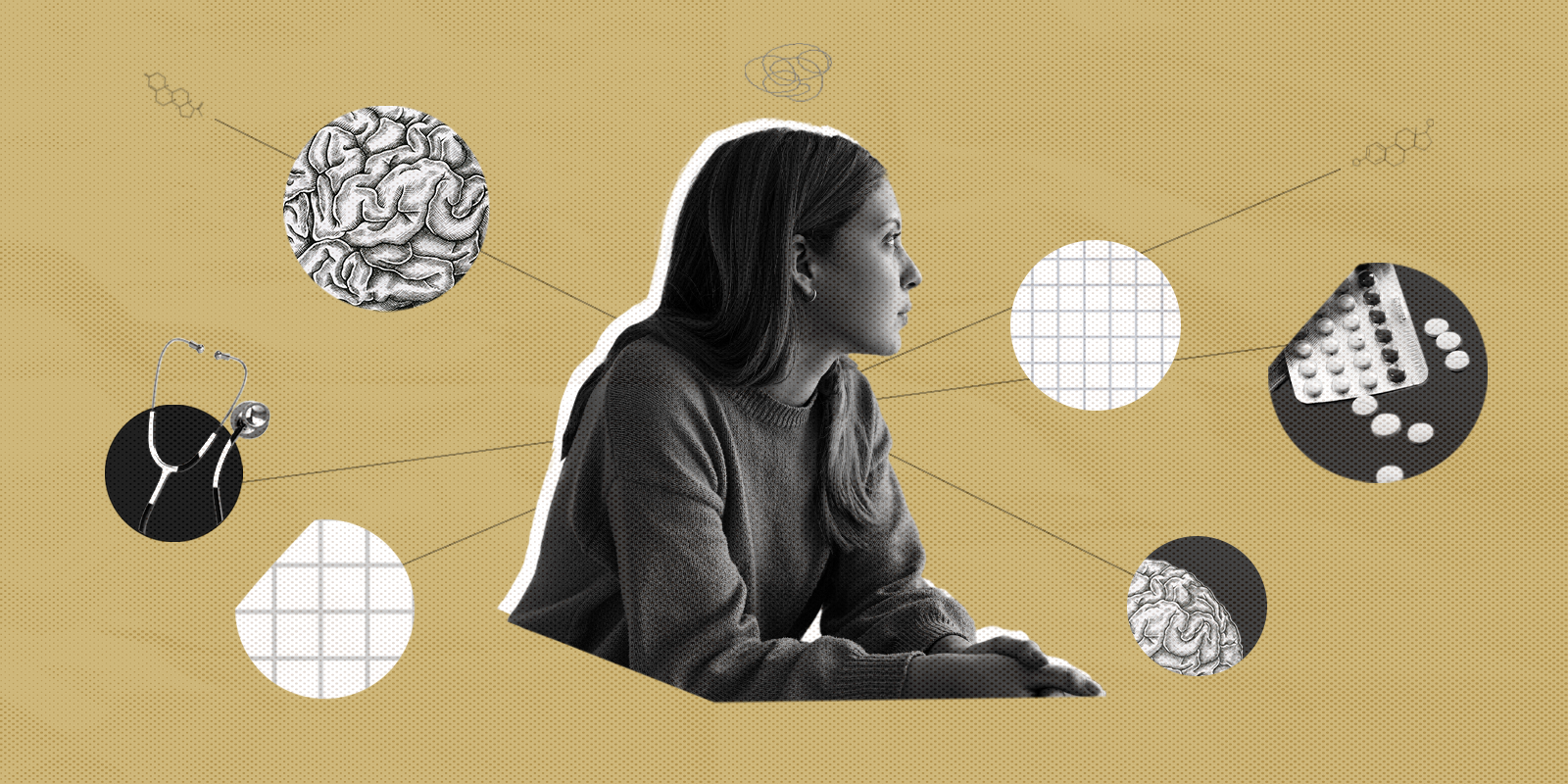
Graphic of a young woman staring soberly into space with circles depicting a brain, an oral contraceptive pill packet and a stethoscope circling around her.

One of Andrew Novick’s go-to stories when explaining sex differences in mental health to psychiatry students involves an archaeological find of a large cache of dinosaur bones at the bottom of a wide ravine.

After further investigation, scientists realized that every skeleton was that of an adolescent male.

“The question then is why?" said Novick, MD, PhD, an assistant professor of psychiatry at the University of Colorado School of Medicine. “The obvious speculation is that it was only the adolescent males who were dumb enough to think that they could jump across the ravine,” Novick said, pointing to testosterone, the male-dominant sex hormone, and its link to risky behaviors.

“The lesson here is that the effects of sex are rather important in shaping behavior.”

With statistics showing women suffer from depression at twice the rate of men, Novick works to uncover reasons behind the gap at the Ludeman Family Center for Women’s Health Research at CU Anschutz. The difference in sex steroid levels – with estrogen, progesterone and testosterone being the “big three” – plays a key role in many mental health sex disparities, he said.

“While mood disorders are most commonly found in females, things like autism and ADHD (attention deficit hyperactivity disorder) very much swing toward males.”

Novick, a reproductive psychiatrist with the Colorado Women's Behavioral Health and Wellness clinic, shares more about his work and the hormonal-related mental health differences women face in the following Q&A.

Mood disorders that can affect women more often than men include:

  • Major depressive disorder
  • Anxiety disorders, including generalized anxiety disorder and social anxiety disorder 
  • Bipolar II disorder
  • Post-traumatic stress disorder
Q&A Header

What is the role of hormones in mood disorder disparities?

Large fluctuations in hormone levels during reproductive health milestones – such as menstruation, pregnancy and menopause –are partly to blame for women’s tendency toward anxiety and depression.

If the brain is constantly having to adapt to changes in these hormones – which play a very large role in brain function, emotional regulation, behavior and cognition – there's going to be a percentage of women who are highly sensitive to these changes, and this can make them vulnerable to certain psychiatric disorders. Men don't have such significant variations.

Did you know? Premenstrual dysphoric disorder (PMDD) is a severe form of premenstrual syndrome (PMS). It includes physical and behavioral symptoms that usually strike one to two weeks before menstruation. Although they generally resolve when menstruation begins, symptoms can disrupt work and damage relationships, requiring treatment. They can include extreme sadness, hopelessness, irritability and anger.

Do social factors come into play in the mental health sex differences?

Yes. You don't need to take a class in women's studies to know that women are paid less, have significant stressors when it comes to motherhood and have more expectations put upon them. And that represents what we would call a stressor. And stressors definitely are one of the factors that contribute to mental illness.

When does the mood disorder disparity between the sexes begin?

Most of the data that I've seen demonstrate a separation starting around puberty where more females compared to males experience mood disorders like depression. Anxiety disorders are a little different in that they start to emerge before puberty and are likely due to genetics of temperament as opposed to something that gets triggered in adolescence. This doesn’t mean we don’t see mood disorders in children. It just means that around adolescence, we start to see more females being diagnosed with mood disorders compared to males.

Is the fact that women are more likely to seek treatment than men a possible factor?

Yes. That's the other arm to this: societal norms as they relate to seeking help for things as well as potential biases as they relate to diagnosis.

Women, as a general rule, are more likely to seek help for their problems. Seeking help for psychiatric disorders is stigmatized regardless of whether you’re a male or female, and that’s a huge problem we have in society. But there’s often an added level of stigmatization for men. 

Would you talk a bit about your studies on hormonal birth control for women?

One of my major studies is looking at a common oral contraceptive pill called Levonorgestrel with ethinyl estradiol and determining how it affects women in terms of their brain function related to motivation and reward.

A lot of women who go on hormonal birth control end up stopping it for various reasons. But a big reason is because they feel that it affects their mood in an adverse way, or it affects their sexual desire in an adverse way. Both mood and sexual desire are influenced by the brain’s reward system. So this study is trying to figure out if oral contraceptive pills influence brain function in a way that might explain some of their side effects.

Did you know? Studies have found that one-third of women will discontinue or switch methods of hormonal contraception within the first year, and up to half of them will cite negative effects on mood as reason for discontinuation.

What are you looking for in the study?

There’s been embarrassingly little research on how hormonal birth control influences the brain. So I'm trying to see to what extent, a, these drugs actually do influence the brain and b, if, so, are they hitting parts of the brain responsible for feeling good? Specifically, I’m looking at parts of the brain that control our ability to feel motivated and interested in things like sex, relationships, hobbies.

What are potential implications of this study?

If the study showed that women taking levonorgestrel plus ethinyl estradiol have decreased brain responses to reward, then that would be important information for a woman to have when choosing which type of contraception to take. It wouldn’t mean that we should never prescribe this pill, but for a woman who might already be prone to depression or having difficulty with mood, they might want to consider other options.

Also, if we find that this specific birth control pill is doing something that might impact mood and motivation, which aspect of the drug is it? Birth control pills usually have two components: an estrogen component and a progesterone component. Is it the estrogen that's making things worse or is it the progesterone that's making things worse, or is it the combination? So, this study could help inform future studies to really figure out what different elements of birth control do in the brain, and how we can use them in a way that helps women the most.

Addressing the contraceptive link is ‘critical’


In a paper on hormones’ effects on mental health, Neill Epperson, MD, chair of psychiatry at CU Anschutz, wrote that, while most women do well on steroid contraception, addressing the issue for those who do not is critical. Epperson cited a large epidemiologic study that found diagnoses of major depressive disorder, suicidal ideation and/or attempt, and psychiatric hospitalizations all increased in the year after initiating a steroid contraceptive method, particularly among adolescents and young adults. 

What inspired your interest in women’s mental health research?

I did my residency training at Brown (University). We had a very strong reproductive psychiatry program and the first mother-infant hospital program in the country. And it was something that I got a lot of training on and really, really enjoyed.

And then close to the time that I was about to graduate, I met Dr. Neill Epperson, who's the chair of our CU Anschutz psychiatry department and very much one of the trailblazers in women's mental health research. She was doing really novel brain imaging studies of women with psychiatric disorders before anyone else was, and that’s something I wanted to be a part of. 

Featured Experts
Staff Mention

Andrew Novick, MD, PhD