What did you and the team find on the impact cannabis has on brain function for older adults?
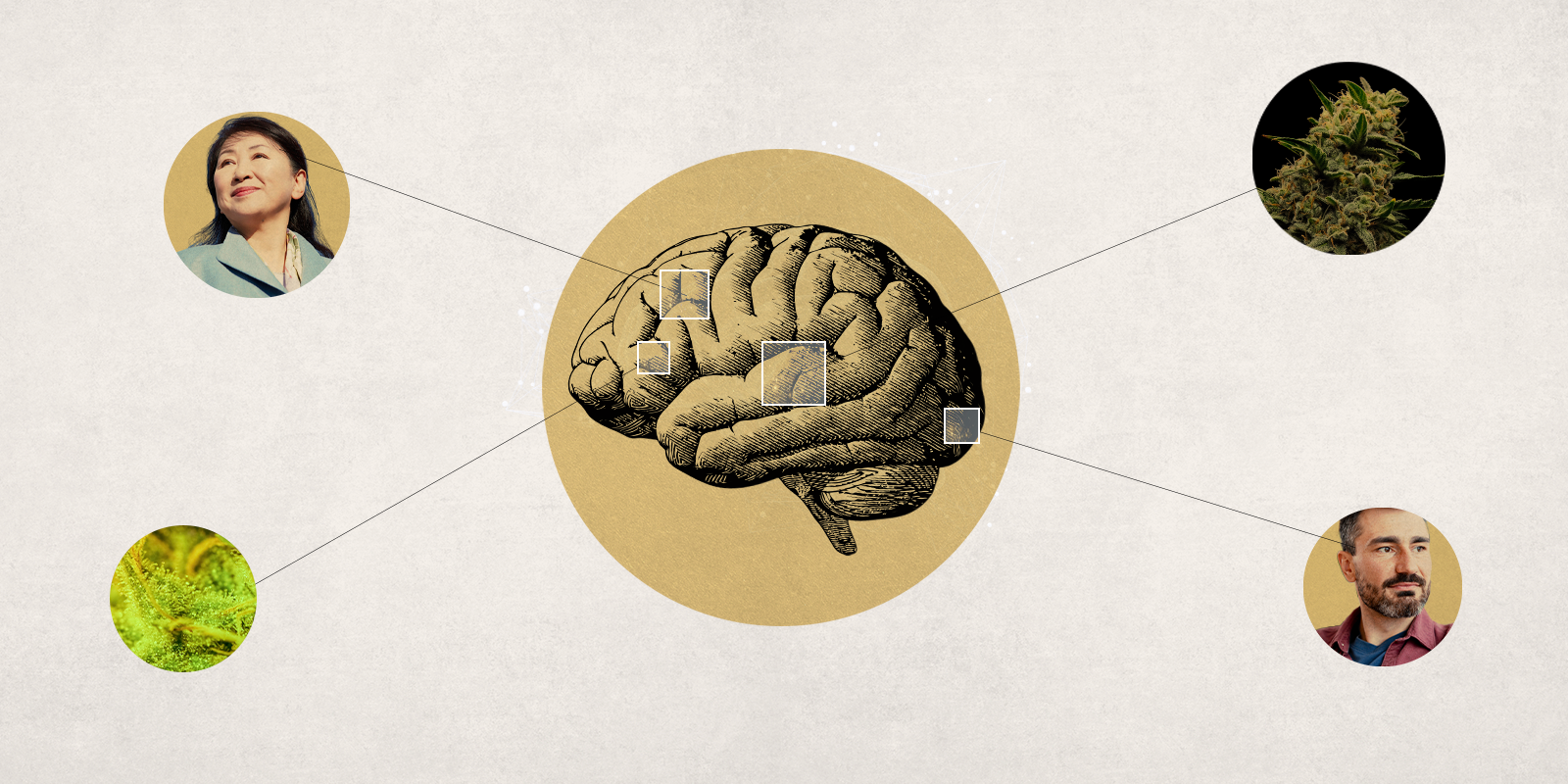
The big-picture, overall finding was that greater lifetime cannabis use among middle aged and older adults (a total of 26,362 participants ages 40 to 77, with an average age of 55) was generally associated with larger brain volumes and better cognitive function.
Specifically, we assessed brain regions that are associated with higher cannabinoid receptor – CB1 – density, which we thought would likely be impacted by cannabis use. We also looked at domains of cognitive function that have been associated with cannabis use in the past, including learning and memory, processing speed, attention and executive function.
One of the phrases used in the paper was that cannabis was associated with increased regional brain volume. Can you walk us through what that is?
It refers to the fact that we were investigating specific parts of the brain and looking at their individual volumes, as opposed to overall or total brain volume.
Some studies will just say there was an impact of cannabis on overall gray matter. However, we wanted to take a more nuanced approach by looking at effects on specific brain regions, especially those with high CB1 receptor density, as well as on cognitive processes like memory, which is, of course, very relevant to aging.
For example, the hippocampus was one of the regions we looked at since it contains many CB1 receptors and plays an important role in memory, especially as we age, and is also implicated in dementia.
What does it mean to have bigger brain volumes? It's not that bigger is always better, but we also know that as we age, we often see smaller brain volumes due to processes like atrophy and neurodegeneration. That decrease is often correlated with reduced cognitive function and increased dementia risk.
In this study, we did see that most of the brain regions we looked at demonstrated a positive relationship between brain volume and cognitive performance. So in this sense, we could think of larger brain volumes in the context of aging as possibly reflecting maintained brain volume and preserved cognitive function, as opposed to say something like atrophy that we expect to occur with age.
Were there any sex differences?
We considered sex as an important factor, specifically to understand whether it moderated, or impacted, the effects of cannabis, for two reasons.
One, we know that men and women tend to use cannabis differently, so they have different patterns of use and they report different subjective effects. And two, from the preclinical research there's evidence that the endocannabinoid system is different in men and women, so the density of cannabinoid receptors differs and there seem to be complex interactions with hormones.
And while there wasn’t a clear-cut or consistent pattern, like male cannabis users always showing more favorable effects than women, we did see significant interactions across several brain regions and cognitive measures, which really suggests that sex is something we need to be looking at because it does seem to be an important factor.
What were the results by cannabis usage category?
We did see that for many of our outcome measures, moderation seemed to be best. For the brain regions and cognitive tests that demonstrated an effect, the moderate-use group generally had larger brain volumes and better cognitive performance. At the same time, there were a few measures, like volume of the right amygdala and visual memory and learning, where the high use group had the best outcomes.
I think that really suggests that there are dose-dependent effects.
As a caveat, we didn’t have access to detailed information about the patterns of usage, so that would be helpful as additional contextual information.
Did you see any negative effects?
I will say one of the things that was really interesting was that although for almost everything we looked at, there was this positive relationship, there was a single brain region where we saw that higher cannabis use was actually associated with lower brain volume – the posterior cingulate, which is part of the limbic system and is implicated in processes like memory, learning, and emotion. That said, some research suggests smaller posterior cingulate volume is actually associated with better working memory, so it’s a little unclear what this means. It’s a good reminder that these effects involve multiple processes. It's not all good or all bad.
Why did you use the UK Biobank?
It’s a huge dataset, providing a great sample of older adults with a lot of awesome health measures important to aging, like neuroimaging and cognitive assessment. It also includes some information on cannabis use, which gave us a really good starting point for our investigation.
Biobanks are a great resource for a small lab like us, because we could never feasibly have a dataset that large. It’s an incredible tool to look at small to moderate effects.
How did the UK Biobank measure cannabis usage, and how did you categorize the data?
In the UK Biobank, people were asked to estimate how many times they’d used cannabis over their lifetime, choosing from a set of ranges. We ended up grouping people into no use, moderate use, and high use, based on the number of times they'd used cannabis. And of course that's an imperfect way to group people, but it did allow us to approximate dose-dependent effects.
Was there anything that you and the team were surprised by, once you started parsing the data?
Even though preliminary work by our group – and some of our colleagues who have also been focused on older adults – had been seeing these beneficial relationships in older adults using cannabis, I was a little surprised that every cognitive measure that demonstrated a significant effect showed better performance among cannabis users. It goes against your default assumptions, because I think a lot of research out there has shown cannabis is associated with worse cognitive function, at least acutely.
What do you want people to know about cannabis research?
I think the main takeaway is that the story is nuanced. It’s not a case of cannabis being all good or all bad. I think sometimes people have seen my poster on this project or they see the headline and they say, "Great, I'll just use more cannabis." But it’s more complicated than that. I think it depends on how people are using and what outcomes you’re looking at. What products are being used, for what reasons, and what part of the lifespan are we looking at? Those are important questions and we're still figuring it out.
For example, I’m interested in the effects of THC versus CBD. We don't have any of that information in the UK Biobank. Most people in this study were using cannabis quite a while ago, and cannabis at that time looked very different from what’s available today. That context really matters. It’s a complex picture.
Where does your research go next?
We do have another paper under review right now looking at connectivity, or function, of the brain in these same older adults. These data suggest there are also positive impacts of cannabis on the function of these brain regions, not just the size or volume of them, too.
Moving beyond cannabis, we’re also beginning to explore relationships between brain health and psilocybin use.
Why is this research so important?
These substances are often marketed as health-promoting and beneficial to certain populations or for certain conditions, like chronic pain or depression, and we don't have solid clinical trials to support that or refute that, or how that might look different with aging. I think it's a very exciting time where we're still figuring out what's going on, and it's especially important for public health and policy. If people are using these substances, it's worth knowing what the impacts are, both good and bad.