December 2023: A breast cancer diagnosis. January 2024-May 2025: chemotherapy every day for three months, then every three weeks for three months, one year of immunotherapy infusions. Double mastectomy. 25 rounds of radiation followed by six months of oral chemotherapy. October 2025: Navigating being a cancer survivor.
This list shows nearly everything Emily Cheshire, DNP, MS, FNP-BC, went through during her breast cancer journey. That’s on top of work, family, and life.
Cheshire, an assistant professor at the University of Colorado Anschutz College of Nursing, was diagnosed with stage two, triple-negative invasive mammary carcinoma nearly two years ago after getting a routine mammogram.
“I pigeonholed the radiologist during my appointment and said, ‘You usually don’t come in here, what’s going on? You see cancer, don’t you?” she says. “I never want to go back to that moment.”
The good news: Cheshire is cancer-free.
“Am I a cancer survivor? Am I in remission? I don’t know what to call myself,” she says.
But there’s always a chance the cancer could return, and it is more likely with triple-negative breast cancer. Cheshire has taken steps to help minimize the risk of cancer returning, including multiple surgeries and taking part in alternative and integrative (non-Western) treatments. Cheshire has been using alternative treatments ever since she was diagnosed.
“When you get to survivorship, you have two options: you either have to get an MRI machine in your garage to test yourself every time you have aches or pains to make sure the cancer hasn’t reoccurred, or you’re going to have to lean into your faith and other treatments to keep your mind at ease,” she says.
She chose the latter.
Recovery Setbacks
Cheshire’s recovery and treatment haven’t been easy. When Cheshire had her double mastectomy, she got bad news: they found some cancer remaining.
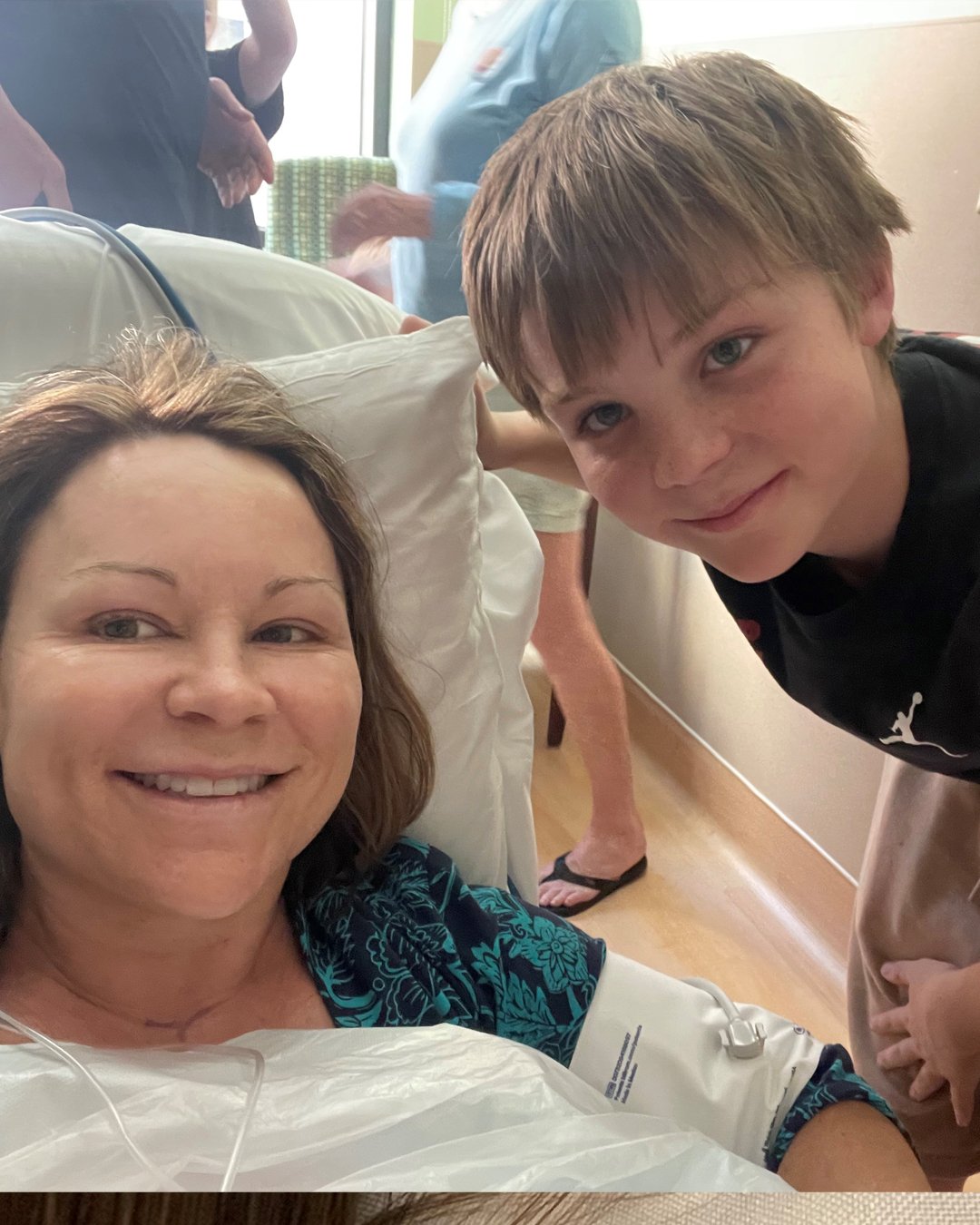
Emily Cheshire with her son after surgery in May. |
“It’s a very emotional thing because you think you’re in the clear after having this surgery, then you find out you still have cancer,” she says.
She had some of her lymph nodes removed, but one of them remained positive. She was given a choice to remove all her lymph nodes, nearly guaranteeing her to have lymphedema, which is when someone’s arm is swollen and in pain. She still had radiation as part of her treatment, which is good at getting rid of microscopic disease.
“It was a hard decision, because up until then I wanted to be as aggressive as possible in my treatment,” she says. “I talked it over with my team at UCHealth and decided to say no to having my lymph nodes removed and proceeded with 25 rounds of radiation and six months of oral chemotherapy.”
Cheshire finished her chemotherapy on April 11 – her mom’s birthday – and had to wait a few weeks before doing breast reconstruction surgery. Surgeons took her abdominal fat and reconstructed it as breast tissue.
“I’m still treating my cancer, but in a different way,” she says. “I used to spend eight to 10 hours a week for three months in a chemo chair, but now I’m using those hours to take care of myself.”
“The surgery took eight and a half hours because the surgeons have to reattach every blood vessel,” she says.
Afterward, she was in the ICU for two days, “not because you're sick, but because they have to check every hour to make sure your blood is flowing properly and there’s not any blood clots,” she explains.
Her reconstruction surgery happened at CommonSpirit St. Anthony’s in Lakewood– “he’s my favorite saint because he’s the saint of lost things. I pray to him a lot."
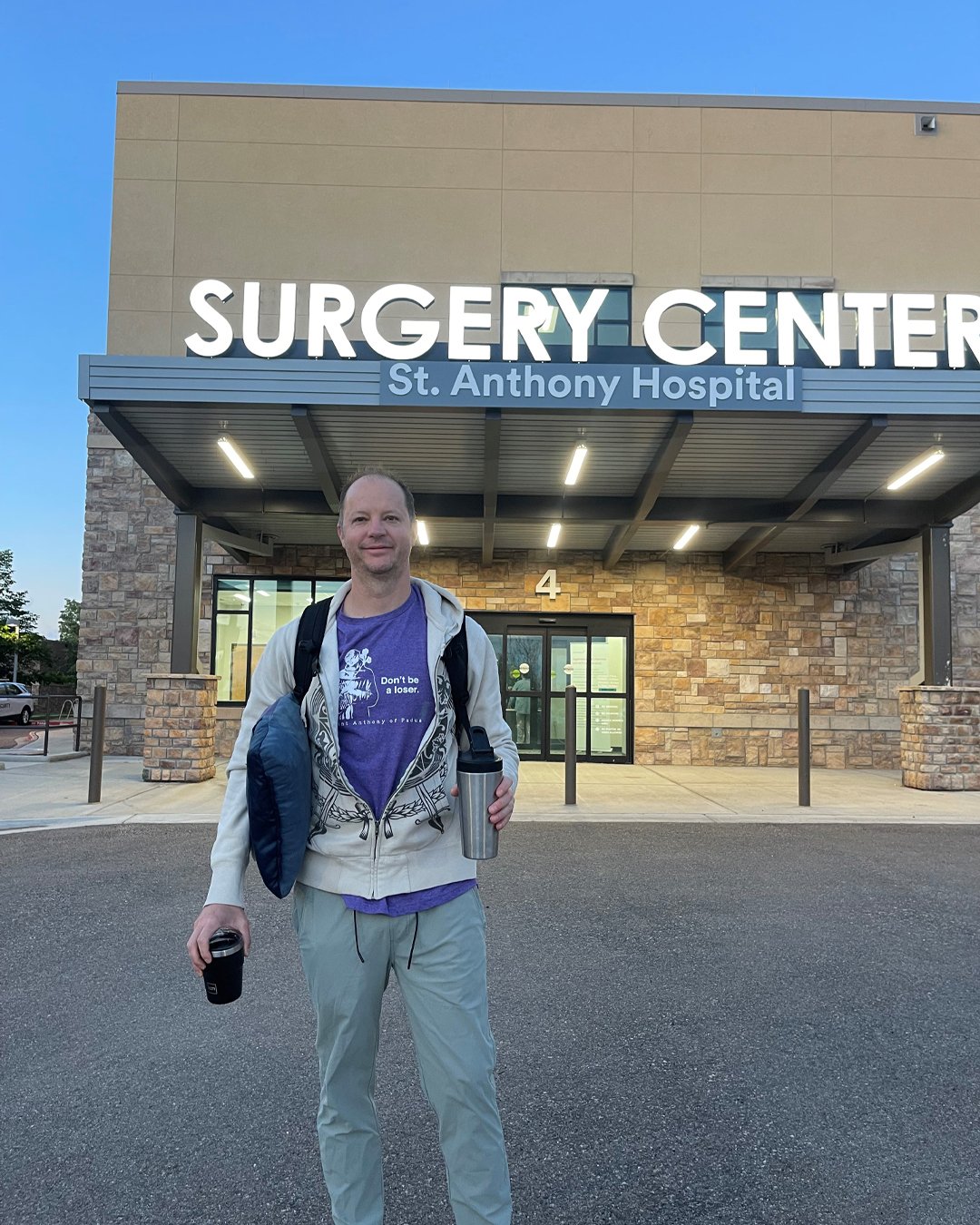
Cheshire's husband wearing a St. Anthony (the saint of lost things) shirt that says "Don't Be a Loser." |
And, her surgery was on Florence Nightingale’s birthday (May 12), who is the founder of modern nursing.
“My surgery was originally scheduled for a different date, so for it to happen on her birthday and for it to happen at St. Anthony’s…I took it as a sign I was in the right place at the right time,” she says.
What Survivorship Looks Like
Cheshire says while she’s cancer-free, “there’s no way to determine if you’ll always be 100% cancer-free. That’s what makes survivorship hard.”
And while she’s not doing chemotherapy or radiation, Cheshire is embracing integrated therapies and treatment to minimize the risk of her cancer returning. In the early part of her diagnosis, her treatments included acupuncture, meditation, and prayer (all of which she still does).
Cheshire has an integrated oncologist (different than her regular oncologist) to discuss treatments. She says she’s done hours of research on treatments since some don’t have conclusive studies or may not be easily available (or approved) in the US.
She’s done things like mistletoe injections (which are common in Europe), Vitamin C infusions, or taking supplements.
“Doing these treatments has helped me because even if it’s helping you believe it’s keeping the cancer away and giving you some control and calmness in your life, then it’s worth it,” she says. “You get to a point where you’re not doing chemo anymore or going to radiation every day…and it’s hard not to do anything.”
Cheshire also participates in “grounding”, where she goes outside and puts her bare feet on the ground for 30 minutes a day. She also did a food allergy test to avoid inflammation and improve her health. Cheshire now stays away from processed sugar and potatoes.
“Cancer is viewed as this bad, foreign thing in the body that needs to be blown, cut, or burned out. I’ve done all three of those – but with integrative treatments, cancer is looked at as a metabolic disease where your body is habitable to cancer, and what are ways to make your body uninhabitable?”
And, since Cheshire will never know if the cancer returns, doing these integrative therapies helps her focus on something other than a second diagnosis.
“I enjoy the integrative treatments because for me, waiting to go to an oncologist once every three months isn’t enough,” she says. “I need something else to do, so I’m not waiting around for my next appointment.”
Adjusting to a New Normal
Cheshire has shifted to a “new normal” in her work, home, and family life. She called the experience a wake-up call and prioritized what was important to her.
“You end up examining your life and thinking about, ‘Where am I replaceable and where am I not replaceable? What are things only Emily can do?” she says. “I feel like my sense of purpose has helped me through this. I love teaching and being a nurse practitioner, and it’s my passion, so that’s helped fuel a healthy recovery.”
Along with her treatments, Cheshire has made other adjustments to her new lifestyle: prioritizing sleep, exercising, taking saunas, and listening to her body.
Taking Her Experience to the ClassroomCheshire has been open with her students about her treatment and recovery, particularly bringing lessons about being a patient and working with insurance. “I’ve tried to explain to students to focus on the whole person care – listening to patients, providing preventative and whole person care,” she says. “Nurses won’t have the time to understand the nuances of a patient’s insurance, but I [as a nurse practitioner] can give them what they need to call and talk to their insurance about what might be covered or not covered.” |
“Before my diagnosis, I was taking care of my family and three young kids; there was the COVID-19 pandemic, I was on call, taking care of patients…so I was obviously tired, but I didn’t realize it. I was probably always tired,” she says. “Then, during my treatments, I was tired. And now, I get tired or I get brain fog, so I have to make sure I wind down and get some sleep. When my kids go to bed, I go to bed at the same time.”
A Hopeful Future
Cheshire’s survivorship doesn’t end with her alternative treatments. She’ll have appointments with her oncologist that will go from once a month to eventually once a year. She’ll also have another follow-up surgery to release scar adhesions from her breast reconstruction surgery.
Cheshire also plans on attending sessions focused on sexual health at UCHealth’s Diane O’Connor Thompson Breast Center after going into immediate menopause caused by chemo.
“This experience changes you anatomically and spiritually,” she says. “And with survivorship, there are so many things people don’t think about or topics that aren’t talked about. The UC Health Breast Center is an outlier among oncologists because they have its own sexual health clinic, which is so important. Breast cancer treatment can impact your relationship with your partner.”
She encourages other people diagnosed with cancer to accept their diagnosis and stay curious about their treatments – but understands not everyone can afford certain ones – and understands they’re not alone.
“There are so many resources out there, and you need to understand people are there for you,” she says. “I’m always happy to be that person who will talk to someone else who’s going through this. Have a scream session or cry session and give yourself space, but understand there are people out there who will always support you.”
“I’m still treating my cancer, but in a different way,” she says. “I used to spend eight to 10 hours a week for three months in a chemo chair, but now I’m using those hours to take care of myself.”