

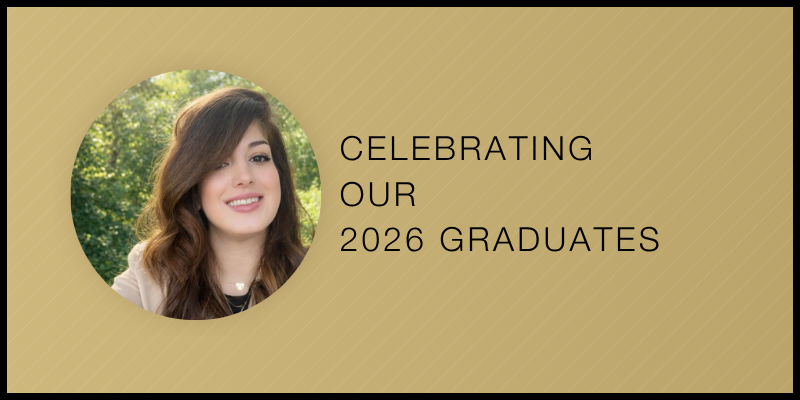
Nora Kakati works at an advanced center for experiential learning and clinical simulation in a College of Medicine and Health Sciences in the United Arab Emirates. Her PhD cohort meets three times per year in Colorado. And the ideas she's spent years studying—how people connect, how trust forms, how healthcare teams either thrive or fracture—turn out to be just as relevant in Dubai and Abu Dhabi as they are in Aurora.
Kakati lives and works on the other side of the world, residing in Dubai and commuting daily to Khalifa University College of Medicine and Health Sciences in Abu Dhabi, UAE.
She’s also about to graduate with her Doctor of Philosophy (PhD) in Caring Science from the University of Colorado Anschutz College of Nursing, evidence that the college's reach extends well beyond the Front Range.
Kakati heard about the college from faculty at her alma mater, who had graduated from here.
“They spoke highly of the college as a warm, supportive, and family-like academic community, which deeply resonated with me and reflected the values of Caring Science that I wanted to embody in my own doctoral journey,” she says.
That kind of personal endorsement matters in a field built on relationships. And for Kakati, the program delivered.
She says one of the most meaningful parts of her PhD journey has been being part of a program where learning builds upon itself over time. Classes connect in ways that encourage depth, deeper thinking, and reflection, creating synergy among theory, research, and practice.
“This journey has deepened my appreciation for the interconnectedness of people, systems, and cultures, and has firmly grounded my commitment to advancing care that is safe, effective, and fundamentally human.”
“As an international doctoral student, this experience held deeper meaning for me, because it allowed me to engage with these concepts across diverse cultural and healthcare contexts, enriching my perspective and expanding my understanding of Caring Science as something both universal and uniquely expressed within each setting,” she says.
Learning Halfway Around the World
Dubai is 10 hours ahead of Colorado. And while the program is mostly online (except for in-person intensives every semester), distance and time zones turned out to be more navigable than they might sound.
She acknowledges there were some challenges, including late nights and balancing demanding work and class schedules, but says that the program is intentionally designed to foster connection with classmates and faculty. She attributes her ability to fully engage in these opportunities to her strong commitment and passion for advancing nursing science. Through mentorship, ongoing communication via email, group chats, and virtual meetings, she cultivated meaningful relationships across thousands of miles.
“It was always wonderful to fly in for intensives week to maintain that enriching in-person connection and networking capability, which is an extremely valuable asset that sets this program apart,” she says. “In many ways, navigating this experience deepened my appreciation for relational connection, which is something that directly informs my dissertation work.”
Creating Safe Healthcare Environments
Kakati found the most powerful parts of nursing and patient care to be intangible: relationships, ethics, and human connections. It's a conviction that shaped her research from the start.
Her dissertation focuses on psychological safety within healthcare teams, particularly the conditions that allow healthcare workers to speak up, engage, and proactively contribute to their healthcare team without fear of judgment, embarrassment, or retaliation.
It's a question with real stakes. In healthcare settings where staff feel silenced, mistakes go unreported, decisions get made without crucial input, and patients bear the cost.
“This has direct implications for patient care because when healthcare providers feel safe, they are more likely to communicate effectively, raise concerns or voice any mistakes, and participate in shared decision-making,” she says. “Ultimately, this contributes to improved patient safety, higher quality of care, and overall team effectiveness. I hope to contribute to local policy development that supports safe, collaborative, and high-performing healthcare teams so we can have safe and patient-centered care environments.”
It's research she's already been applying in Abu Dhabi throughout her doctoral journey, and that she hopes will shape how healthcare institutions think about team culture and policy long after she's graduated.


.png)