The United States has 3,142 counties.
35% of them (1,104) are considered maternity care deserts, where there is limited or no access to maternity care services. This means people have to travel, on average, 38 minutes to get care – which is more than two times the average travel time (14.4 minutes) for people living in areas with full access to care.
What’s being done to increase access to care?
Denise Smith, PhD, CNM, FACNM, an assistant professor at the University of Colorado College of Nursing at Anschutz Medical Campus, took her concerns directly to Congress to advocate for change.
She joined other midwives from the American College of Nurse-Midwives (ACNM) on Capitol Hill in July to brief health policy staffers about two bills – the Midwives for Maximizing Optimal Maternity Services (MOMS) Act and the Better Availability of Birth Centers Improvements Outcomes and Expands Savings (BABIES) Act.
The Midwives for MOMS Act would increase access to midwives through grant funding opportunities for midwifery programs. The BABIES Act would provide grant funding to create birth centers in states with limited access to maternity care.
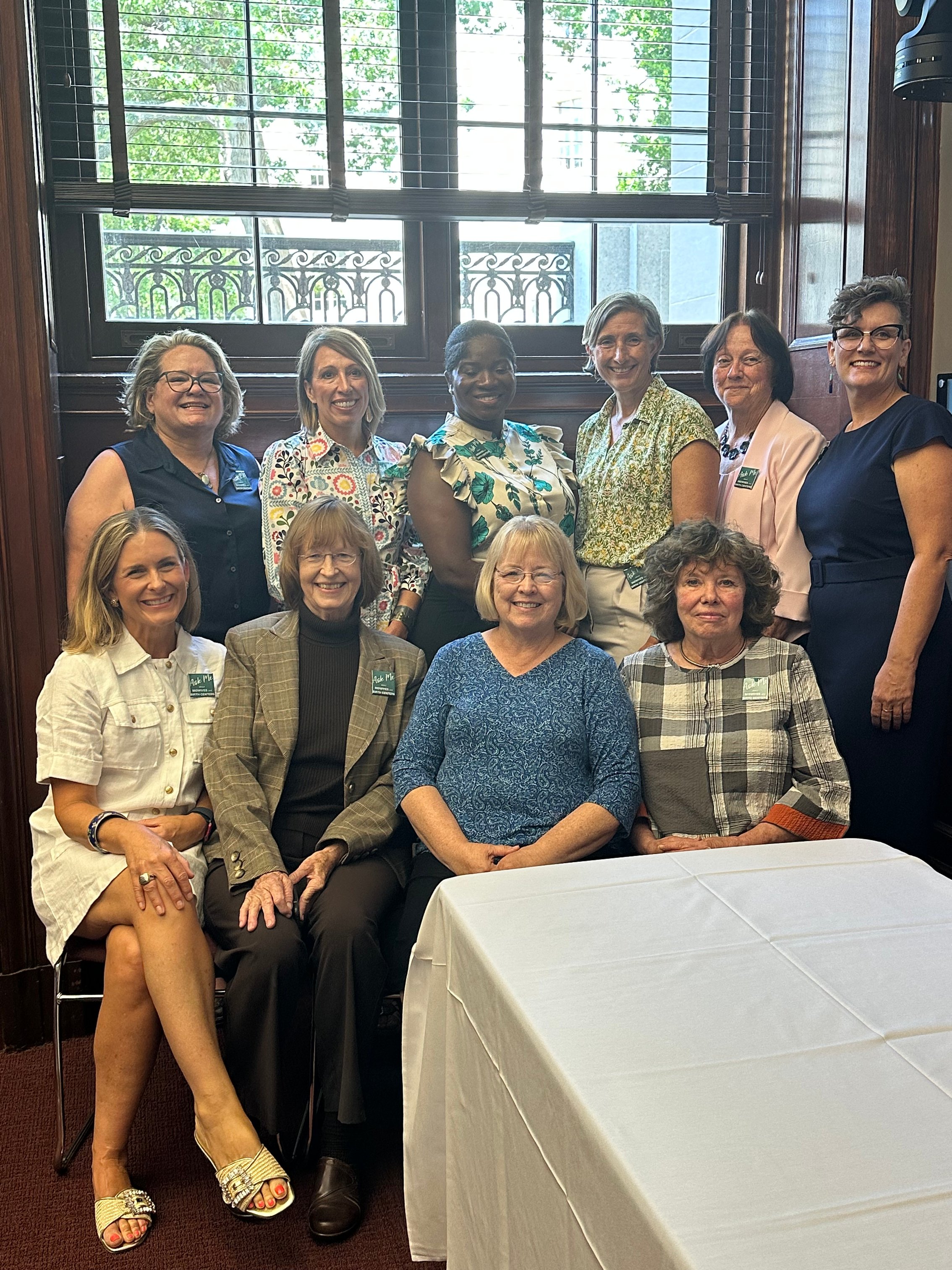
CU Nursing's Dr. Denise Smith (top row, second from left) with other midwives from the American College of Nurse-Midwives in Washington, D.C. |
“Birth is something that happens every day, and it’s the most common reason why people access hospital services,” Smith says. “A midwife has been a foundational part of every community in the world since the beginning of time, and that model should still exist in every community.”
Smith was chosen to speak to give her expertise on Colorado’s Rural Midwifery Workforce Expansion Program – one of ten such programs in the country.
“I was able to talk about how we use Title VIII MatCare funds awarded under the Advanced Nurse Education workforce development program to support rural students who, upon graduation, will go on the provide midwifery care in rural communities,” she says. “These types of workforce pipeline programs don’t get a lot of attention, but they have demonstrated their effectiveness in retaining healthcare providers in areas of the country with limited access.
“Midwives attend up to 30% of rural births in Colorado. We have a model that the rest of the country can learn from," Smith says.
The Rural Midwifery Workforce Expansion Program supports CU Nursing’s Rural Midwifery Track through the college’s Nurse-Midwifery program. The Rural Midwifery Track provides scholarships to students who are committed to treating patients in rural areas after graduation.
“We are training midwives to live and work in these rural areas to maintain or even increase access to care,” Smith says.
Keeping care locally is a huge benefit for patients – it can save lives because living in a maternity care desert can lead to an increased risk of a pre-term birth or maternal and pregnancy-related death.
“The curriculum is designed to support a rural practitioner. There’s also leadership and business training skills that would help someone build and maintain a clinical practice in an environment with limited resources.”
Roles of Midwives
The US is the only industrialized high-income country that doesn’t use midwifery on a broad level. Smith says the US treats a midwife as an alternative to a physician if someone wants a different birthing experience.
“The midwifery model of care is for everybody. It’s not just for people who want an unmedicated birth, so there’s this misconception about the appropriate use of midwives,” Smith says. “These two bills are about a federal investment in the midwifery workforce and birth centers.”
Increasing access to midwives could be key in improving maternity deserts because they can fill the gap in care and fill healthcare provider roles. Smith says the family medicine profession has tried to add maternal care to their scope of practice, but so far, it hasn’t really moved the needle in increasing care.
“We’re seeing growth in the number of practicing midwives, and we anticipate that we’ll have a 30 to 40% growth in our workforce by 2030,” Smith says. “What we’re trying to do is let people know we, as midwives, have a viable workforce and we should be investing in them.”