In 2023, University of Colorado Anschutz College of Nursing Associate Professor Christina Sun, PhD, was named a Fulbright Scholar, allowing her to study transgender populations in Taiwan and Botswana to improve quality of life and reduce health disparities.
Her research was very community-based and focused on using photographs and people’s voices (photovoice and photo-elicitation interviews) to understand health disparities better and learn more about understudied populations.
Sun’s research has always taken a global health perspective, and she has focused her work on transgender health since 2013. Sun sat down with CU Anschutz Nursing to talk about her experience. In the first part of her interview, she gives an inside look into her research.
Why did you want to focus your research on transgender people in Botswana and Taiwan?
I was in Botswana when the High Court of Botswana made a ruling about transgender rights, allowing transgender people to change their gender markers. At that moment, I knew immediately I wanted to do a Fulbright so I could support the population through research.
Dr. Sun’s Time AbroadOctober 2023: Taiwan
February-April 2024: Botswana
October-November 2024: Taiwan
|
We know so little about transgender people and their health, and even less in certain regions of the world, such as Africa, Asia, and Latin America. So when it came time to develop my research plan, I wanted a global perspective, and Botswana and Taiwan stood out to me because both countries were supportive of transgender rights in regions of the world that are historically not.
Can you explain the difference between photovoice and photo elicitation?
Photovoice was developed in the late 1990s and first applied in China. It’s done with one group of people and emphasizes research findings for advocacy and to address certain priorities. The goal is not only to better understand the priorities, needs, and strengths of this population, but also to take those findings and collaborate with community members in their own advocacy, pushing for and leading change.
Photo elicitation focuses on interviewing people individually, but we’re not trying to get them involved in driving advocacy. It was started in the late 1950s by an anthropologist studying the influence of environmental factors on mental health outcomes, who decided to incorporate photos to compare living situations among their study’s participants.
Can you explain how you conducted research?
This work was done outside clinical settings, so it was very much community and public health nursing-focused. Nursing is very holistic, and I’m focused on understanding the circumstances in which people live, sometimes referred to as the social determinants of health, and how that influences their health and clinical outcomes.
In Taiwan, the research was conducted through photo elicitation. Twenty participants received photography training and took photos that addressed two questions: what are the positive aspects of their lives, and what are the negative (or challenging) aspects of their lives. We told them there was no right or wrong approach to taking photos. We let participants choose which photos were discussed, allowing them to guide the conversation, and asked open-ended questions. One theme I discovered was the multifaceted and complex ways in which Taiwanese society upholds gender norms and the immense pressure participants felt to conform to those stereotypes.
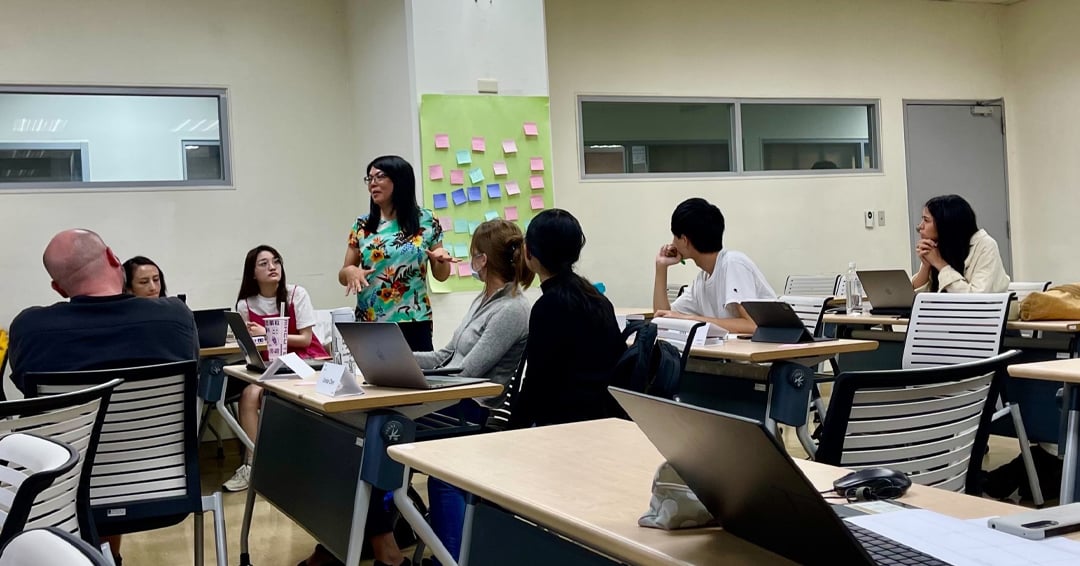
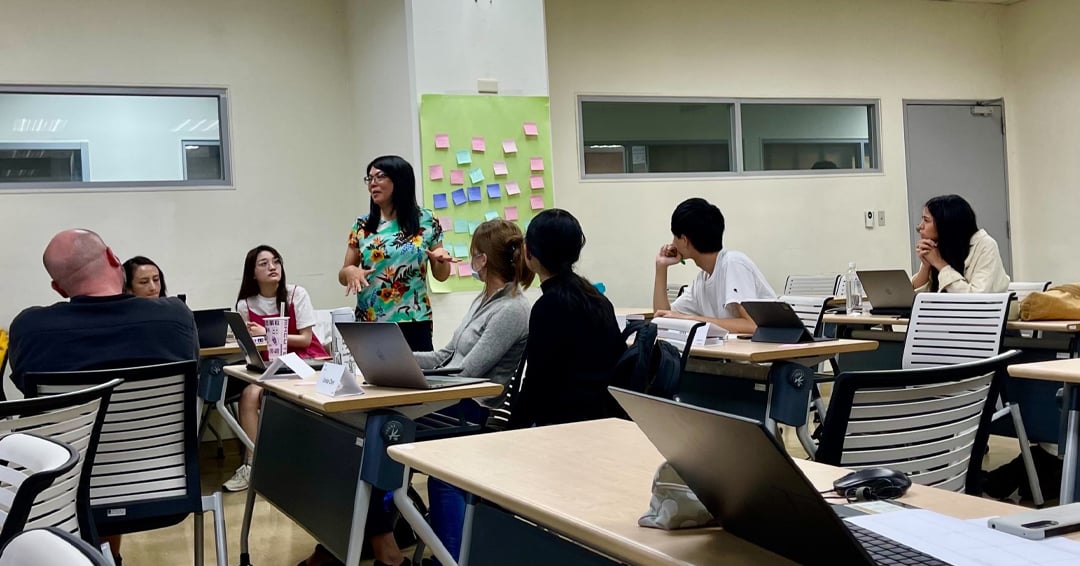
Dr. Sun guest lecturing at National Taiwan University. |
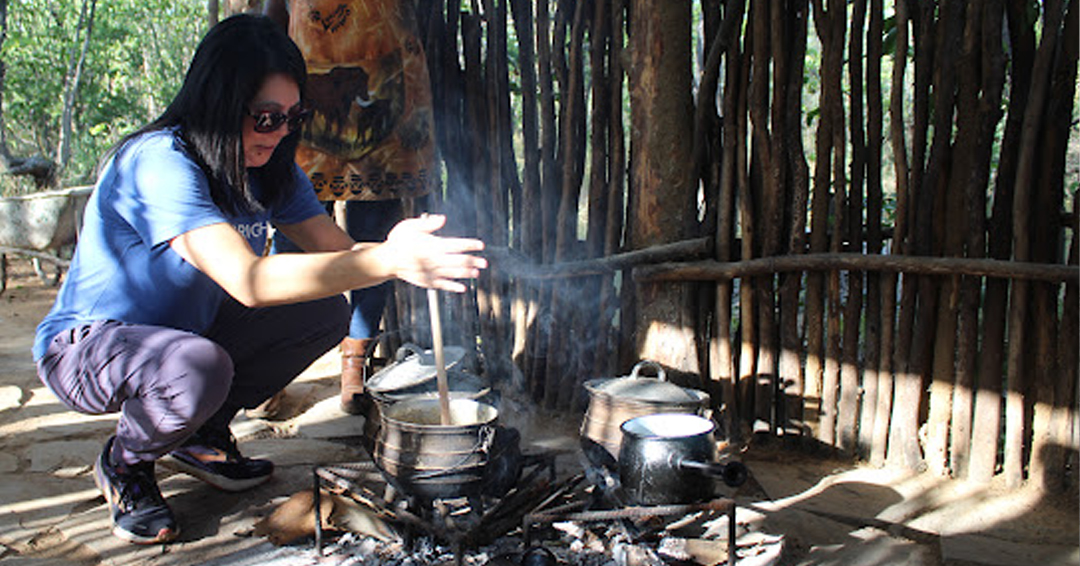
The research approach used in Botswana was photovoice, as it allows participants to share their lived experiences with leaders and others who can influence change. With the participants and representatives from the non-governmental organization (NGO) I was working with, we held a community forum where people viewed the participants' photos and, in small groups, heard directly from them as they explained their photos. Their discussion focused on four topics, including social relationships and mental health.
What do you hope to accomplish with your research?
I think this research really helps us better understand the unique context, mental health challenges, social context, and the structural factors that impact people’s lives and, therefore, their health.
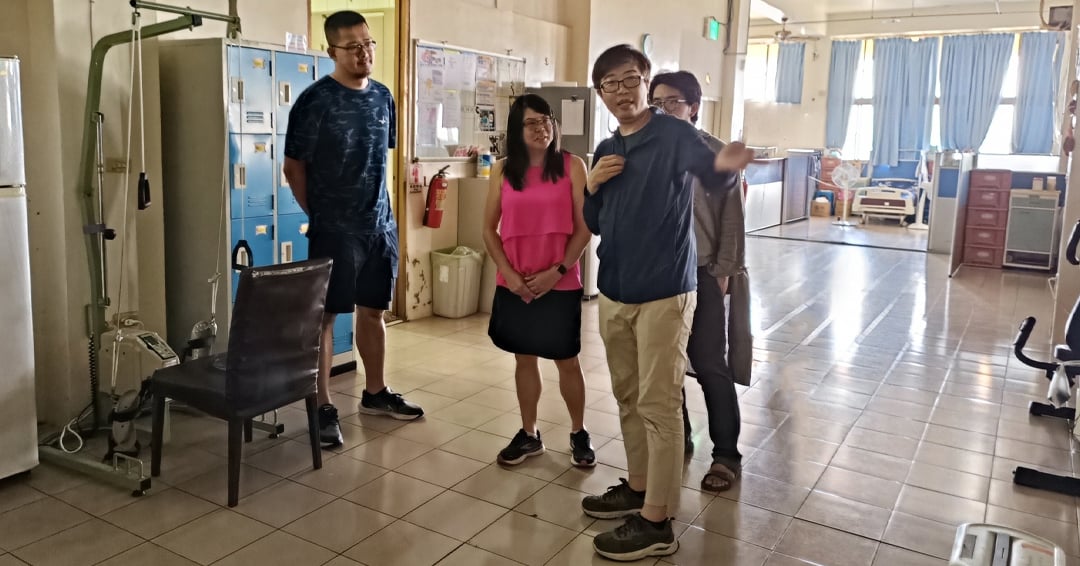
Dr. Sun's site visit in Taipei. |
Participants in both countries described how rigid gender norms and structural barriers impact their daily lives when it comes to health, stress, exclusion, and care.
As far as I know, the work I did in Botswana was the first study focused on trans adults [Sun also worked on a second study in Taiwan, not related to her Fulbright, which was the first study of its kind focused on transgender people in Taiwan]. I can’t believe it’s 2026 and we still know so little about this population.
Expand on some takeaways you found while conducting research
One thing that sticks out in my mind is thinking about all the different strategies and ways these communities and populations adapt to live in a difficult world. Despite poor health outcomes, these populations are trying to make it work.
I also think it’s important for students and other researchers to see a different side of research. Research doesn’t have to be really dry. Think beyond traditional research methods. You can incorporate different research methodologies, like photos, voices, and stories. They're interesting and important sources of data. I think there are benefits to tapping into these ideas and letting people express themselves. It enhances the richness of the data.
What’s something you’d like people to know about working abroad?
When we think about doing research abroad, people may think it’s so exotic or different, but it can be accessible. I think this kind of work really enhances thinking on a larger scale and about the global connections between all of us. It’s important we think about improving health outcomes for everyone.
What are the next steps with this research and your research as a whole?
I hope to return to Taiwan and conduct a family-level intervention study. One thing I found so striking was how long people live with their parents. In the US, we typically see 18 as the age at which people leave home. But in Taiwan, most people live at home and are considered children until they’re married or move away for a job opportunity. I want to focus on the young adults and how we can best support transgender young adults so we can improve their outcomes.
As for Botswana, if I could do this—I’m still trying to figure it out—I’d want to focus on streamlining certain processes for transgender people. Right now, people can change the gender marker on their ID, but many bureaucratic and structural barriers prevent them from doing so. I’m not sure how I’d do this, but I want to find a way to help. I also want to find ways to eliminate barriers to people seeking gender-affirming care.
Check back tomorrow for part two, where Sun highlights what life is like living in two countries.