
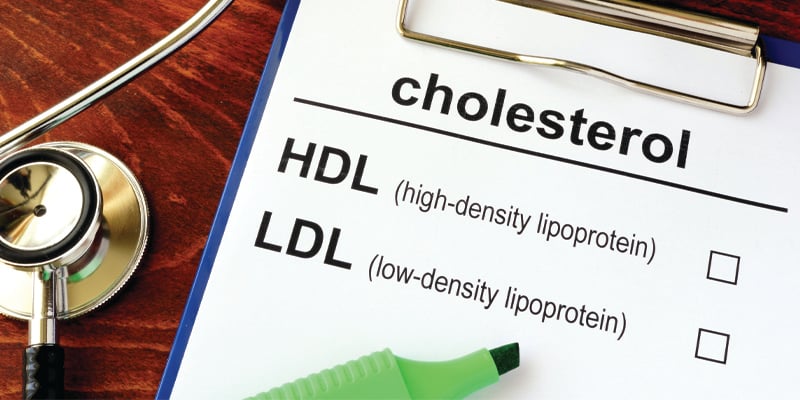
Millions of Americans have high cholesterol. The Centers for Disease Control reports that high cholesterol affects close to 12% of adults in the US. Unfortunately, only slightly more than half of US adults (54.5%, or 47 million people) who could benefit from cholesterol medicine are currently taking it.
For National Cholesterol Education Month, CU Nursing Assistant Professor of Clinical Teaching, Michael Horne, DNP, MBA, AGNP-BC, CCK, explains what people should know about cholesterol – including an additional type of cholesterol, which was previously thought not to be impactful, but has now been discovered to increase cardiovascular risks.
What is cholesterol?
Cholesterol is a fat-like substance in the cells of our body. Our body needs cholesterol for things like making hormones, building cell walls, and forming bile to help digest food and absorb nutrients. Dietary cholesterol is found in animal foods, like meat, seafood, poultry, and dairy (including eggs).
When you get your cholesterol checked, we’re looking primarily at two types:
- Low-density lipoprotein (LDL). This is “bad” cholesterol
- High-density lipoprotein (HDL). This is “good” cholesterol
LDL cholesterol deposits fat into your arteries, and that can build up over time, creating a partial or full blockage. HDL can help reduce LDL in arteries and thus lower your risk of heart disease and stroke.
I’ve heard there’s a new type of cholesterol. What is it?
It’s called lipoprotein or lp(a). It’s similar to LDL, but we’ve really been learning more about it in the past five or six years. We know that people with an elevated level of lp have a significant risk of cardiovascular disease, even more so than having an elevated LDL level. Not everyone has been tested for this type of cholesterol yet, but projections estimate that as many as 20% of people in the US have it. This type of cholesterol is also almost entirely inherited, and the level is determined by age five and remains fairly constant.
Is my cholesterol level solely based on diet and lifestyle?
A lot of the LDL cholesterol production in your body is based on hereditary factors, so you can be the leanest marathon runner and still have high cholesterol. You can treat it with medication, but having a healthy lifestyle will also help lower your cholesterol levels. Suppose you inherit a propensity for high cholesterol but are a lifelong exerciser and live a relatively healthy life. In that case, you may not ever need a statin until you’re older, if ever.
What is a statin? Should I be taking one?
Statins are medications that lower your body’s LDL cholesterol levels and increase your HDL levels. The way we determine if someone needs a statin is based on a couple of factors. We look at a combination of both your HDL and LDL cholesterol levels. There are several conditions that suggest the need for a statin. First, it’s recommended to be on a statin if your LDL level is 190 mg/dL, regardless of any other factors. Statins are also recommended for all people who have a history of a heart attack or stroke. There are some potential modifications to the intensity of the statin recommended for people over 75.
Other than those absolute recommendations, statins may be needed based on risk factors. For example, if you have diabetes and you’re over 45, you should be on a statin. We also look at your 10-year cardiovascular risk, which is your chances of having a heart attack over the next ten years. If your risk percentage is above 5%, we recommend a statin.
If you’re someone who should be on a statin based on the guidelines but you’re not, it’s important to consider taking one. It can reduce your cardiovascular risk by 20 to 50%.
However, statins don’t reduce lp(a) levels. In fact, they may actually increase lp(a), although any slight increase does not negate the benefit of statins for those who should be on a statin. Three or four drugs are being developed to treat lp(a) cholesterol and are expected to get FDA approval and become available early next year.
What are things I can do to keep my “bad” cholesterol levels low?
Try to avoid saturated fats and eat more fruits and vegetables. Eating a Mediterranean diet [this type of diet encourages fruits, veggies, whole grains, fish, and poultry while limiting red meat and processed foods] can help control or even reduce LDL cholesterol levels.
How often should I get my cholesterol checked?
If you don’t have any specific risk factors, you should get it checked in your early 20s, and, if nothing changes health-wise, typically every five years after that. Once you’re in your 50s, do it every couple of years. Your cholesterol levels will be measured more frequently if you’re on a statin.
I should note: these guidelines were last updated in 2018 by the American College of Cardiology. We’re expected to get new updates next year, and I expect they will be more aggressive in both measuring and treating cholesterol.
Should I get checked for lp(a) cholesterol levels?
It would be good to ask about getting tested because currently your lp(a) levels aren’t tested in the standard cholesterol test. More primary care providers and cardiologists are testing people on this type of cholesterol.
Are there side effects from taking a statin?
About 5% of people who take statins may develop muscle soreness. Some of that is probably from the statin itself. But, say you have a heart attack, and you haven’t been exercising. You’re put on a statin, and then you also start a cardiovascular exercise program. You get sore after doing the program for a few days. So, is the soreness from the drug or from you now starting an exercise program? There are also some rare cases where someone might have some liver or muscle damage from a statin, but it is unusual.
What roles do NPs play in cholesterol education?
Nurse Practitioners are doing more primary care, so it’s up to us to help manage and prevent cardiovascular disease in our patients. We play a key role in education and administering tests and medication.