

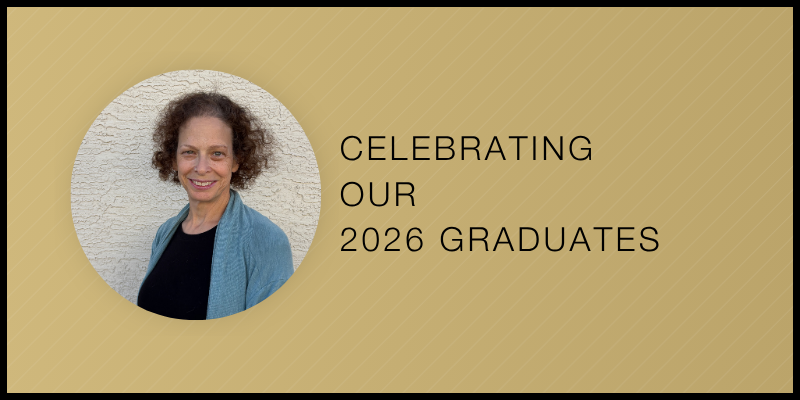
Heather Waghelstein has spent more than a decade working in one of the most underserved corners of American healthcare. As a nurse practitioner in the emergency room at Tséhootsooí Medical Center, a small Navajo Nation hospital in Fort Defiance, Arizona, she sees the same gap play out every day.
“One problem I see is that people come to the ER for primary care because there’s nowhere else to go,” she says.
The hospital treats about 120 patients a day. Some travel hours to get there. That reality has shaped everything about how Waghelstein thinks about her work — and why she came to the University of Colorado Anschutz College of Nursing to pursue a dual degree in Doctor of Nursing Practice and Master of Public Health.
“You realize there are problems all over and there are ways to solve them,” she says. “Society needs to step in to fix problems or find solutions. I’ve always enjoyed helping people realize their best selves. You give them the tools to be successful, whether it’s in their life or treating their illness.”
Planning for What Comes Next
For her DNP project, Waghelstein turned her attention to a conversation that too often goes unfinished: advanced care planning — the process of thinking about, discussing, and documenting your preferences for future medical care in case you become unable to communicate them yourself.
“I want to normalize this discussion between patients and their healthcare providers,” she says. “Many people don’t know what kind of care they want, and sometimes neither does their family.”
Working with a federally qualified health center in nearby Gallup, New Mexico, she discovered that most patients wanted to discuss advanced care planning but were afraid to bring it up. So she helped create space for those conversations, revising the center's workflow and care documentation in the process.
"I've always enjoyed helping people realize their best selves. You give them the tools to be successful, whether it's in their life or treating their illness."
“We came up with a solution where we made time for them to talk about their advanced care plans with providers at the clinic, and we revised the center’s workflow and care forms,” she says. “When I started my project, there were six advanced care plans in the health center’s system, and after several months, there are now nearly 20.”
Rethinking Obesity as a Disease
Waghelstein also brings a deeply personal lens to one of her other areas of focus: obesity medicine. She's lived with the disease herself, and she wants to change the way it's treated and talked about.
“Obesity is a disease that’s very stigmatized where people are led to believe it’s your fault, because in some cases, changing your diet and exercising won’t fix the problem,” she says. “I’m someone who’s struggled with obesity my whole life and has eaten a mostly vegan diet for years, and taking a GLP-1 medication was successful for me. We need more treatments and policies for those treatments.”
Her goal isn't just individual care: it's expanding access to effective treatments for patients in rural and underserved communities who often have the fewest options.
Next Stop: Alaska
After graduation, Waghelstein is heading even further into the frontier. She plans to travel to remote parts of Alaska to provide care in small Indigenous communities, spending two weeks at a time in places with few, if any, permanent providers.
“It’s been something I’ve wanted to do for a while. I’ll get to really know these patients and work with the community health workers who are native to that area,” she says. “A lot of rural places don’t have enough physicians, so I’ll be able to fill this role.”
For Waghelstein, the dual DNP/MPH degree isn't just a credential. It's a framework for doing exactly that kind of work at scale, connecting the clinical and the systemic in places where both are urgently needed.

.png)