When a man in his early 20s looked in the mirror, he quickly noticed something was wrong. His left eye was slighting bulging out of its socket and becoming lopsided, and he started experiencing fluctuations in his vision. Seeking help, he went to the University of Colorado Anschutz, where a team of ophthalmologists and rhinologists (specialized ear, nose, and throat surgeons) combined their expertise to deliver sight-saving care.
The patient, they discovered, had an osteoma — a benign, slow-growing bone tumor — centered in the left frontal sinus, which sits above the eye. The osteoma had grown so much that it was extending into the eye socket below, effectively pushing the eye out.
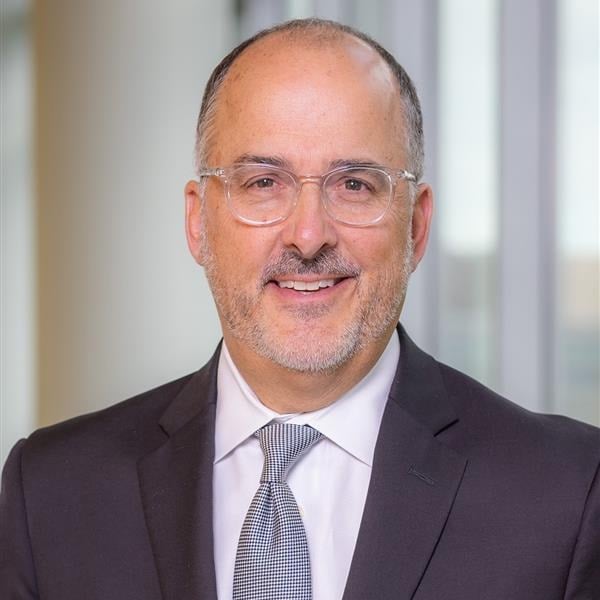
Todd Kingdom, MD, section chief of rhinology and sinus surgery at the CU Anschutz Department of Otolaryngology – Head & Neck Surgery with a secondary appointment at the CU Anschutz Department of Ophthalmology, worked in tandem with Eric Hink, MD, section chief of oculofacial plastic and orbital surgery at the ophthalmology department, to help the patient.
“Dr. Hink and I went into the operating room. I worked through an endoscopic, minimally-invasive approach through the nose to reduce the pressure the osteoma was causing, and he worked through the eye to address where the osteoma was threatening vision. I know it sounds unusual, but we essentially were able to meet in the middle and help one another,” Kingdom says. “I helped him avoid certain critical structures, and vice versa, while we worked on the mass. I couldn’t have done it safely by myself, and neither could he. It was a combo case, and the pressure on the eye was reduced immediately.”
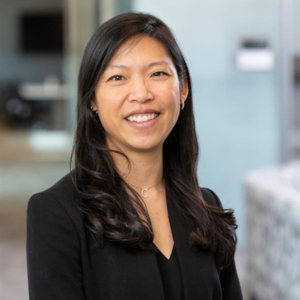
Due to how connected the eyes are to the sinuses and nasal cavity, collaborations between ophthalmologists and rhinologists occur regularly at CU Anschutz, whether it be responding to emergency trauma cases, removing tumors, or correcting tear duct issues in the eyes. A team approach is particularly common for oculofacial and orbital plastic surgeons — a type of ophthalmologist who specializes in procedures done around the eyeball, including the eyelids, tear ducts, and eye sockets, explains Sophie Liao, MD, the Robert H. Bell Endowed Chair in Ophthalmology.
“Much of our practice crosses over with other specialties, including neurosurgery, dermatology, endocrinology, rheumatology, and otolaryngology,” says Liao, an associate professor of ophthalmology and associate chief medical officer of ambulatory services at UCHealth University of Colorado Hospital (UCH). “We often are talking with one another about how to manage a patient, and we may operate with each other. It’s fun and collaborative, and we learn from each other.”
This approach benefits clinicians and patients alike, Kingdom explains, highlighting how the minimally invasive techniques specialists like him provide can improve quality of care.
“We’ve demonstrated that we are better together as a team, bringing different skillsets and knowledge bases,” Kingdom says. “The clinical outcomes are better, the success rates are better, and the risks of adverse consequences are lower.”
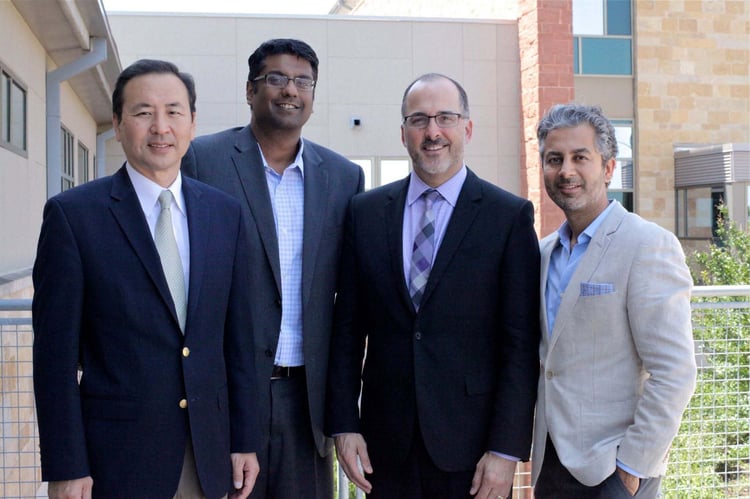
Vikram Durairaj, MD, second from far left, and Todd Kingdom, MD, third from left, smile together while at an event in 2016. Image courtesy of Kingdom and TOC Eye and Face.
From a strong duo to a growing team
Today, a team of four rhinologists and five ophthalmologists at CU Anschutz regularly collaborate on patient cases at UCH, Children’s Hospital Colorado, and the UCHealth Sue Anschutz-Rodgers Eye Center. This team stems from a partnership that formed roughly 20 years ago between Kingdom and ophthalmologist Vikram Durairaj, MD, a former CU Anschutz faculty member.
Kingdom met Durairaj in the early 2000s at CU Anschutz. Due to their prior training and clinical experience at other institutions in the country, they each understood how valuable collaborations between ophthalmologists and rhinologists can be in treating patients.
“We saw an opportunity to build an area of emphasis, and that’s what led to me connecting with the ophthalmology department. I was given a secondary appointment in ophthalmology, and he given a secondary appointment with our department to solidify the commitment,” Kingdom says.
Much of Kingdom’s work as a rhinologist focuses on caring for patients with conditions like sinusitis, nasal obstruction, and other issues affecting the nose and sinuses. Specialists like him can offer medical and surgical interventions to patients who range in age from young children to older adults.
“Another extension of rhinology is minimally invasive endoscopic surgery of other areas besides the nose,” Kingdom says. “With ophthalmology, we help our colleagues deal with eye conditions by working through the nose and delivering some minimally invasive techniques. In general, we do a lot of combination, collaborative surgery.”
When Hink became a fellow at CU Anschutz, he began learning from Durairaj and became involved in the partnership. It was the start of another powerful connection, as Kingdom and Hink have continued to expand the cross-departmental collaboration over the years.
“The ophthalmology department started to add partners, such as Liao, and I proceeded to incrementally add additional colleagues and expertise as well,” Kingdom says. “We all have the same expectations and attitude toward taking great care of our patients and helping them. It’s shared thinking, shared clinical decision making, and shared philosophies.”
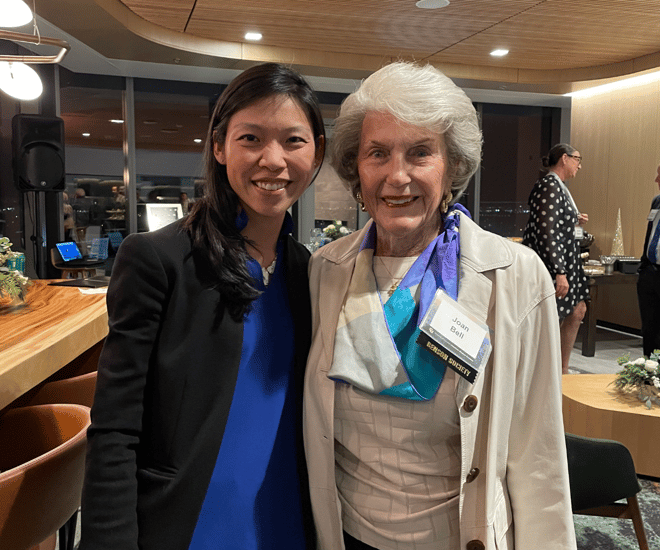
Sophie Liao, MD, left, was named the inaugural Robert H. Bell Endowed Chair in Ophthalmology in gratitude for the care she delivered to a former patient, Robert Bell. At the endowed chair announcement in 2023, Liao smiled alongside Bell's wife, Joan Bell.
Improving patient outcomes with minimally invasive methods
Applying a team approach between rhinologists and ophthalmologists has proven to be valuable to patients in a multitude of ways, Kingdom explains, particularly by offering patients procedures that are less invasive.
A common complaint that Kingdom and Liao hear from patients is that their eyes are constantly tearing, a condition known as epiphora. This is often due to an obstruction in the tear duct system.
“If you think about your eye being like a sink with a pipe, it’s the pipe that empties from the eye surface into the nose and throat. The end of the pipe is in the nose,” Liao says. “If your pipe is blocked and never drains, it leads to constant tearing that is extraordinarily bothersome. Patients can’t see properly, always look like they’re crying, and it can really disrupt their vision.”
For many years, ophthalmologists would traditionally perform a procedure called an external dacryocystorhinostomy (DCR), Kingdom explains, where the surgeon would make an incision on the face to open it up so they could fix the tear duct system.
“With the development of endoscopic nasal approaches, we started doing this procedure through the nose, so patients did not need the incision on the face. We do an endoscopic DCR in collaboration with the ophthalmologists to help open up the obstructed tear duct system,” Kingdom says. “We found this was a successful way for us to collaborate, as it helped decrease morbidity in patients while also avoiding scarring on the patient’s face.”
The clinicians also collaborate to help patients who have too much pressure on their eyes. This can happen in patients who have thyroid eye disease (TED), an autoimmune disorder. The heightened pressure can cause the eyeball to be pushed outward, and it may lead to worsening vision and even blindness if not addressed.
“Again, for many years, ophthalmologists would take the pressure off by creating an incision so they could decompress the orbit, the bone around the eye. Now, we can come in through the nose via an endoscopic approach and do much of the work without facial incisions — something called endoscopic orbital decompression,” Kingdom says. “We operate together with the oculoplastic team, who typically perform inferior and lateral decompression, removing portions of the orbital bone. We can do this quickly and typically provide relief and halt the progression of visual loss immediately.”
“That’s where, I would say, we made a huge impact by collaborating,” he adds. “Dr. Durairaj and I published a series looking at the outcomes of this approach, and we demonstrated excellent outcomes with fewer complications.”
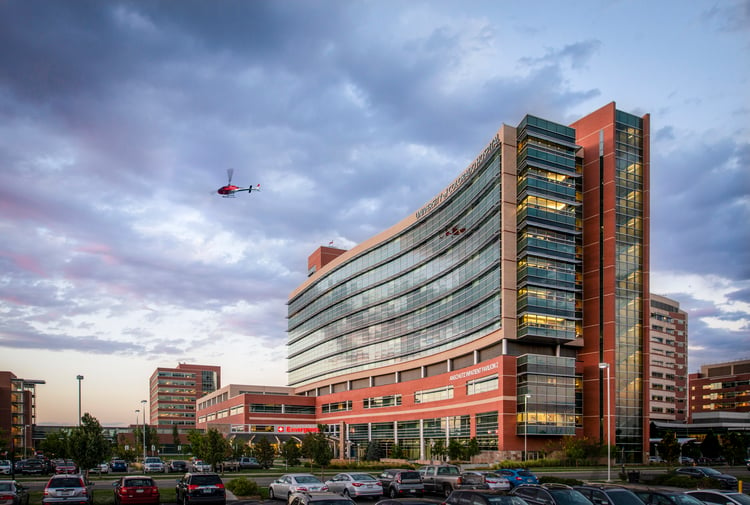
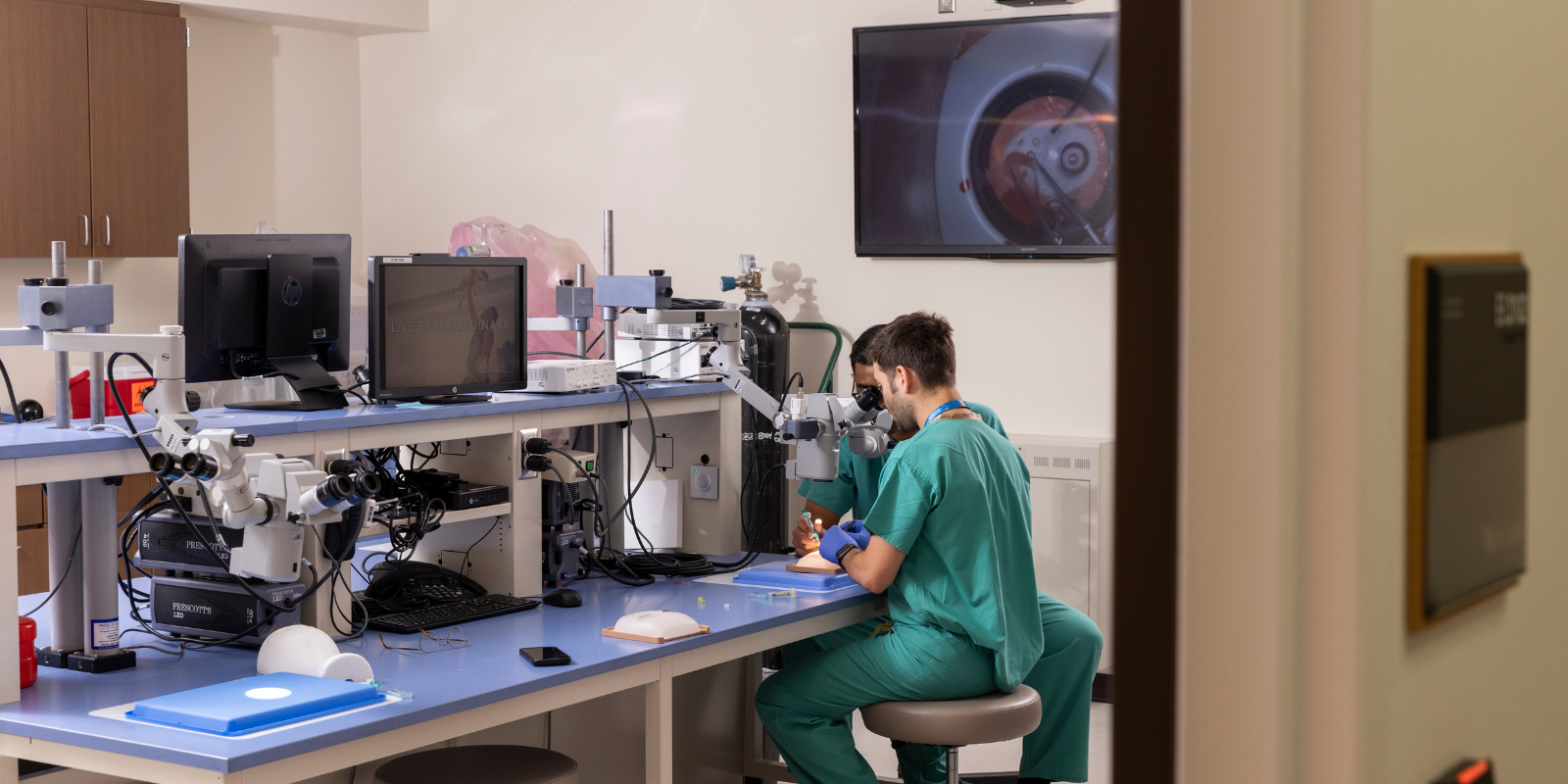
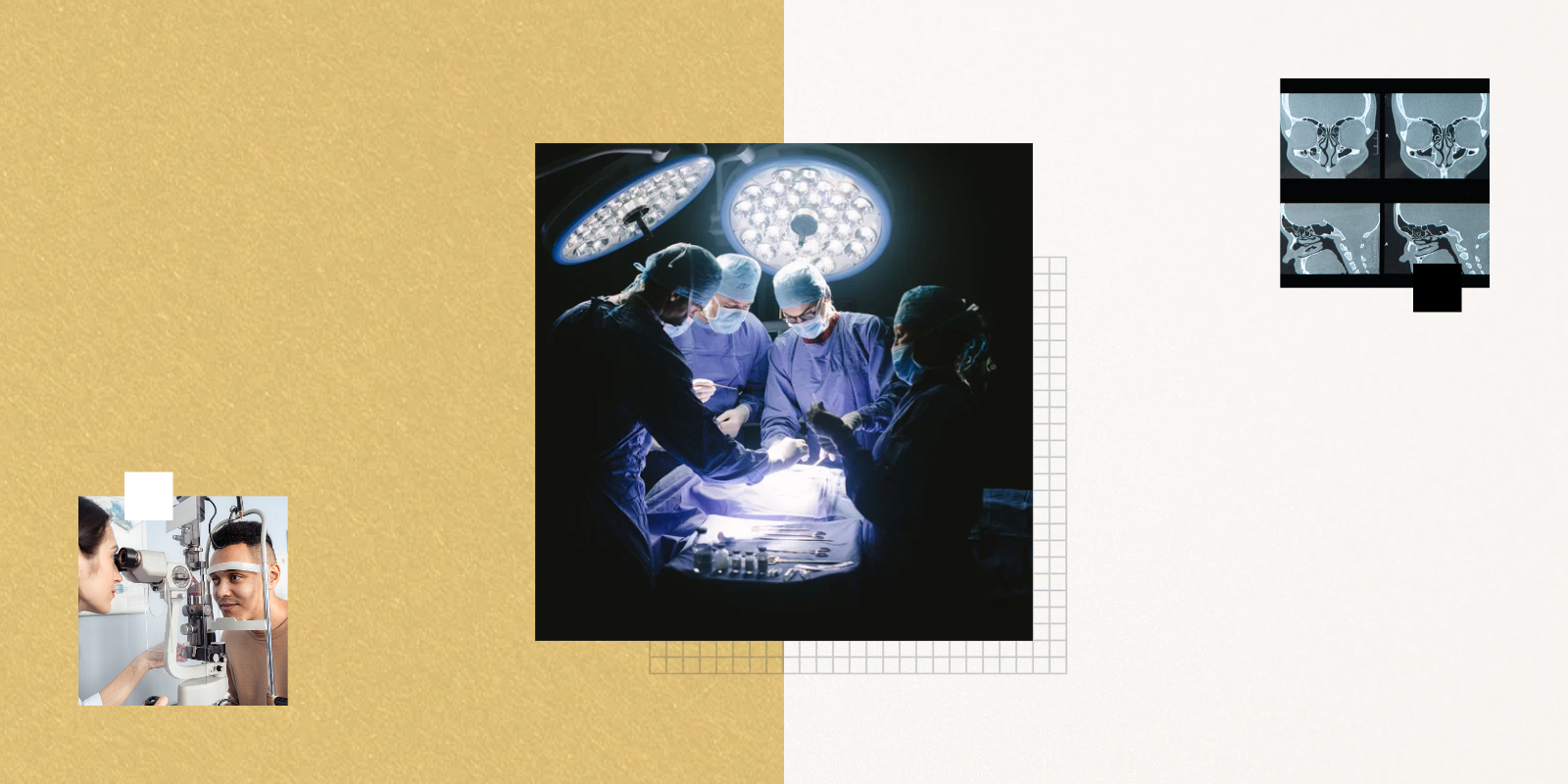
Whether it be responding to emergency trauma cases or removing tumors, surgeons at the UCHealth University of Colorado Hospital at CU Anschutz regularly collaborate to provide exceptional care to patients.
Treating complex tumors
Helping cancer patients by removing tumors is another critical piece of the collaborative work that ophthalmologists and rhinologists perform. Kingdom explains that he will help ophthalmologists access hard-to-reach tumors, such as those around the optic nerve or near the orbit, through the nose.
“It’s a sophisticated and complicated procedure, but it is minimally invasive, potentially saving the patient a bigger external surgery — like a craniotomy, where a neurosurgeon would have to step in,” he says.
In her work, Liao has coordinated with both rhinologists as well as facial plastic and reconstructive surgeons, who are another type of subspecialist in the CU Anschutz Department of Otolaryngology – Head & Neck Surgery.
“The bigger a tumor gets, the more people who may be involved to remove the tumor safely. We’ll also collaborate for reconstruction surgery,” Liao says. “We always talk about our surgical plan ahead of time and create thorough plans centered around what is safest for the patient. We make sure the patient is involved, and we work with other clinicians, such as nurse navigators, to make sure everyone is on the same page. I think that is one of the reasons why the relationship between our departments is so important.”
For Liao, the experience of caring for an 8-year-old boy who had melanoma near his eyelid illuminated how valuable this collaborative, coordinated approach is.
“This was an incredibly rare occurrence, and there is very little literature that we could consult compared to treating adults with melanoma,” she says. “We consulted oncologists, radiation oncologists, and other experts to make sure we were considering everything and ensure we were doing what was best for this patient. It was weeks of preparation.”
Liao worked closely with Brian Cervenka, MD, who specializes in head and neck oncology and microvascular surgery, to treat this patient. She had to surgically remove a somewhat large section of the patient’s eyelid to ensure the melanoma was fully removed, resulting in a more intensive reconstruction surgery. Cervenka focused on ensuring the lymph nodes were properly biopsied.
“I’ve seen that kiddo a few times after the surgery was performed last year, and he’s doing great. His eye is functional, he’s back to doing what he wants and is thriving in school, and he does not have cancer anymore,” Liao says. “I’m glad we were able to achieve those outcomes, and we couldn’t have done it without the whole team. This is not a one-man show, ever.”
“I’m thankful that I’m at a big academic center like this, because I have a friend in every corner who can help me make the right decisions for patients. Making decisions with experts of different fields is so incredibly important, and it uniquely positions us to provide this level of specialty care,” she adds. “I think health care in this country would be different if everyone was treated like they are at the CU Anschutz campus.”