<img height="1" width="1" style="display:none" src="https://www.facebook.com/tr?id=799546403794687&amp;ev=PageView&amp;noscript=1">

How West Nile Virus Can Affect Your Eyes

Although rare, CU ophthalmologist Amit Reddy, MD, explains how West Nile virus can potentially affect a person’s vision.

minute read

by Tayler Shaw | August 4, 2025
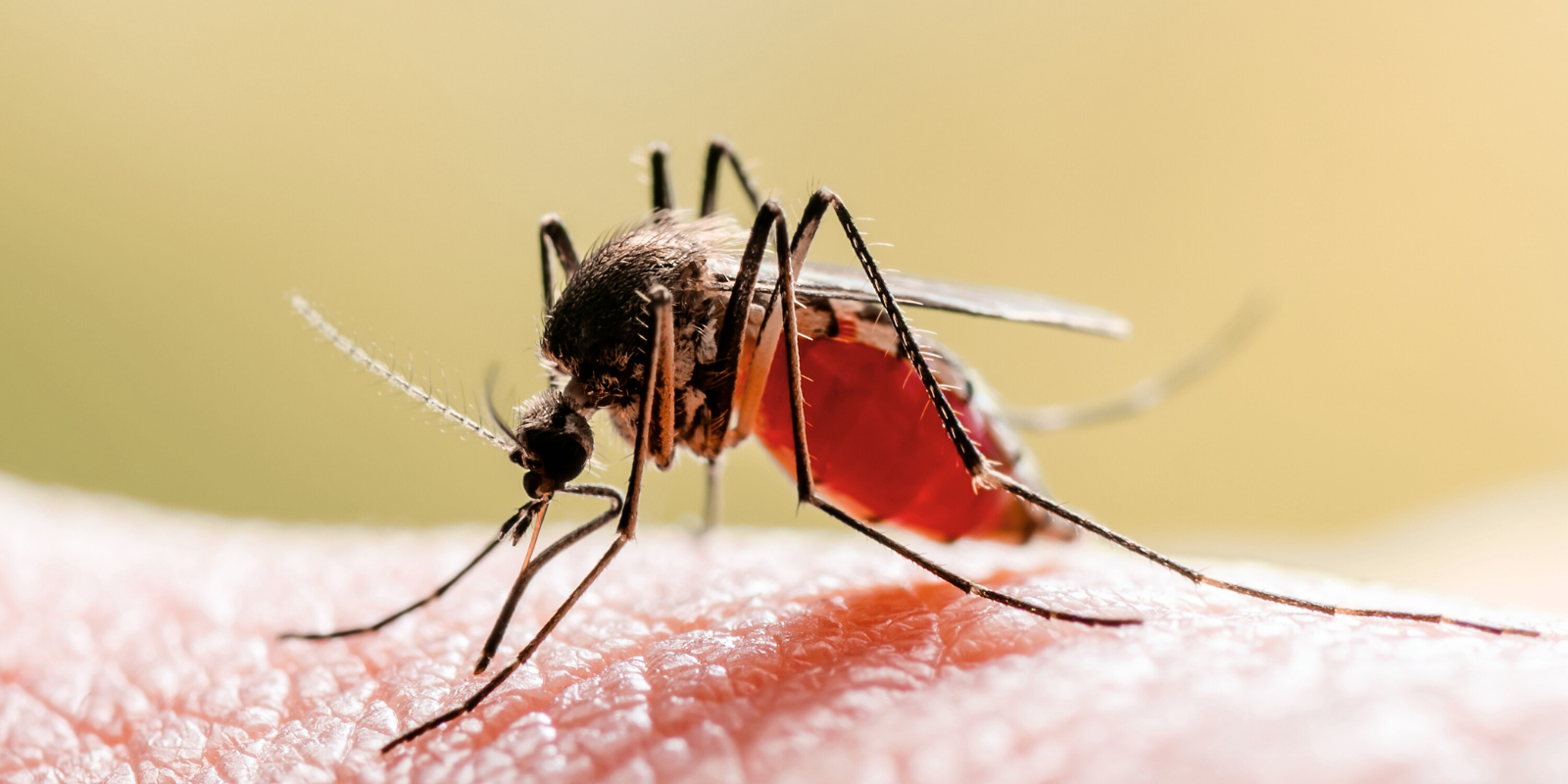
A close-up image of a mosquito on a person's skin.

Mosquito bites are always a nuisance, but for some, a little bite can cause significant harm. National data shows that as of July 29, people in 23 states have been infected with West Nile virus in 2025. In Colorado, at least 11 people have been diagnosed with West Nile virus and one person has died from the mosquito-borne disease so far this year, prompting state officials to urge residents to be more aware of the virus and take precautions. Although most people will not experience serious symptoms, the state health department warns that some people may experience fever, severe fatigue, body aches, skin rash, and swollen lymph nodes — but a lesser-known symptom can arise, too: eye issues.

Each year, a handful of patients whose vision is affected by West Nile virus will come to the Sue Anschutz-Rodgers Eye Center and see a specialist like Amit Reddy, MD, an assistant professor in the University of Colorado Department of Ophthalmology who cares for patients with uveitis, which refers to inflammation in the middle layer of the eye that is caused by a variety of conditions.

“For most people, if they get West Nile virus, they may experience mild symptoms that go away on their own. But for a small percentage of people, the virus can make its way into the brain, and those seem to be the patients who have the highest risk of eye involvement,” Reddy says. “It’s still unclear exactly how the virus gets into the eye, but the neurological connection makes us suspect that it likely goes from the brain into the eye.” 

Reddy sees the highest peak of West Nile cases during the late summer and early fall. Given that at least eight counties in Colorado have mosquitoes carrying West Nile virus, we recently spoke with Reddy about what people should know about this rare occurrence.  

 The following interview has been edited and condensed. 

Q&A Header

In what ways can West Nile virus affect the eyes? What symptoms may a person experience?

Patients’ symptoms are often vague floaters in the eye, blurry vision, and some visual changes. When we assess them, we can usually determine if the issues are connected to West Nile virus because it has a very characteristic appearance — linear scarring on the retina. Nothing else really looks like that, so if you see that, you can be pretty sure that it’s West Nile. The scarring usually does not cause visual issues.

This virus can have other manifestations as well. There can be what’s called anterior uveitis, which is when there are white blood cells in the front part of the eye in the anterior chamber. There may also be white blood cells floating in the middle part of the eye. You can also get inflammation in the retinal blood vessels, which we call retinal vasculitis. Those are less common appearances, but a patient may have a combination of these signs plus the retinal scars.

What is the diagnosis process?

You technically diagnose it by getting antibody tests in the blood — or if it is in the brain, you can test spinal fluid through spinal tap — to see if a patient has antibodies against West Nile virus. There are two types of antibodies, IgG and IgM. IgM is the acute antibody that tells us if it is an active or recent infection, and IgG is the long-acting antibody that tells us if you’ve been exposed to the virus before.

How rare is it for West Nile virus to affect a person’s eyes?

It seems very rare. It is difficult to know the exact percentage of affected patients because most affected people will not have severe symptoms, so they don’t go to the hospital and don’t get their eyes looked at.

In patients who have a neurological infection from West Nile virus, the rates vary from 40% to 80% experiencing eye involvement. So, if you have brain involvement, it seems that there is a high likelihood of having eye involvement as well. But generally, West Nile cases are mild, and patients are very unlikely to have eye involvement.

At the eye center, each year, we usually get three to five cases in the late summer or early fall of patients whose eyes have been impacted by the virus.

What is the typical treatment process?

There isn’t a treatment specifically for the virus. If you have a severe infection that is affecting the brain, you usually end up being admitted to the hospital and receive supportive care. There is not a specific antiviral treatment.

With the eyes, it appears that most cases are self-resolving and do not require long-term treatment. If a patient has anterior uveitis, we may treat them with steroid eye drops. Most of the time, patients will recover, and it does not lead to any chronic problems. Scars in the retina can lead to a blood vessel formation that is called choroidal neovascularization. We can treat that with injections into the eye, but for the scars themselves, we usually just monitor them.

Are there any additional steps a person could take to prevent West Nile virus from affecting their eyes and vision?

The best way to protect yourself is to avoid contracting West Nile virus by avoiding getting bitten by mosquitoes — which is difficult because if you are outdoors in Colorado, you are at risk. Older age and diabetes appear to be risk factors for getting a more severe infection from West Nile virus.

In general, during the late summer and early fall, if you feel sick and experience symptoms that you think may be connected to West Nile virus, I recommend getting evaluated by health care professionals.

Looking ahead, what additional research is needed on this?

As the prevalence and rates of West Nile virus continue to increase each year, and as it spreads to more areas of the country, having an antiviral medication for it or a vaccine for it would be very helpful. This is an issue that researchers are working on, but it takes time.

Featured Experts
Staff Mention

Amit Reddy, MD