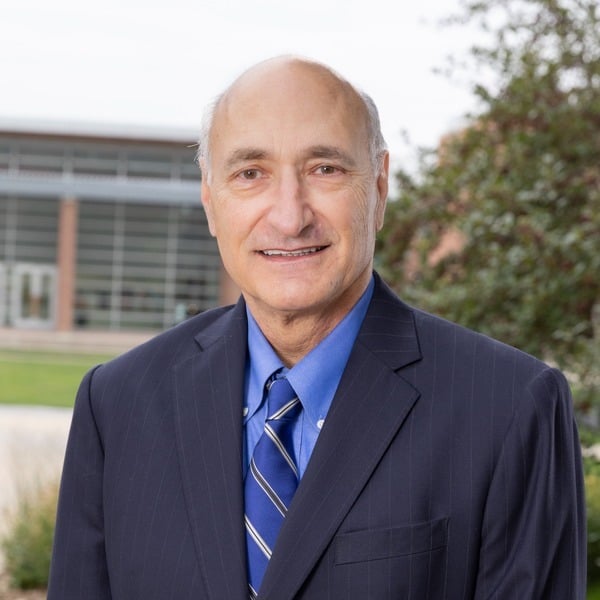
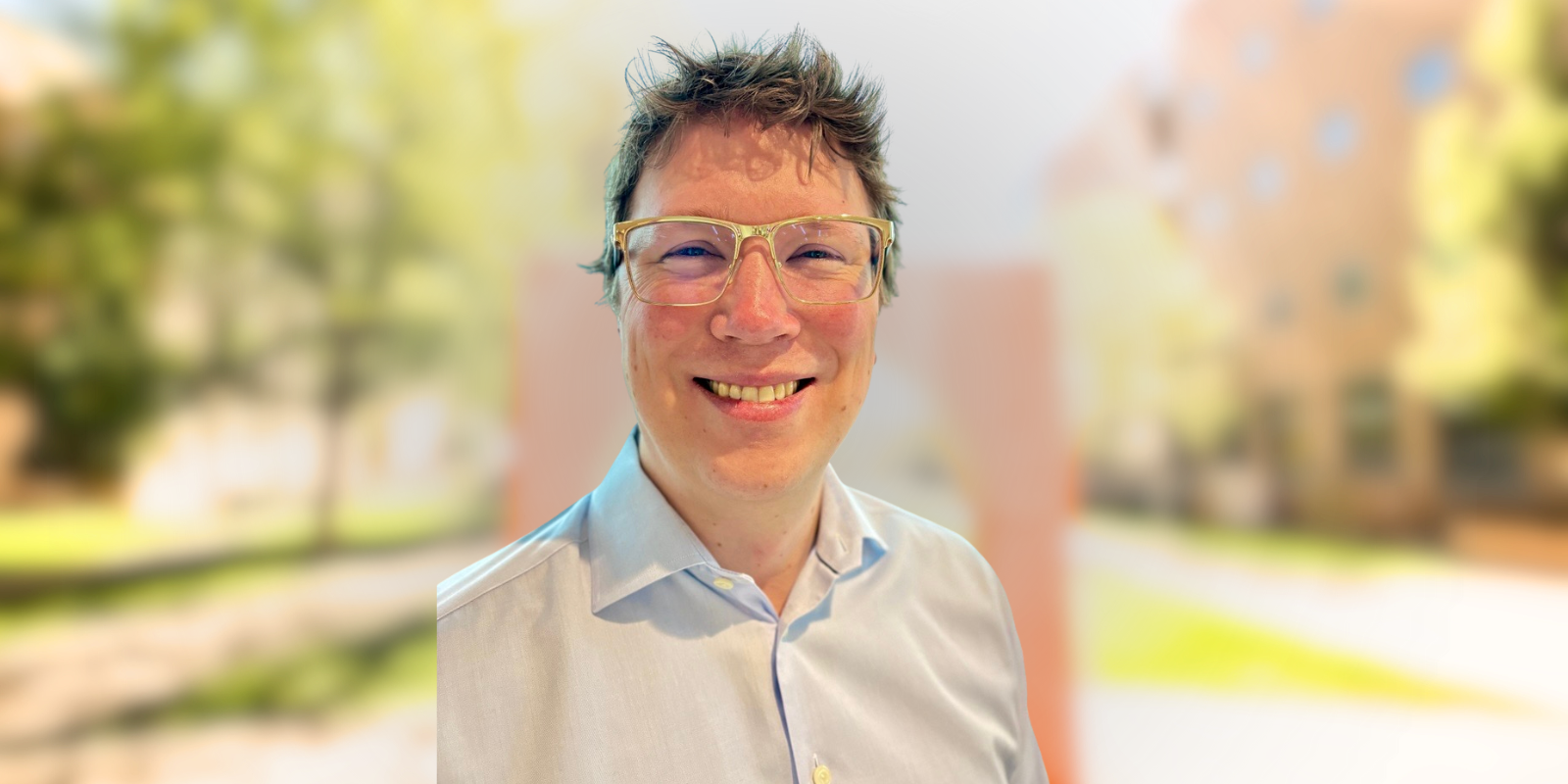
With his sights set on improving eye health care through innovative artificial intelligence (AI) research and global health initiatives, Travis Redd, MD, MPH, has multifaceted aspirations as the new chief of cornea service at the University of Colorado Anschutz Department of Ophthalmology. He is also the first chair holder of the newly established Frank and Ann Taravella Endowed Chair in Corneal Disease, named after the parents of Michael Taravella, MD, the former cornea chief.
“I couldn’t ask for a better person to occupy the endowed chair in my family name,” says Taravella, a professor of ophthalmology, co-director of the department’s cornea, external disease, and refractive surgery fellowship program, and director of the refractive surgery service. “Dr. Redd is an excellent clinician and surgeon who has an outstanding reputation in the area of corneal transplant. He is also at the forefront of cornea research, especially in artificial intelligence as it applies to corneal disease.”
Redd joined the Sue Anschutz-Rodgers Eye Center in January to advance care for patients who face issues with their cornea, which is the clear window in the front part of the eye. As the new leader of cornea specialists for the eye center, Redd will build upon the strong foundation Taravella created over the past four decades.
“The CU Anschutz Department of Ophthalmology is already fantastic and extremely accomplished, so it's the perfect situation for me to join,” Redd says. “I want to help make our cornea service a regional, national, and even global leader in terms of taking care of patients, building a strong research portfolio, and training the next generation of cornea specialists.”
From Indiana Jones fan to eye doctor
Redd, who grew up in the Pacific Northwest, was a big fan of Indiana Jones as a child. He initially envisioned a future filled with similar adventures and discoveries. The reality, he learned as an anthropology major at the University of Oregon, was less fulfilling.
“I distinctly remember that halfway through college, I was in a basement by myself, picking through little shards of pottery and trying to find anything of value. I had this realization that I really enjoyed learning about other cultures, but I wanted to do something where I would have a tangible, positive impact on people’s lives,” Redd says. “That’s when I decided to switch to medicine.”
He discovered an interest in ophthalmology during his medical school training at the Oregon Health and Science University (OHSU), where he also earned a master’s degree in public health. Following medical school, Redd completed his residency training at the same university. Then, he completed his fellowship training in cornea and external diseases at the University of California San Francisco and Francis I. Proctor Foundation for Research in Ophthalmology.
“The cornea lends itself well to my global health interests, because the majority of preventable blindness in the world is caused by cataract and corneal opacification,” he says. “Most of the corneal blindness in the world is caused by infections like corneal ulcers or trachoma, and those are my two main areas of clinical and research interest.”
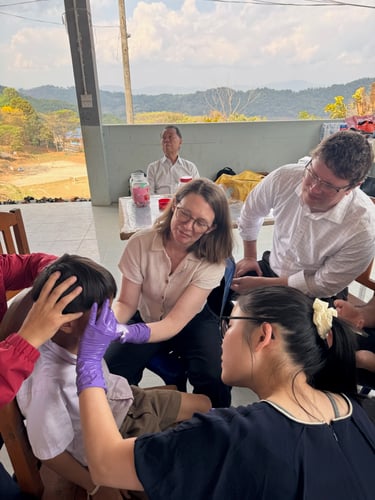
Travis Redd, MD, MPH, top right, examines a pediatric patient in Thailand in February 2026. Redd and several research partners traveled to a rural area in northern Thailand to conduct a screening project and pilot test a new AI model that aims to diagnose trachoma — a bacterial eye infection — using a smartphone application.
Using AI to help treat eye infections
Before joining CU Anschutz, Redd worked at the OHSU Casey Eye Institute, where he cared for patients and built an impressive research portfolio. Much of his research is focused on exploring how AI can help diagnose infectious keratitis — also known as corneal ulcers, where an infection causes progressive inflammation of the cornea — and trachoma, a bacterial infection that can spread rapidly and cause irreversible blindness.
When treating corneal ulcers, it can be difficult for doctors to determine if a patient has a bacterial infection or a fungal infection — an important distinction because the treatment varies depending on the infection type.
“We’re working on developing several different AI models to help guide that initial selection of antimicrobial agents to hopefully get rid of the infection,” Redd says.
Research estimates that between 30,000 and 75,000 new cases of corneal ulcers are detected annually in the United States. Trachoma, on the other hand, has not existed in the U.S. for many decades, but it is still a major cause of blindness in low- and middle-income countries, Redd explains.
“It’s frustrating because for many decades, we’ve had effective treatments,” he says. “If you find a community of people who have a high prevalence of trachoma, you give antibiotics to all the children under age 10 in that community, and if you do that every six months or so, you can eradicate trachoma from that region.”
Diagnosing trachoma, however, has become difficult, he explains.
“As trachoma becomes more siloed in specific communities, there are fewer people who know how to diagnose it,” he says. “My research collaborators and I developed an AI model to help us diagnose it using a smartphone application.”
This year, Redd and his collaborators will travel to a rural area in northern Thailand to conduct a screening project and pilot test the new AI model. They will also assess whether there is a high prevalence of trachoma in the area. If there is, Redd hopes to help eradicate it.
“With global health work, I feel very strongly that you have to be collaborating with local organizations or providers, so I have three universities that I collaborate with in Thailand,” he says. “One of them has strong connection to this area of rural Thailand — the communities are called the hill tribes — and they have limited access to medical care. It’s a particularly high-risk population for trachoma.”
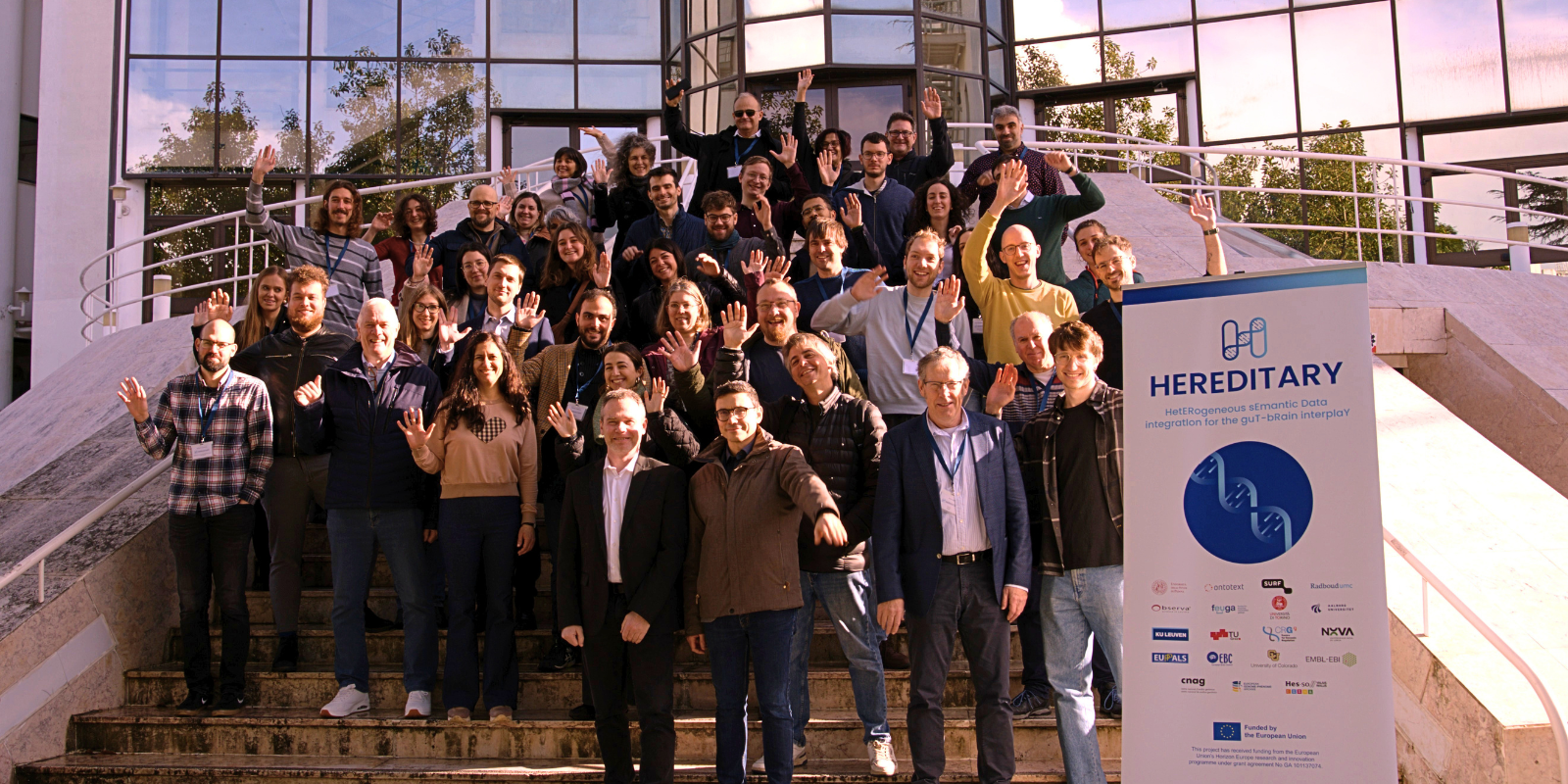
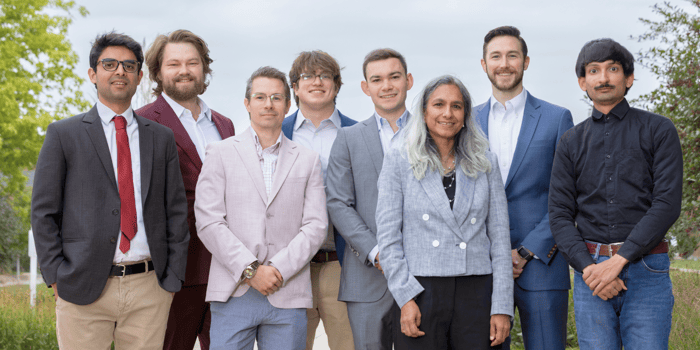 Members of the Division of Artificial Medical Intelligence in Ophthalmology smile for a group photo at CU Anschutz.
‘I’m really honored’
A major reason Redd wanted to join the ophthalmology department at CU Anschutz was because of its cutting-edge work in the AI space, admiring the leadership of professors like Jayashree Kalpathy-Cramer, PhD, chief of the Division of Artificial Medical Intelligence in Ophthalmology.
“I think CU Anschutz is a national leader in AI and ophthalmology, and I’m really looking forward to using the resources here to push forward these existing projects and create new collaborations so we can become global leaders in this space,” he says. “I think that's a very realistic goal, given the talent and dedication of the team that's already here.”
As chief of cornea service, Redd aims to support the whole team that helps patients with corneal diseases — from staff, to trainees, to faculty — to ensure that patients get the highest quality care. In addition to supporting clinical care and advancing research, he looks forward to helping educate the next generation of medical professionals.
Being the inaugural chair holder of the Frank and Ann Taravella Endowed Chair in Corneal Disease will help Redd accomplish these goals by providing funding to support such initiatives.
“I’m really honored to take on this endowed chair position. I have so much respect for Dr. Michael Taravella, because he’s taken care of patients in this region for many decades and has had such a huge impact on the community,” Redd says. “It’s thousands of people, from his patients to his trainees, who have benefitted from his service, so I feel a lot of responsibility to take on the Taravella chair and ensure I am doing it justice.”
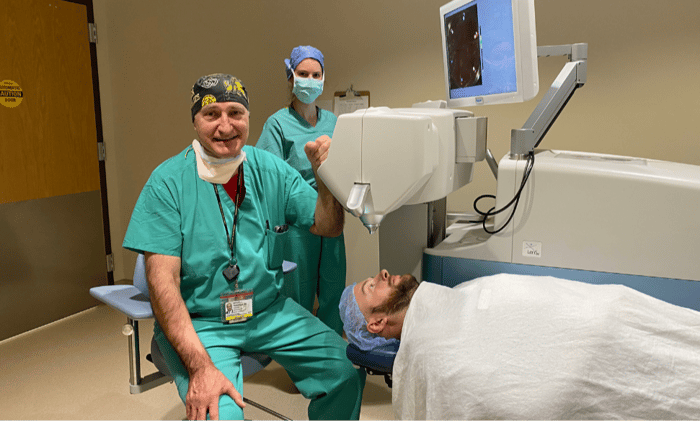 Michael Taravella, MD, far left, has worked at CU Anschutz for roughly four decades, providing exceptional care to patients and leadership to the ophthalmology department.
Decades of growth ‘in the blink of an eye’
When Taravella, who graduated from the CU Anschutz School of Medicine in 1981, began working in the Department of Ophthalmology in 1987, it was just himself and Philip Ellis, MD, the chair of the department at the time, who were full-time faculty.
“We didn’t really have subspecialty chiefs to begin with — that evolved over time,” he says, noting that the department now has nine cornea specialists. “Looking back, 40 years go by in the blink of an eye.”
Just as the department has evolved, there have been substantial developments in the treatments and surgeries performed in corneal medicine, such as the development of keratoprosthesis, a surgical procedure in which a diseased cornea is replaced with an artificial one.
“I was one of the first in the U.S. to use something called the AlphaCor, which was an artificial cornea,” Taravella says. “Over time, we started using the Boston keratoprosthesis, which is really for patients who have issues where a normal cornea transplant wouldn’t work.”
Taravella has also seen the growth of the department’s partnership with the Rocky Mountain Lions Eye Institute, including the evolution of the Rocky Mountain Lions Eye Bank, which helps supply eye tissue donations that can be used for transplants.
“I feel like having the eye bank next door to us is a great advantage. Over the years, we have worked closely with the personnel there as newer techniques, such as endothelial keratoplasty, have come to fruition,” he says. “What really sets our eye center apart is our ability to treat more complex cornea cases in collaboration with other subspecialists. I can’t imagine another place in the region where you could get multi-level care under one roof as efficiently as you can here.”
Although Taravella has stepped down as the cornea chief, he will continue to direct refractive services for the department. A refractive treatment corrects vision issues such as nearsightedness, farsightedness, and astigmatism and includes LASIK, photorefractive keratectomy (PRK), and intraocular lenses. He will also continue as co-director of the cornea, external disease, and refractive surgery fellowship program.
“I think if I have one true legacy here, more than any other, it's being involved with the people I helped train and seeing them come into their own,” he says, noting that several faculty members in the department are former fellows. “There are few fellowships that offer the breadth and depth of experience that our fellows finish with.”
‘I wanted to honor them’
The Frank and Ann Taravella Endowed Chair in Corneal Disease is named after Taravella’s parents. Taravella is a second-generation Italian American. On his father’s side, his grandparents immigrated from Sicily around 1900. His father spent his life working on a farm and in the steel mill in Pueblo, Colorado. His father also served in World War II as a medic. Taravella says his mother, who was of Slovenian ancestry, was a homemaker who “made a great home for myself and my brother to grow up in."
“They lived through many social upheavals such as the Great Depression. They were both part of what’s become known as the ‘Greatest Generation,’” he says. “My parents were what I consider to be the salt of the earth, and I wanted to honor them for raising me, supporting me, and paying my way through medical school.”
Looking ahead, Taravella is excited to see what Redd will accomplish in his new leadership roles.
“I’m really happy that we recruited him. He’s a great fit for us and has strong ideas about research and ways to improve corneal care,” Taravella says. “He’s very down to earth and has a clear vision as to where he wants to take the cornea service.”