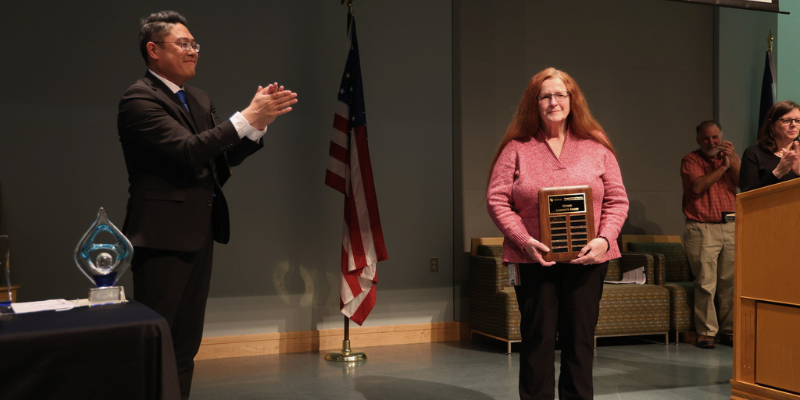

Colorado is a leader in progressive pharmacy practice, in no small part to the collaboration between CU Skaggs School of Pharmacy and Pharmaceutical Sciences and the Colorado Pharmacists Society (CPS). So, when The Food and Drug Administration authorized updated COVID-19 vaccines but limited their use for most age groups and rescinded the emergency use authorization, a group of pharmacists kicked their work in to high gear. Led by Gina Moore, PharmD, CU Pharmacy Senior Associate Dean for Operations and Regulatory Affairs and Legislative Chair for CPS, and Emily Zadvorny, PharmD, Chief Executive Officer for CPS and Clinical Associate Professor at CU Pharmacy, the team of advocates knew their work was of the essence.
Two Goals for Greater Vaccine Access
The pharmacy leaders set out with two goals to make vaccines more accessible for Coloradans; one, update rules set by the Colorado State Board of Pharmacy that would allow pharmacists to provide all vaccines independent of physician authorization; and two, collaborate with Governor Jared Pollis’ office to issue a standing order allowing pharmacists to issue COVID vaccines. The standing health order also serves as a state-wide prescription from Colorado’s Chief Medical Officer for all Coloradans to be eligible for a COVID vaccine.
The team succeeded on both fronts. On Sept. 3, Colorado issued Public Health Order 25-01, restoring access to COVID vaccines just in time for fall respiratory illness season; and on Sept. 5, the Colorado Board of Pharmacy conducted Emergency Rulemaking that allows pharmacists to prescribe and administer all vaccines directly, whether or not they are included on the Centers for Disease Control (CDC)-recommended list.
Years of Collaboration Paved the Way
Their success was a group effort and started long before this vaccine emergency.
“We worked together with a group of stakeholders in 2021 on our state’s pharmacy practice act, so we were familiar with the bill’s language,” explained Dr. Moore. “We have also worked closely with the Colorado State Board of Pharmacy over the years and have a very collaborative and respectful relationship with the Executive Director of the Board, in which we are able to suggest regulatory changes to enable public access to pharmacist services, while remaining mindful of statutory language.”

Additionally, Zadvorny is on the Board of Directors for Immunize Colorado, a vaccine advocacy group, and was able to work with her colleagues there. With some outreach, she was also able to garner the support of physician groups that supported the rule changes. Once they had their supporters, they explained that they became aware that Governor Pollis’ office was also planning to issue a standing order for COVID vaccinations; however, that standing order was issued for just a one-year period.
Moore and Zadvorny wanted to ensure that pharmacists could independently prescribe and administer all vaccines on an ongoing basis or could also choose to utilize the standing one-year executive COVID vaccine order, creating two different legal pathways for pharmacists to provide vaccines.
Empowering Pharmacists as Prescribers
“We [pharmacists] have been able to administer vaccines under physician authorization for years in accordance with CDC guidelines,” Moore said. “This previous authorization typically took the form of a standing order downloaded from the CDC website signed off by a physician. The pharmacist would still determine for whom a given vaccine was appropriate or not. The physician who signed the standing order was the prescriber of record for the vaccine for record-keeping and billing purposes, but never actually saw the patient.”
In contrast, these new rules still require the pharmacist to determine vaccine appropriateness, but the pharmacist may become the prescriber of record. Pharmacists will no longer have to find a physician to sign off on a standing order. Incorporating the ability to rely upon national, evidence-based guidelines beyond the CDC will allow pharmacists to administer vaccines based on those guidelines and patients will not need to obtain a prescription for a vaccine from their provider.
This part is important. Pharmacists have long been recognized as the most accessible healthcare professional, and this reinforces that role in any community. At a time when rural healthcare is struggling, and access to providers is low, pharmacists are continuing to provide frontline care.
Advice for Future Advocates
Because of Moore and Zadvorny’s work, Colorado continues to lead the nation in its progressive pharmacy practice. Zadvorny offers her advice to pharmacists who want to move the dial forward for their field and create accessible healthcare.
“Become a member of your state professional association,” she said. "Get involved with the legislative or advocacy committee. Become well versed on legislative and policy issues. It’s also important to develop relationships with legislators and policy makers so that you can serve as a resource when issues arise. Our relationships have taken years to establish and it's a bit easier to navigate public policy issues now, but it is important to always be respectful and collaborative.”
Colorado, a Model in Care
The recent changes mark another milestone in Colorado’s ongoing effort to expand the role of pharmacists in patient care. By securing new authority to prescribe and administer vaccines, the state’s pharmacy leaders have shown how collaboration and advocacy can drive meaningful progress in public health. As other states look to modernize their pharmacy laws, Colorado’s model offers a clear example of how pharmacists can help close gaps in care and keep communities healthier.