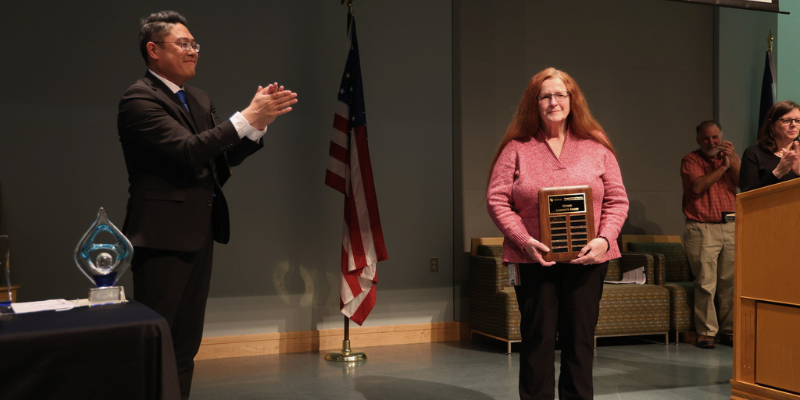
Wesley Nuffer, PharmD, is a Professor and Assistant Director of Experiential Programs at CU Skaggs School of Pharmacy and Pharmaceutical Sciences, where he works to place students in various pharmacy practice settings. In addition to experiential education, Dr. Nuffer’s expertise is in diabetes, obesity, and immunizations. He spends many weekends each year helping at vaccine clinics alongside his students, ensuring a healthier Colorado for all. We caught up with him for some back-to-school immunization questions just as summer is winding down.

What vaccines are recommended for adults and children as we head into the fall season?
There has been quite a bit of activity in the federal government, with the 17 standing members of the Advisory Committee on Immunization Practices (ACIP) being removed by HHS Secretary Robert F. Kennedy Jr. Eight new members were appointed to the committee. ACIP has long been the committee that makes decisions on which vaccines should be recommended across different age groups and special populations, and they meet in October.
For fall, influenza vaccines are still recommended for everyone over the age of six months. Additionally, adults 60 years and older, particularly those with chronic health conditions, and infants should receive a respiratory syncytial virus (RSV) vaccine if they have never received one in the past. Finally, those adults who have not yet received the 2024-25 COVID vaccine are recommended by the CDC to receive one. It is anticipated that a 2025-26 COVID vaccine will be available in the fall, but the CDC recommendations on which groups within the population should receive it have not yet been released.
Are there any recommended vaccines for school-aged children that aren't mandatory but still important?
As stated above, current recommendations for both children and adults are under review by ACIP and could change substantially based upon the October meeting. This is significant because current legislation requires all insurance payers to cover all vaccines at no cost based on ACIP recommendations. If a vaccine was removed from ACIP recommendations, payers, such as insurance companies, would no longer be required to cover the cost at 100%.
Currently there are strong recommendations for school-aged children from elementary through high school. These are considered mandatory based on the established science that demonstrates the remarkably high rates of prevention that occurs. Unfortunately, as we have seen with the multiple measles outbreak in 2025 (32 outbreaks and 1356 confirmed cases compared to 16 outbreaks and 285 confirmed cases in 2024) many children are not receiving the vaccines that they need. It should also be noted that these statistics are only confirmed cases and it is suspected the actual number of measles cases this year are much higher. I strongly encourage parents to talk to informed health care providers, including their pediatricians and their pharmacists, about what vaccines their children should receive to prevent serious disease from occurring and spreading.
Can you tell us more about the flu shot, and when is the best time to get it?
Everyone over the age of six months should receive a flu shot to protect themselves and each other against the risk of flu. While many people view the flu as being mild, many Americans are hospitalized each year and some die from the influenza virus and complications associated with it. For the 2023-24 season, the CDC estimated there were 40 million flu-related illnesses, 18 million flu-related medical visits, 470,000 flu-related hospitalizations and 28,000 flu-related deaths. Getting vaccinated remains the best way to protect against the flu.
Generally, the influenza season peaks between late December and early February of each year, during the peak of winter. Based upon this, the ideal time frame for receiving the flu vaccine is late September through early November. People with strong immune systems should have no problems if they receive a dose earlier than this time frame, but for higher risk or older individuals it is best to wait until this time to receive a flu shot. Additionally, adults over the age of 65 or those who may have a compromised immune system are recommended to receive specific flu shot products that have established a higher level of efficacy. Three flu vaccines (Fluzone high-dose, Flublok recombinant and Fluad adjuvanted) are preferentially indicated for these individuals. If those three vaccines are unavailable, any flu vaccine is acceptable as an alternative.
If someone isn’t sure what vaccines they’ve had, how can they find out or catch up?
Colorado maintains a registry record of immunizations (CIIS) that is a good place to start. Individuals are able to look up and print all vaccines on record at this site. If the registry does not list vaccinations for an individual, they should speak with a health care provider about what vaccines they may need to receive based on their age, circumstances, risk factors and disease states. In many cases, based upon the benefits vaccines produce and the low risk of adverse effects, these patients may be advised to go ahead and receive a vaccine series even if they may have had it in the past. There are also vaccine antibody titers that can be measured for certain vaccines to gauge someone’s immunity against that disease. Finally, the CDC has an established “catch-up schedule” that health care providers can use to help people become fully vaccinated based on appropriate intervals of doses.
How do vaccines help protect not just individuals, but entire communities?
Population immunity (also called community immunity or previously called “herd immunity”) is a concept where if the strong majority of the population is protected against a specific disease, those individuals who may not be able to receive a vaccine due to an immune problem or other contraindication can still be protected. Essentially by protecting everyone around us by vaccinating them, the person who is at risk may not get exposed to the contagion and can avoid being sick. Unfortunately population immunity relies on the community themselves to get vaccinated to protect those most vulnerable who cannot. Today, there is so much controversy and politics around vaccinations that many people are not up to date with current recommendations. When significant portions of the population do not get vaccinated, population immunity fails and those most vulnerable patients can get very sick and even die from a preventable disease.
What advice do you have for people who are hesitant or have questions about getting vaccinated?
Everyone should be skeptical about claims that are too good to be true. Skepticism is not bad, but too many people believe what they read on social media and do not seek out reliable sources. Vaccine safety has been studied extensively and there are very reliable websites available to provide foundational, scientific evidence as to the benefits of receiving a vaccine. Ask a health care professional about what sites you can explore that will provide reliable, science-based information. Unfortunately, the internet is ripe with misinformation and false truths as well so it is important that we guide our decisions based on solid science and evidence. It is so confusing in today’s world with different news outlets portraying the same story at very different angles. We need to become educated and learn how to find the truth for ourselves, rather than believing what someone else tells us. I would also encourage everyone to avoid sharing any sensational story they come across without first verifying the authenticity of the information. Spreading misinformation only makes this problem worse. Trust your health care providers to help educate and lead you to good sources. We are dedicated to caring for your health.