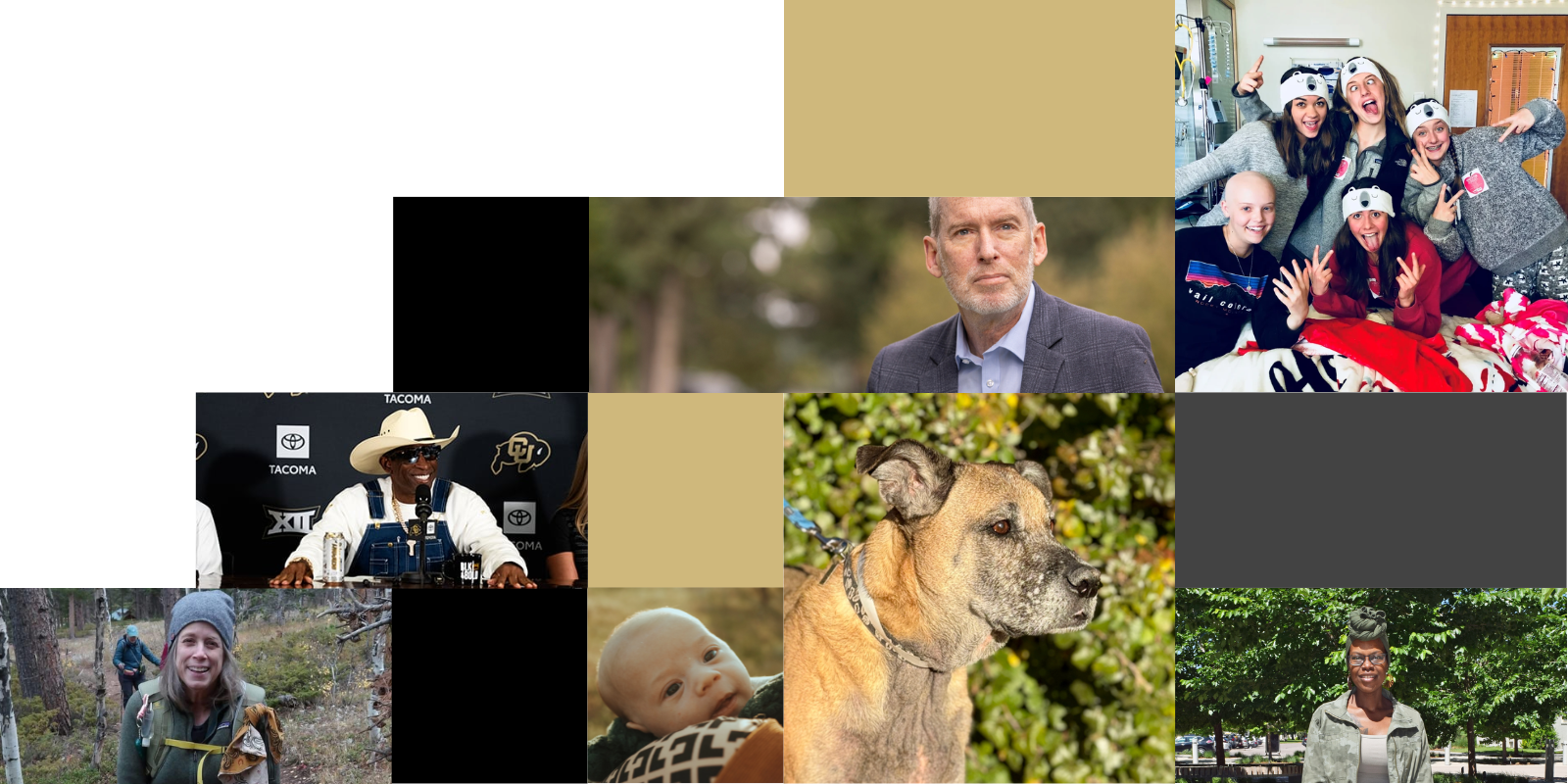
In 2013, Dara and Nate Johnson welcomed Baxter into their home as a Christmas rescue, and he quickly became the heart of their family, enjoying nothing more than a good scratch and peaceful walks around their hometown of Longmont. Described by his family as calm and with an Eeyore-like demeanor, he was the kind of dog who made everyone feel at ease.
“He’s always been a sweetheart,” Nate Johnson says. "He looks powerful, but he's the gentlest dog you'll ever meet."
However, in late 2021, the Johnsons noticed a concerning change in their beloved canine family member. After a walk near some fresh landscaping, Baxter emerged with blood on his nose. At first, they thought he’d been poked by a twig. But the bleeding returned sporadically, then more frequently, and soon Baxter struggled to drink water and breathe comfortably. He would rest his head, then lift it abruptly to catch a breath — his nose increasingly blocked by something unseen but ominous.
Their local vet offered an x-ray that led to a biopsy, and the diagnosis revealed sinonasal carcinoma, a type of nasal cancer. The options were limited: palliative care, intermediate radiation with modest results, or intensive, high-dose radiation therapy with a steep price tag.
Then, an unexpected opportunity presented itself.
Felt like hope
Colorado State University’s Flint Animal Cancer Center, a partner institution of the University of Colorado Cancer Center, reached out with an invitation: Baxter was eligible for a led by CU Cancer Center member Keara Boss, DVM, PhD, who is a veterinary radiation oncologist and clinician scientist. The trial combined stereotactic radiation therapy — a precise, high-dose treatment — with two repurposed blood pressure medications designed to modulate a canine patient’s immune system. It was a cutting-edge approach, and for the Johnsons, it felt like a ray of light in a dark time.
“We didn’t know what to expect,” Nate recalls. “But it felt like hope.”
Once Baxter was accepted into the clinical trial, he began his treatment at CSU, marking the start of a challenging journey for the whole family. “That was the hardest part,” Dara said. “We tried everything, but some days it was a real struggle. Every now and then, he'd bite a pill accidentally and get a bad taste, and we'd have to switch brands to different pill pockets and go back and forth."
Emotionally, the experience was a rollercoaster; Baxter's sneezing fit the first night after radiation was so intense it resembled a horror movie scene. But it was also the first sign that the treatment was working. “It was scary,” Dara says, “but also a relief. We knew something was happening.”
Soon, Baxter could breathe again. His energy returned. He was chasing squirrels along the fence line and enjoying his walks, albeit shorter ones. The Johnsons were given a small memento from the treatment — a bite plate used to position Baxter’s head during radiation. “It felt like a graduation,” Nate says. “A symbol of everything he’d been through.”


Learning from Baxter
Behind the scenes, the team at Flint Animal Cancer Center was learning from Baxter, too. Boss and her colleagues collected tissue and blood samples throughout the trial, tracking how the cancer responded and how Baxter’s immune system shifted. Though canine sinonasal carcinoma is rarely cured, Baxter’s tumor has remained under control two years post-treatment, which is well beyond the typical prognosis of 12 to 18 months.
“Baxter’s case has been incredibly valuable,” Boss explains. “Not just for veterinary medicine, but hopefully for human medicine as well. This trial is part of a larger collaboration with the Colorado Head and Neck Cancer SPORE at CU Cancer Center, exploring how the treatment of canine head and neck cancer might help advance treatment for people with head and neck cancers.”
Baxter’s journey wasn’t without complications. Partway through the trial, he experienced a kidney event that prompted the treating team to discontinue the immune-modulating drugs. But even off the medications, his cancer remains undetectable on CT scan, a discovery that Boss hopes will influence how future patients are treated in future clinical trials.
Kristen Weishaar, DVM, clinical trials director at Flint, emphasizes the potential impact of Baxter’s story and treatment. “He’s not just a patient, he’s a pioneer. His participation is helping us understand how to improve outcomes for both pets and people.”
Quality time
For the Johnsons, the trial gave them more than just time; it gave them quality time. “Two years ago, we were considering palliative care. Now, he’s still with us, still wagging his tail, still our sweet boy.” They’re grateful not only for the science but for the compassion they found at CSU. “Everyone there was so kind,” Nate says, his voice catching with emotion. “They always greeted him like he was the best boy. And he is.”
When asked what she would tell other pet owners facing a similar diagnosis, Dara didn’t hesitate. “Reach out to CSU. They gave us hope when we didn’t know what to do.”
Baxter’s journey exemplifies resilience, the deep bond between pets and their families, and the transformative potential of scientific advancements. He may not know he’s helping to shape the future of cancer treatment, but his quiet strength speaks volumes. In the twilight of his years, Baxter is still teaching us what it means to fight, to heal, and to hope.
And for the team at CSU, Baxter’s legacy will live on — not just in the data he helped generate, but in the lives he may save, both canine and human.