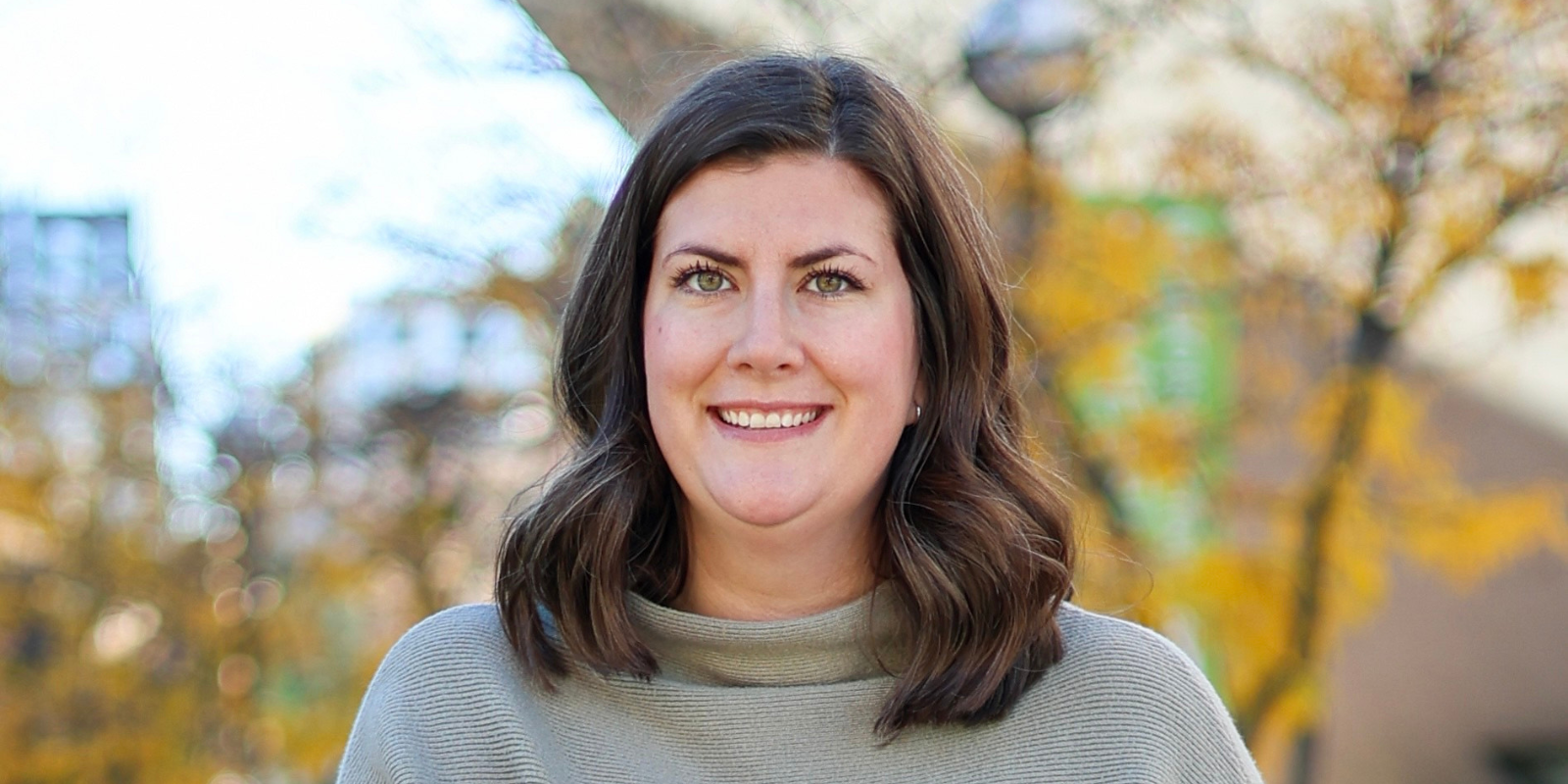
Like a lot of people in and around Colorado who learn they have cancer, the University of Colorado Cancer Center wasn’t the first place Caitlin Duffy went for treatment of her advanced cervical cancer. But that’s where she wound up – and she’s glad she did.
In 2023, when she was 31, Duffy – a teacher and mother of two – was diagnosed with cervical cancer. When she initially met with doctors near her home in Northern Colorado, she says, “I didn’t feel confident or comforted in what was happening. I wanted to make sure the treatment plan I was being assigned was the right one. I wanted second opinions.”
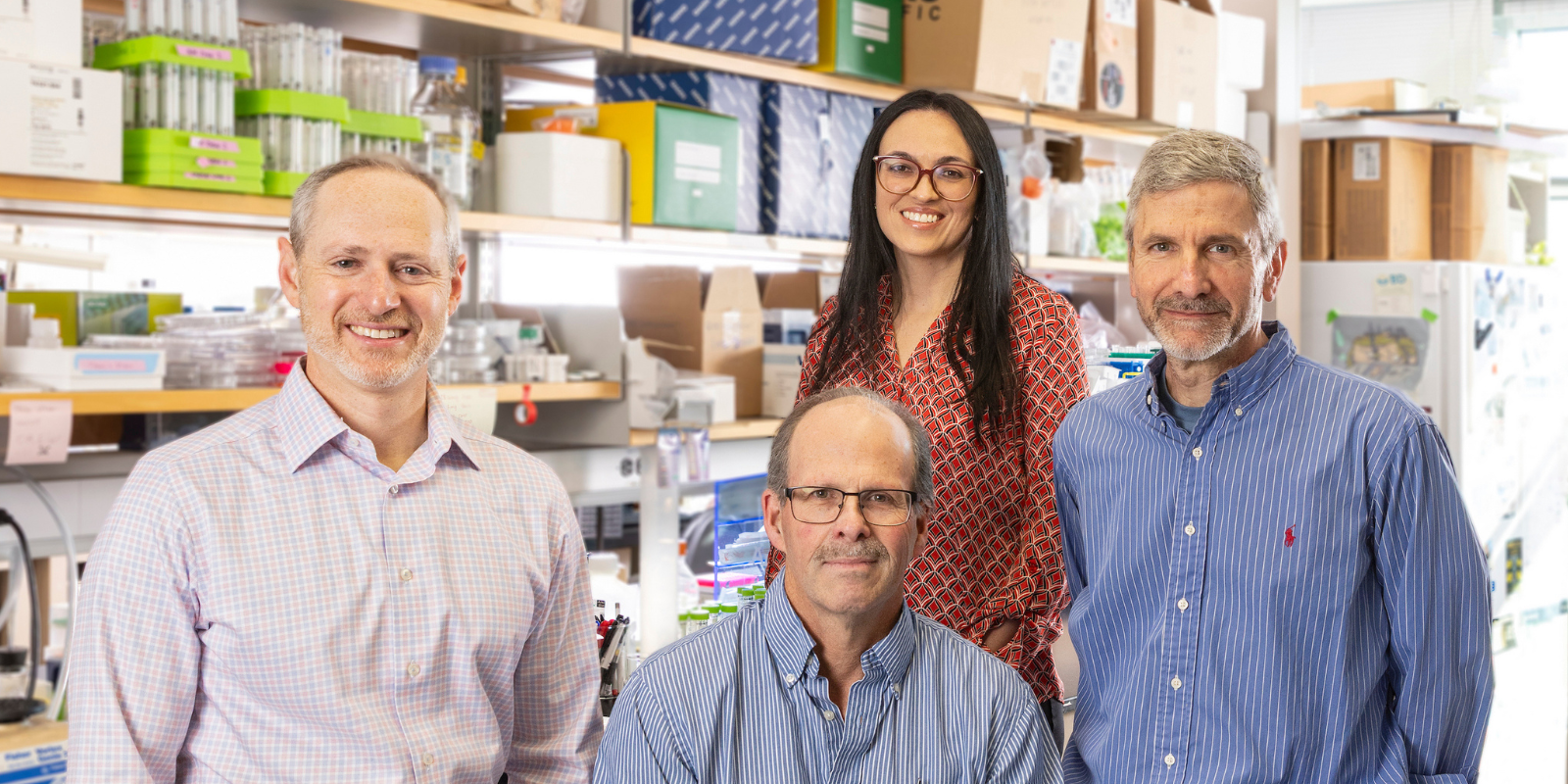
That’s why she reached out to CU Cancer Center member Saketh Guntupalli, MD, the Karen M. Jennison Endowed Chair in Gynecologic Oncology in the CU Anschutz Department of Obstetrics and Gynecology. Guntupalli recently was named chair of the department.
At the CU Cancer Center, Colorado’s only Comprehensive Cancer Center as designated by the National Cancer Institute, a multidisciplinary team of specialists created a coordinated treatment plan for Duffy, drawing on a trailblazing clinical trial in which the cancer center had participated.
Today, Duffy is 33, and her cancer is undetectable. “It almost doesn’t feel real,” she says, “because most of my identity had become about having cancer.”
Fear and uncertainty
After growing up in a small town on Colorado’s Western Slope, Duffy became a teacher, and at age 22 met her husband, Brennan, a fellow teacher. They later moved to the suburbs north of Denver to pursue their careers. They have two children: Marshall, almost 9; and Hazel, 5.
Duffy is now a social-emotional learning specialist. “I coach teachers on behavior management in their class and supporting struggling students who are doing everything from crying to flipping chairs. I’m the walkie-talkie guy who teachers call to help with a behavior situation. It’s the best job in the school, but it’s a lot of work.”
In early 2023, Duffy began feeling elevated pelvic pain during her menstrual periods. By October 2023, her periods were becoming irregular. At first, she told herself that what she was experiencing was a normal part of entering her 30s. Eventually she went to see a local doctor. Tests showed she had stage 3C cervical cancer that had spread to her lymph nodes, “which was extra terrifying to me, because it meant the solution I wanted, surgery, was off the table.”
Duffy knew few people who had experienced cancer. She says she “started to go down a Google rabbit hole, which is the No. 1 thing they tell you not to do,” while watching movies and TV shows about cancer, “and everything I saw was awful and very scary.” Her fear and uncertainty was outside her personal and professional experience, she says.
“I am a very resilient and positive person. I mean, my whole job is to be the sunshine crew at school. That’s basically my entire personality. And this was very, very difficult. My daughter was starting kindergarten in 18 months, and I was very afraid that I was going to miss out on being a mom and being a person.”
Duffy sought options for a second opinion, and her father-in-law was familiar with CU Anschutz “and knew about the wonderful reputation of Anschutz cancer center.” That led her to Guntupalli in February 2024.

Caitlin Duffy with her family: Husband Brennan and kids Marshall and Hazel. Photos provided by Caitlin Duffy.
‘He tells it to you straight’
Both Duffy and Guntupalli use the word “wonderful” to describe one another.
“He’s wonderful,” Duffy says. “He’s very intelligent and very kind. He’s not going to tell you something that’s not true or waste words. He tells it to you straight. And never once have I doubted that he was making the right choice for me.”
“She is just a wonderful, lovely person,” Guntupalli says. “She was in a normal state of health, and all of a sudden she had a devastating diagnosis. But she loves life, loves her husband and kids, and loves the kids in her school. She didn’t let this get her down. She is so dedicated and inspiring to all of us.”
Guntupalli says that when Duffy came to him, “we did genetic testing on her, and found that she had a very unique biomarker. We did some outside-of-the-box thinking, because the tumor was quite big, and decided to give her chemotherapy and radiation, but we added on pembrolizumab, which is an immunotherapy drug.”
The CU Cancer Center was one of 176 enrollment sites worldwide, and the only site in Colorado, for a phase 3 clinical trial called Keynote-A18, conducted in 2020-2022. In 2024, researchers reported “significantly improved progression-free survival in patients with newly diagnosed, high-risk, locally advanced cervical cancer” from adding pembrolizumab to chemotherapy and radiation (also called chemoradiotherapy) versus chemoradiotherapy without pembrolizumab. Duffy was treated under a protocol established in that trial.
Guntupalli worked on Duffy’s treatment plan with CU Cancer Center member Christine Fisher, MD, MPH, professor and vice chair of the CU Anschutz Department of Radiation Oncology, and other experts on the multidisciplinary team.
→ Why Should You Consider a Cancer Clinical Trial? Here Are Answers from a CU Cancer Center Leader.
A very big village
For six weeks in early 2024, Duffy underwent rounds of chemotherapy combined with pembrolizumab. At the same time, she had 25 radiation treatments, one each weekday for five weeks. She commuted to CU Anschutz for each treatment round.
“I was very exhausted and nauseous. As someone who is very active and runs around with children 12 hours a day, the fatigue was like nothing I’ve ever experienced. But the cancer team was great. As soon as you say, ‘I’m not feeling great,’ they already have a new idea for you. They made a lot of adjustments to my medication, and we ended up getting my nausea under control. And the physician assistants and nurses were like a little positivity crew. They also provide you with a special cancer therapist, which is essential.”
Duffy’s radiation treatments caused inflammation, so there would be three months of waiting at home before she could be scanned to check the status of her cancer. She briefly returned to work while awaiting a PET scan.
A “huge village of people” came to Duffy’s aide, she says.
“I’ve never felt more loved or less alone in my whole life. My amazing husband, my parents, and my in-laws were wonderful, and even casual friends. We had more dinners delivered than we could ever eat or finish. We had people dropping off toys for my children so they could play and so mommy being very sick wasn’t terribly drab for them. People would send care packages and cards and texts and calls and set up play dates for the kids. I am lucky that those people are in my life.”
→ CU Doctor Works to Increase HPV Vaccine Uptake to Prevent Cervical Cancer
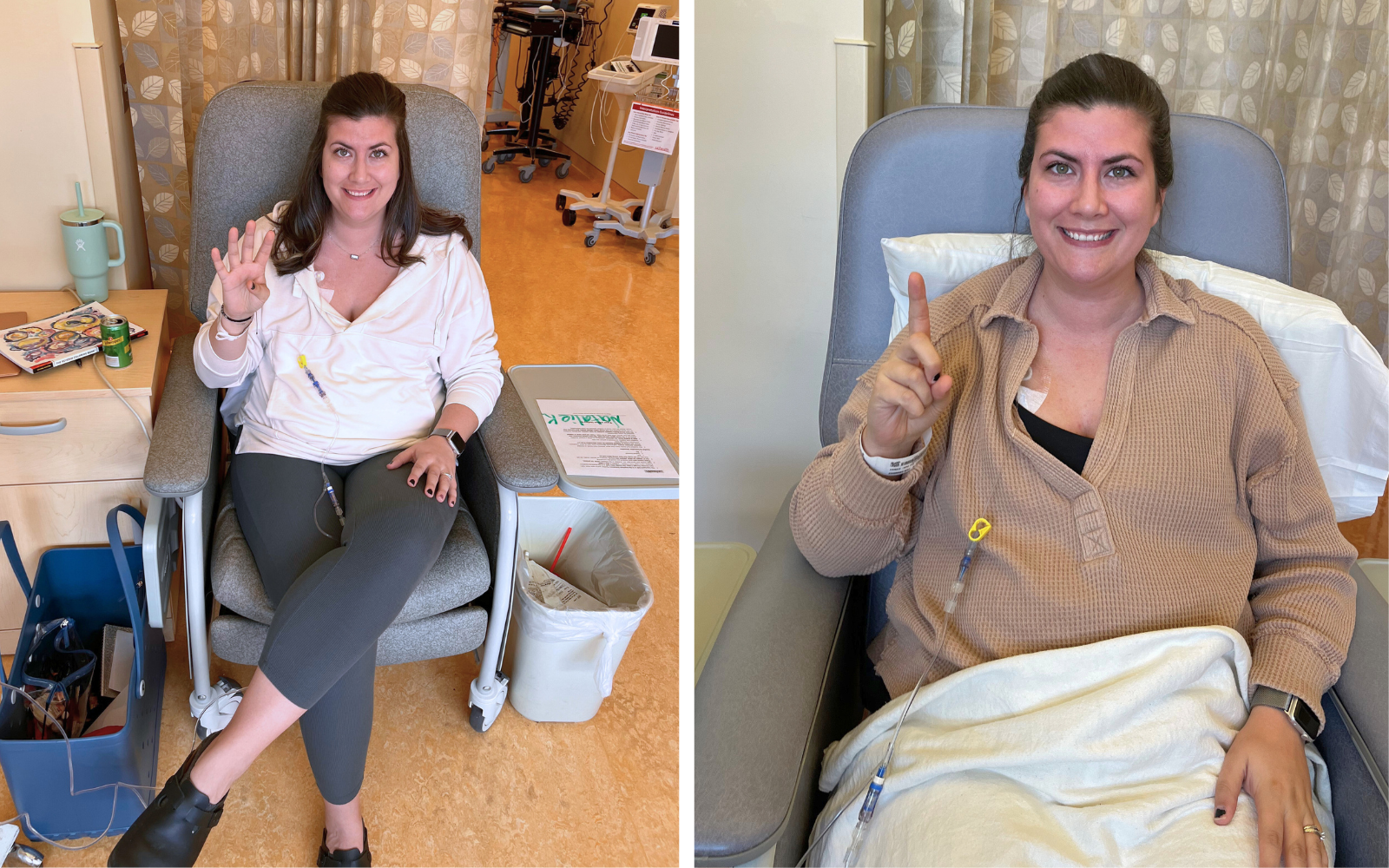
Caitlin Duffy during her treatment appointments. Photos provided by Caitlin Duffy.
Top-notch care in Colorado
In July 2024, when Duffy first saw her PET scan results delivered to her phone before her next appointment with Guntupalli, she misunderstood them, thinking they were bad news.
“I went into the appointment thinking that I still had cancer,” she says. “And Dr. Guntupalli came in and said, ‘I don’t know why you’re crying. Have you read your PET scan results?’ And I said, ‘I did, and I’m sad.’ He said, ‘No, the cancer is gone! We’ve done it. This is amazing. You’re welcome to cry, but you’re crying for the wrong reason.’ Then I hugged him.”
“The tumor completely melted away, and she is now two years cancer free and doing really well,” Guntupalli says.
Since then, Duffy has undergone pembrolizumab treatments every six weeks to help her immune system learn to recognize and kill cancer cells. She has another two rounds of treatment to go. Starting in April, she’ll see Guntupalli every three months for PET scans and pelvic exams.
Today, Duffy talks of how grateful she is to have a “world renowned doctor” and his team by her side at a top-notch cancer center close to home.
“The amount of research, science, and cutting-edge technology that I get to drive to for my treatments is insane,” she says. “You hear about people who go to MD Anderson or the Mayo Clinic, and they have to stay in provided housing or a hotel, or they fly back and forth. I didn’t have to do any of that. I got to go home every single treatment day. I’m very lucky to live to close and not have to add the stress of travel to my treatment. And my pembrolizumab treatment was approved the month before I started it. You don't get much luckier than that.”
Asked for advice for others, Duffy says: “Don’t be afraid to go to the doctor if something feels bad. Especially for things involving women’s health, they can be hard to talk about because you might feel you won’t be taken seriously. That was not my experience at CU Anschutz at all.”