
The effects of the SARS-CoV2 virus on the elderly and people with compromised immune systems is by now well-documented, but new research led by University of Colorado Cancer Center Deputy Director James DeGregori, PhD, reveals another group that could be affected by COVID infection — cancer patients, in particular cancer patients whose disease has gone into remission.
In research published today in the journal Nature, DeGregori and an international research team from the U.S. and Europe show that respiratory viral infections such as COVID trigger inflammation that can awaken dormant cancer cells in the lungs, raising the risk of lung metastasis and cancer-related death.
Key collaborators include CU Cancer Center members Mercedes Rincon, PhD, Dexiang Gao, PhD, Felipe Pereira, PhD, Junxiao Hu, PhD, Andrew Goodspeed, PhD, James Costello, PhD, and Thomas Morrison, PhD, as well as investigators in New York, led by Julio Aguire-Ghiso, PhD, and Europe, led by Roel Vermeulen, PhD, at Utrecht University, The Netherlands and Imperial College London. The project was spearheaded by Shi Biao Chia, PhD, a former postdoctoral fellow at the CU Cancer Center, and graduate student Bryan Johnson.
“This complex and multidisciplinary study truly took a village,” DeGregori says.
Fuel on the fire
It is known that people who are treated for their cancers can remain disease free for many years, only to relapse years or even decades later from metastatic disease originating from their original cancer. Extensive research has shown how cancer cells, often as solitary cells or small clumps, can remain dormant at metastatic sites for years or decades, but researchers lack a good understanding of the conditions that favor their reawakening.
Previous studies have revealed that inflammation can promote dormant cancer cell awakening. Together with Rincon, Aguire-Ghiso, and other collaborators, Chia and Johnson initiated experiments during the COVID-19 pandemic, using animal models of breast cancer, to ask whether respiratory viral infections, such as the flu virus or SARS-CoV2, known to cause massive inflammation in the lungs, could trigger metastatic progression in the lungs.
The results were striking, DeGregori says: Infection of the animal models with either flu virus or SARS-CoV2 led to massive expansion — more than 100-fold — of the previously dormant breast cancer cells in the lungs. These results prompted the team to reach out to collaborators who could analyze human data to see if there were similar connections. Though only breast cancer was modeled in the mice, DeGregori says that the findings are likely applicable to other types of cancer.
“Dormant cancer cells are like the embers left in an abandoned campfire, and respiratory viruses are like a strong wind that reignites the flames,” DeGregori says.
Increasing the risk of death from cancer
Using patient data from UK and U.S. health databases, another part of the study looked at the effects of a COVID infection on previously diagnosed cancer patients.
The team of epidemiological collaborators, led by Vermeulen, looked at people in the UK biobank whose cancer was diagnosed either five or 10 years ago. “This means they were almost certainly in remission,” Vermeulen says. “We studied those individuals who either got a positive or negative test for COVID-19 in 2020, the period before vaccination had started, and we asked, ‘Did they die from their cancer, and when?’ These analyses showed that the chance of dying from cancer was higher among the people that had contracted the virus. This risk seemed to be strongest in the year after contracting the virus.
“The odds ratio for death from cancer was substantial for the first year (2020), which means they were much more likely to die of their cancer if they got COVID,” Vermeulen continues. “The extent of this increased risk is almost unheard of in epidemiology for cancer. It’s a significant effect.” The magnitude of the increased risk in people mirrors the observed massive expansion of dormant cancer cells in the animal models.
Additional analyses of Flatiron Health data of women with a diagnosis of breast cancer, led by Hu and Gao, provided more specificity, showing that contracting COVID-19 significantly increased the risk of development of metastatic disease in the lungs. Again, results completely aligned with the experimental work in mice.
“Breast cancer cells stay in the lung, but they stay in very small numbers, in essentially a quiescent state,” DeGregori says. “What our data suggest is that if you are a cancer patient who has these dormant cells, you may end up living a normal life and dying with these dormant cells, instead of dying because those dormant cells awakened. But if you get a respiratory virus like influenza or COVID, your chance of dying from those dormant cells awakening is much greater.”
Vermeulen says it is important to note that the study examined the effect prior to the availability of COVID-19 vaccines.
“At this time, it is not yet known whether vaccination has reduced this risk,” he says. “However, since vaccination results in a much milder dysregulation of the immune system, we speculate that the observed risk would be lower in vaccinated individuals. That said, further research is needed to determine whether any residual risk remains after vaccination."
The IL6 factor
Driving the reawakening of dormant cancer cells, the researchers found, is interleukin 6 (IL6), a cytokine known to be involved in inflammatory responses. Here, the decades-long experience of Rincon in understanding this cytokine was key.
“It's interesting, because IL6 is actually targeted in some people who get COVID,” DeGregori says. “If you have severe COVID, they might give you an antibody that blocks signaling through the IL6 receptor to lessen the inflammatory response and increase survival. So it could be a win-win. While any changes to recommendations or clinical practice will require further research and trials, our studies reveal pathways that can be modulated by FDA-approved drugs that hold the promise of reducing the risks of metastatic progression in cancer survivors who experience viral lung infections like flu or COVID.”
Further investigation needed
Given the dramatic results of their initial research, DeGregori and Rincon, along with the Aguirre-Ghiso lab at the Einstein College of Medicine in New York, now plan to look more closely at how the reawakening process works, how it can be prevented, and how the immune system might be engaged to eliminate awakened cancer cells.
They recently were awarded a 5-year grant from the National Cancer Institute to pursue these studies, although most of the results presented in the Nature publication relied on philanthropic support and intramural support of many of the institutions involved — including from the Cancer League of Colorado, a Patten Davis Endowed Chair in Lung Cancer Research to DeGregori, and the Kay Sutherland and Monika Weber Research Fund, together with additional funding from the Veterans Administration and other sources — that was not originally designated for this project.
Vermeulen and epidemiological colleagues are also extending their work to study important follow-up questions that arise from the current research. Does it matter which cancer you had before infection, or are all ex-cancer patients at risk? Is it only metastatic disease of the lung, or also other sites like the brain and bone? Is there still a risk after vaccination for respiratory viruses like the flu or COVID? Although funding is still pending, Vermeulen and colleagues have started this work, recognizing that the results published in Nature will lead to these questions, which need answers as soon as possible.
“By understanding underlying mechanisms, we will work hard to develop interventions that can limit the risk of metastatic progression in cancer survivors who experience respiratory viral infections. We also plan to extend our analyses, both in animal models and through mining of clinical data, to other cancer types and other sites of metastatic disease,” DeGregori says. “Respiratory viral infections are forever a part of our lives, so we need to understand the longer-term consequences of these infections.”
Additional collaborators on the study were at University College of London, Johns Hopkins University, the University of Connecticut, the University of Pittsburgh, and Children’s Hospital of Philadelphia.
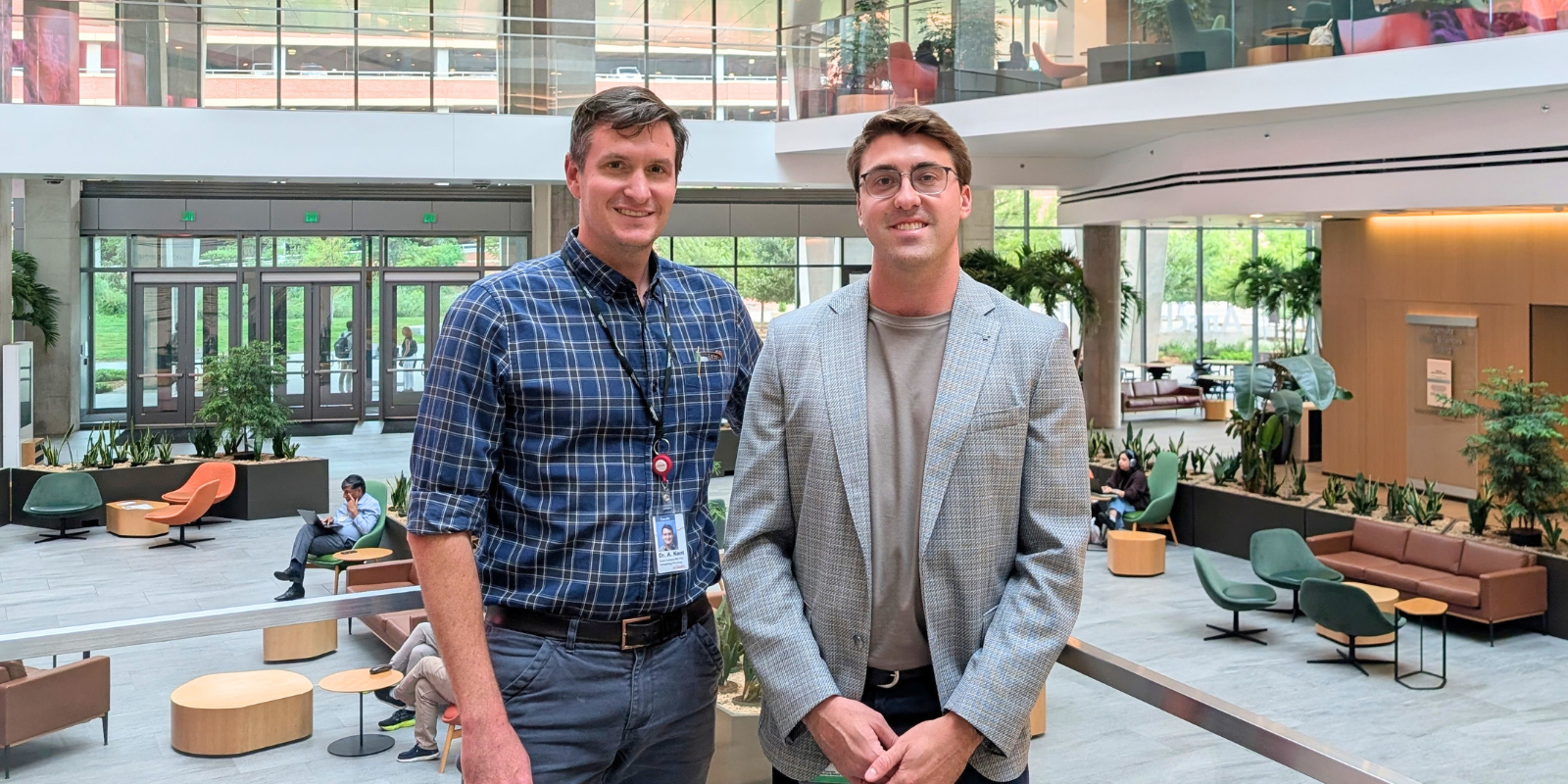
Featured image: From left, CU Cancer Center researchers Mercedes Rincon, PhD, Felipe Pereira, PhD, Bryan Johnson, and James DeGregori, PhD