Over the last decade, immunotherapy has revolutionized the treatment of advanced lung cancer by helping a patient’s own immune system to fight tumors. As more immune therapies are discovered, more patients can live longer.
But as University of Colorado Cancer Center member Erin Schenk, MD, PhD, knows from her patient care, “there is a specific subset of lung cancer patients who haven’t yet benefited from these types of immune therapies.”
This “urgent, unmet clinical need,” Schenk says, drives the research she is leading with support from a five-year, $1.2 million grant awarded in 2024 by the National Cancer Institute. The NCI’s K08 Mentored Clinical Scientist Research Career Development Award aims to help early-career clinician-scientists get “protected time” to conduct intensive cancer research.
“A lot of the research work I’m doing starts with that clinical challenge that I don't have immunotherapies to give these patients,” says Schenk, an associate professor in the CU Department of Medicine’s Division of Medical Oncology who practices in the lung cancer clinic at the UCHealth Anschutz Cancer Pavilion.
‘My big driver’
The subset of patients Schenk hopes to help with her work include those whose lung cancer is driven by oncogenes – mutated genes that can trigger abnormal cell growth, leading to cancer. Oncogene drivers such as EGFR and ALK can play a critical role in the development of non-small cell lung cancer, the most common type of lung cancer.
“We’ve tried to incorporate immunotherapy medicines for patients with those drivers, but many just don’t see the benefit,” she says. And since lung cancer screening rates are relatively low, most lung cancers aren’t diagnosed until they are at an advanced stage, which makes having effective immunotherapy treatments all the more important as available weapons in addition to conventional first-line therapies such as radiation, chemotherapy, and surgery.
Schenk, who completed her oncology fellowship in 2018, says she realized early in her career “that we don’t really understand how the immune system interacts with these cancer types. If we’re going to try to build upon the immune system to better eliminate these cancer types, we need to understand how those interactions take place. That’s my big driver.”
Impairing T cells
Schenk and her collaborators are focused on understanding the role that a type of white blood cells called neutrophils play in reducing the effectiveness of molecularly targeted therapies, another kind of advanced lung cancer treatment.
Earlier research, she says, showed that “having more neutrophils within the tumor reduces the ability of the cancer cells to be eliminated by the therapies I give in clinic, and it appears these neutrophils are preventing the efficacy of the targeted therapy by impairing T cells,” the immune system’s tumor-fighting soldiers.
Using animal models and analysis of patient samples, and employing single-cell sequencing to determine the genetic material of individual cells, Schenk seeks to answer questions about the composition of immune cells within tumors and how they change over time during therapy.
The goal, she says, is to identify both good and bad immune cell contributors to a cancer’s treatment response, leading to a better understanding of potential immune targets for treatment, and eventually to clinical trials for new immunotherapies based on her research.
Thankful for support
Schenk says she firmly believes that “the immune system is how we cure lung cancer, and that’s what motivates me to try to find novel therapies that have a potential to cure.”
She has wanted to be a physician since she watched a TV special about a neurosurgeon in the fourth grade. “The ability to help patients appealed to me, and that hasn’t changed,” she says. And then, as an undergrad, she was exposed to basic science, “and I really loved it.” So at the Mayo Clinic College of Medicine and Science, she sought her MD and PhD simultaneously.
“In graduate school, I did my thesis work in an immunology lab, and I was fascinated by the questions I could ask about the immune system in cancer,” Schenk says. “This was before we had any clinical immunotherapies like we have now, so I liked it before it was cool. Then while I was completing my fellowship, some of the first studies on checkpoint inhibitors and immunotherapy for lung cancer came out. That moved me towards the lung cancer field and being a thoracic oncologist.”
As she grows her experience and expertise in research, Schenk says she has received vital support and encouragement from the CU Cancer Center and its Thoracic Oncology Research Initiative (TORI), as well as from her division, and the thoracic oncology program of which she is a part.
“It’s always nice when a big grant like a K08 is awarded, but it wouldn’t have happened without all the small steps along the way, the pilot grants I received, and the generosity of my mentors,” she says. “And we have great infrastructure here to do this work.”
Several leading CU Cancer Center members have been mentoring Schenk in her project, including D. Ross Camidge, MD, PhD; Eduardo Davila, PhD; Raphael Nemenoff, PhD, and Jill Slansky, PhD. And she appreciates the support of institutional leadership, including CU Cancer Center Director Richard Schulick, MD, MBA, who wrote a key letter in support of her grant.
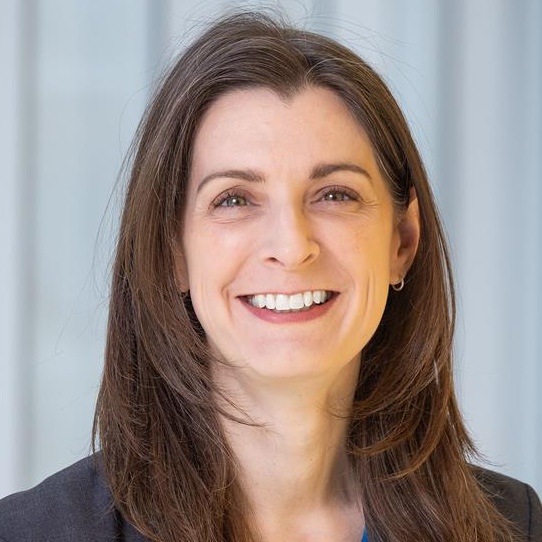
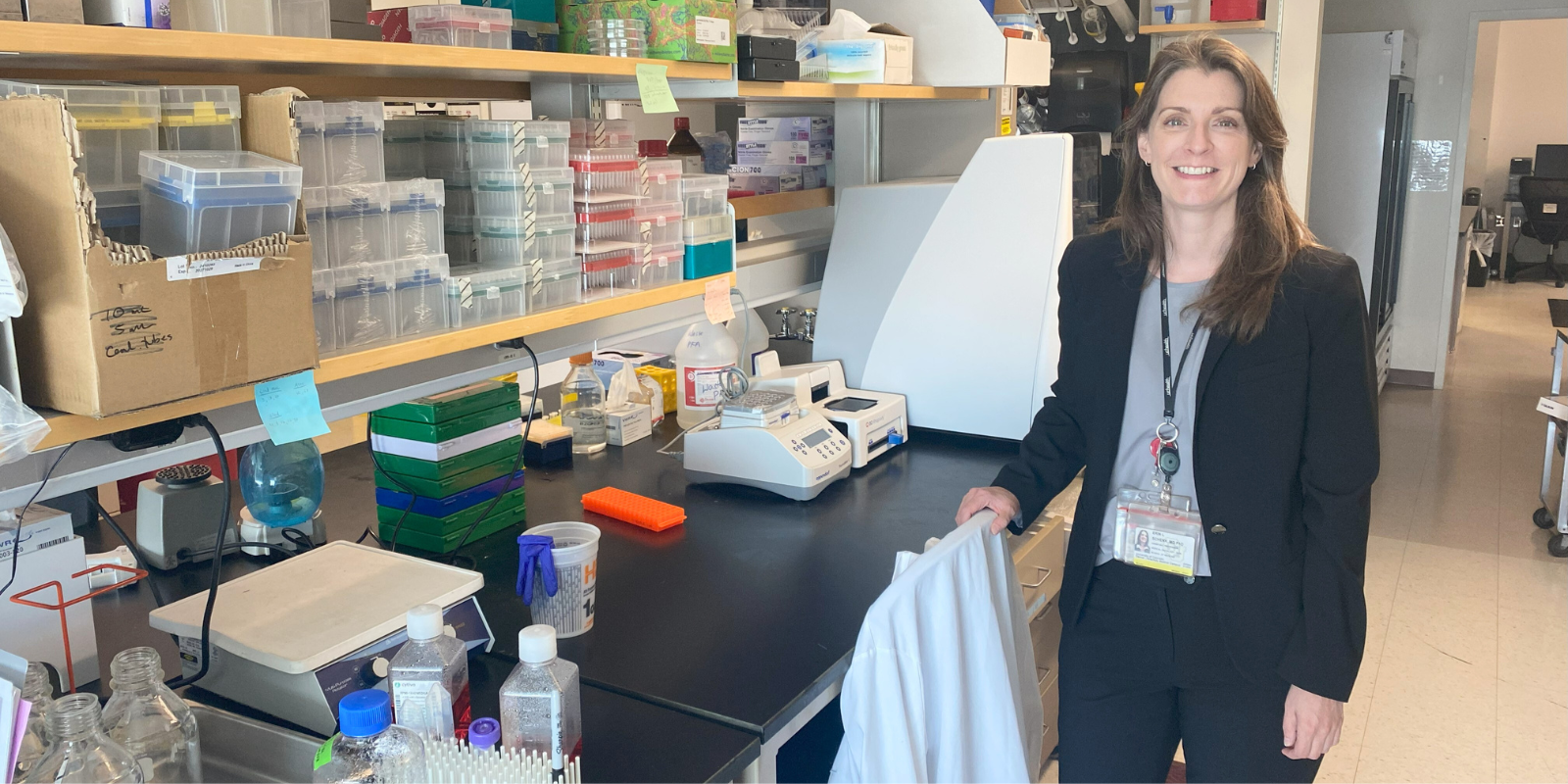
Photo at top: Erin Schenk, MD, PhD, in her lab at the CU Cancer Center. Photo by Mark Harden | CU Cancer Center.