Rare diseases are not as rare as you might think. Worldwide, more than 300 million people live with over 10,000 rare diseases. One of these is called OTC deficiency, which is when the liver can’t make enough of an enzyme called ornithine transcarbamylase (OTC). OTC is essential for removing ammonia from your blood. OTC deficiency is a type of urea cycle disorder that can lead to brain damage and even death.
“If you have a defect in the instructions to make that enzyme, the liver can’t detoxify ammonia, and it builds up rapidly, which can cause severe brain damage,” said Shawn McCandless, MD, professor of genetics and metabolism at CU Anschutz School of Medicine. The most serious cases of OTC deficiency are diagnosed in infancy.
Late-onset disease
Eighty percent of patients with OTC deficiency are diagnosed later in life. These cases are typically less severe. One example of someone with late-onset OTC deficiency is Peter Barton, who has been participating in a clinical study at the pediatric Clinical Translational Research Center (CTRC), part of the Colorado Clinical and Translational Sciences Institute.
He was diagnosed with the disease more than 25 years ago. At that time, he was rushed to the ER when his wife found him unresponsive and unable to wake up one morning. Barton fell into a coma and remained in that state for eight days. When he finally recovered from the coma, doctors at the Mayo Clinic in Arizona diagnosed him with OTC deficiency.
Today, Barton is in his seventies and travels to Colorado quarterly to participate in a gene therapy study led in Colorado by Janet Thomas, MD, professor of pediatrics, clinical genetics and metabolism at CU Anschutz School of Medicine. Recently published results from the study show positive outcomes for those who received the gene therapy treatment. Participants showed a reduction in plasma ammonia, and they maintained average ammonia in the normal range for 36 weeks after a single treatment.
“The primary endpoint [of the study] is improved ammonia levels,” Thomas said. “The study shows that it helps control ammonia levels and other biomarkers, which tells us the urea cycle itself is working better.”
Going forward, if the gene therapy treatment continues to be effective in the adult population, researchers will likely move forward to study infants and children. Participants like Barton will be followed for several years.
Gene therapy
Gene therapy targets an individual’s genetic mutation or disorder. The treatment works by either changing a disease-causing gene or providing a working copy of that gene. Genes are instructions for making proteins that help your body work.
The gene therapy treatments are administered via an intravenous (IV) infusion that takes anywhere from 30 minutes up to two hours. The gene product is attached to an adeno-associated virus (AAV) as this virus is an effective way to deliver genetic material to the liver where the urea cycle is located. The virus is inactivated and will not result in human disease. Moreover, it will not replicate in the body like normal viruses do.
“These gene therapy trials are such that you only get the product once,” said Thomas. She explained that the therapy used to treat late-onset OTC deficiency does not integrate in the genomic information in the cell. “It sits in the cell, and it makes its product.”
Barton said that when he received his infusion and shortly afterwards, he did not feel sick, or anything different than before. The study will continue to follow participants for the next five years to determine if positive effects continue over time.
Barton’s motivation
Once Barton was diagnosed with late-onset OTC deficiency, he made sure his children and grandchildren were screened for the disease. Some are carriers of the disease, but none has symptomatic disease. He found out, however, that he has a second cousin who has symptoms of OTC deficiency. When Barton was presented with the opportunity to participate in clinical research, he said, “I think this would be a good thing to do.” He hopes the knowledge generated from the study will help others, including his family members.
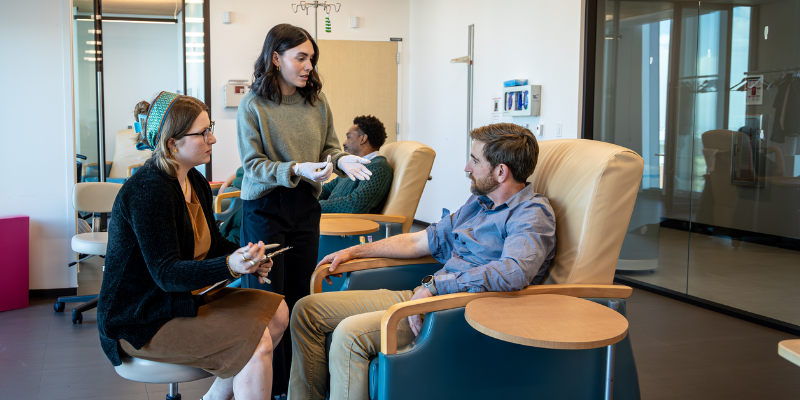
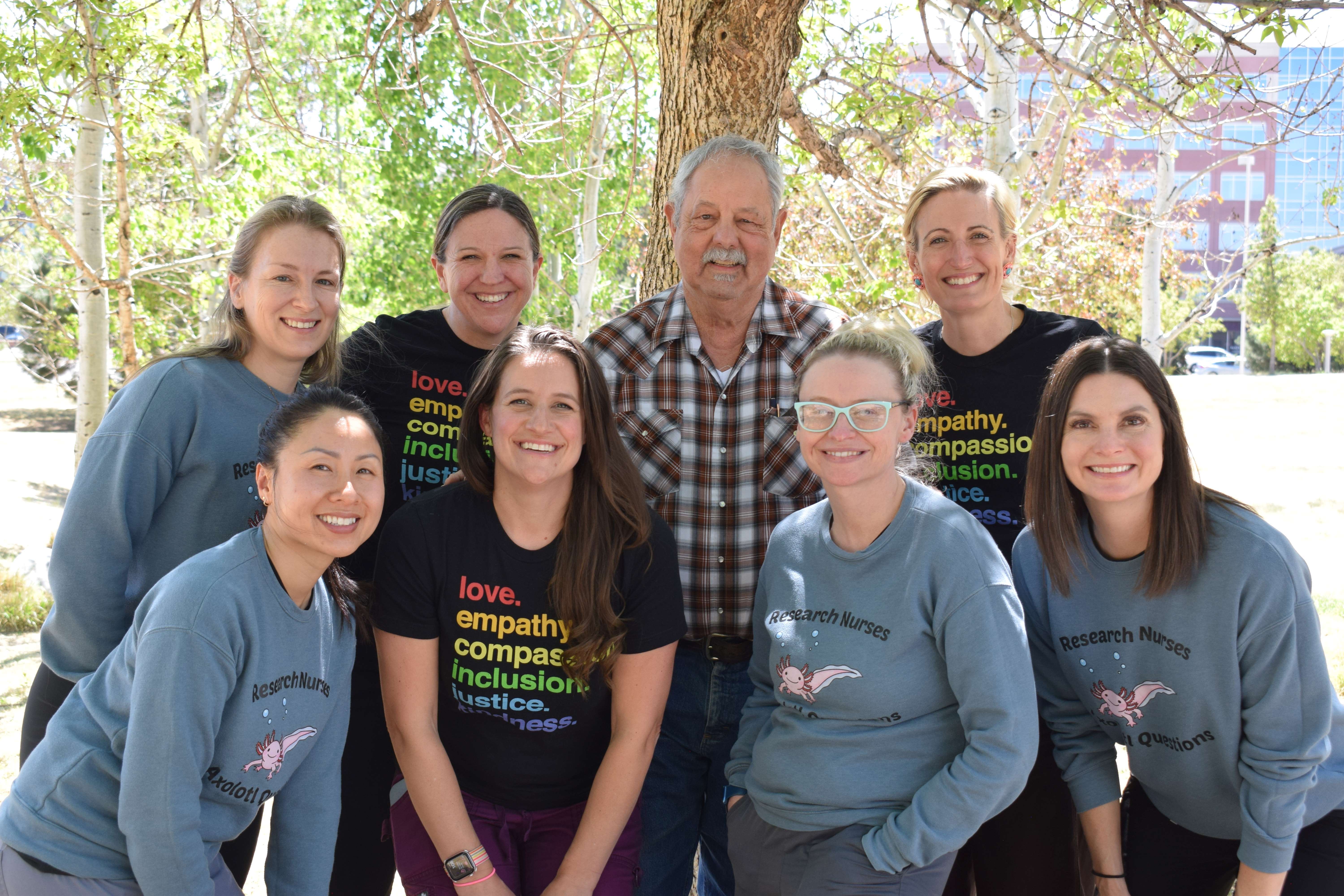
He travels to Colorado from Arizona every three months so Dr. Thomas and the nurses in the CTRC can follow up on his blood ammonia levels and other key indicators of his health. He always spends one night in the hospital and one full day in the outpatient CTRC. Referring to the specialized research nurses in the CTRC, he said, “These girls here, they take pretty good care of me.”
Each time Barton comes for a visit, the nurses draw blood samples so Dr. Thomas may review his ammonia levels and additional biomarkers of his health. Referring to his most recent visit, Barton said, “I hope the lab results from the blood draws gave them enough ammunition to go forward.” He continued, “As long as I can give them information, I will be here!”
When he initially signed up for the study, he was told it would last about two years. Then in January he found out the study had been extended, and it was his choice whether he wanted to continue to participate, “I said, well, count me in.”
He says people should not be afraid of clinical research. “If they’ve got the time and the energy, they should get involved with it because knowledge is beneficial.”
Looking to the future
Thomas reiterated that the interim results of the clinical trial are very encouraging. The gene therapy product appears to be effective in improving ammonia levels in many patients with late-onset OTC, which means ultimately patients will need to take fewer medications and have fewer dietary restrictions.
If the trial results continue to be positive, the FDA may eventually approve the gene therapy treatment. That would be a big step in improving therapeutic options for individuals with OTC. Thomas said, “Our hope would be that you make the diagnosis [in infancy], you receive a gene therapy product, and off you go. It will change the natural history of these disorders.”
She continued, “You are curing these diseases from a very young age. The treatments will save them from a lifetime of chronic disease management – that would be our overall goal.”
Photo above shows Peter Barton with the pediatric CTRC research nursing team.