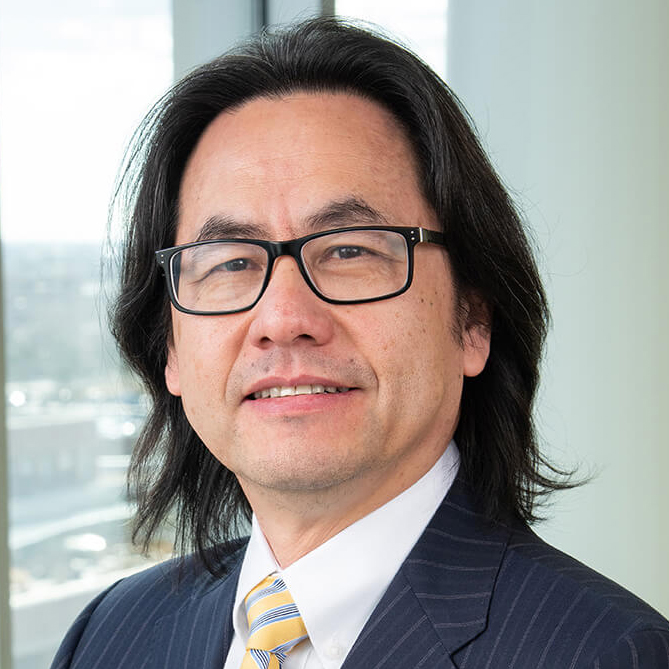

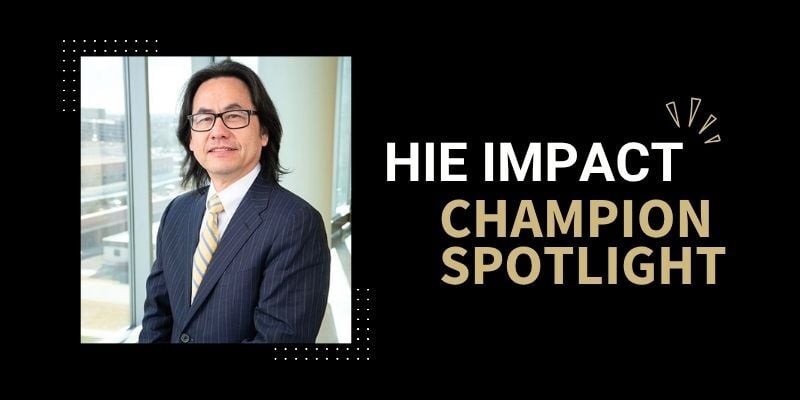
A Q&A with Dr. Shi-Long Lu, Professor, Department of Otolaryngology-Head and Neck Surgery, CU Anschutz School of Medicine, and member of the CU Anschutz Cancer Center
HIE Impact Innovation Champions are CU Anschutz faculty and staff embedded across campus who are helping shape a culture where ideas become impact. Through this spotlight series, we’ll introduce you to the Champions driving change from within, the connectors, catalysts, and collaborators who are making innovation more visible, accessible, and actionable for all. Get to know what motivates them, the discoveries they’re championing, and how they’re helping move bold ideas toward patient and societal benefit.

Why are you passionate about advancing healthcare innovation at CU Anschutz?
What motivates me most is bridging the gap between research discoveries and clinical impact. By combining innovative science with collaborative, patient-centered research, I hope to develop solutions that advance our understanding of cancer and translate into better diagnostic tools, treatments, and outcomes for patients. Improving the lives of cancer patients and their families through meaningful innovation is the driving force behind my research and aligns closely with the collaborative, translational mission of CU Anschutz.
How did you catch the innovation bug / what was your first exposure to innovation?
My first exposure to innovation came during my postdoctoral training at Case Western Reserve University, where I worked on stool DNA testing for colorectal cancer. That technology ultimately contributed to the development of Cologuard, the first noninvasive molecular screening test for colorectal cancer. Seeing how a scientific discovery could be translated into a clinically impactful diagnostic tool sparked my interest in innovation. Later, when I established my independent research in head and neck cancer, developing a saliva-based diagnostic test became a natural extension of that experience, leveraging the anatomical accessibility of the disease site to pursue a noninvasive approach for early cancer detection.
"Innovation starts with a simple idea, but it grows through collaboration and persistence." - Shi-Long Lu, MD PhD
What innovation work are you currently involved in (or have supported), and what impact are you hoping it will create?
My current innovation work centers on HNKlear, a saliva-based diagnostic platform for head and neck cancer. In its early stages, HNKlear was selected as one of the first SPARKee projects by CU Anschutz Innovations and received support from the Colorado State, our Cancer Center, and the Cancer League of Colorado. These supports enabled us to secure an NIH UH2/UH3 grant to rigorously validate the biomarker through analytical and clinical validations. We are now advancing the platform toward clinical use for recurrence monitoring and the development of companion diagnostics to guide precision cancer care. During the pandemic, we leveraged our saliva technology to develop an extraction-free, high-throughput PCR testing platform with an ultrafast turnaround time. This innovation enabled our company to become one of Colorado's largest COVID-19 testing providers, demonstrating the versatility of our technology and its potential to address both urgent public health challenges and long-term needs in cancer diagnosis and treatment.
Is there anyone in your department doing particularly interesting innovation work?
There are many innovative efforts across our department that would be difficult for me to highlight just one individual. Faculty across our department are advancing new ideas and technologies across the full spectrum of Otolaryngology- Head and Neck Surgery, from novel surgical approaches and diagnostic tools to translational therapies and technology-driven solutions. Our Chair, Dr. Yuri Agrawal, has been a strong advocate for innovation, providing the support and vision that enable faculty to pursue impactful ideas and transform them into clinical advances.
If you could wave a magic wand, what is the most important thing you would be able to accomplish as an Innovation Champion?
I would create a more seamless pathway for innovative ideas to become meaningful solutions for patients. Many faculty members generate groundbreaking discoveries, but translating these discoveries into clinical applications requires resources, expertise, mentorship, and connections across research, industry, and healthcare. I hope to help build an environment where investigators have the support, they need to overcome these barriers and accelerate the journey from scientific discovery to real-world impact.
What excites you most about the future of innovation on this campus?
What excites me most is the combination of scientific excellence, clinical expertise, and a strong culture of collaboration across our campus. Bringing together researchers, clinicians, engineers, entrepreneurs, and industry partners creates unique opportunities to develop solutions that can transform healthcare. With rapid advances in areas such as precision medicine, artificial intelligence, and digital health, I believe CU Anschutz is uniquely positioned to translate innovative ideas into meaningful improvements in patient care.
Any particularly interesting or surprising learnings along the innovation journey?
One of the most surprising lessons from my innovation journey is that the impactful innovations sometimes emerge by recognizing opportunities beyond the original vision. During the pandemic, our saliva-based diagnostic technology, originally developed for cancer detection, was adapted to create an extraction-free, high-throughput testing platform. This experience reinforced that innovation requires flexibility, creativity, and the willingness to apply existing knowledge in new ways.
What advice would you give a colleague who has an idea but isn’t sure where to begin?
Do not wait until the idea is perfect before sharing it. Engage with your colleagues, mentors, and CU Anschutz innovation team early. These conversations can provide valuable feedback, refine the idea, and connect you with the resources needed to move it forward. Innovation starts with a simple idea, but it grows through collaboration and persistence.