
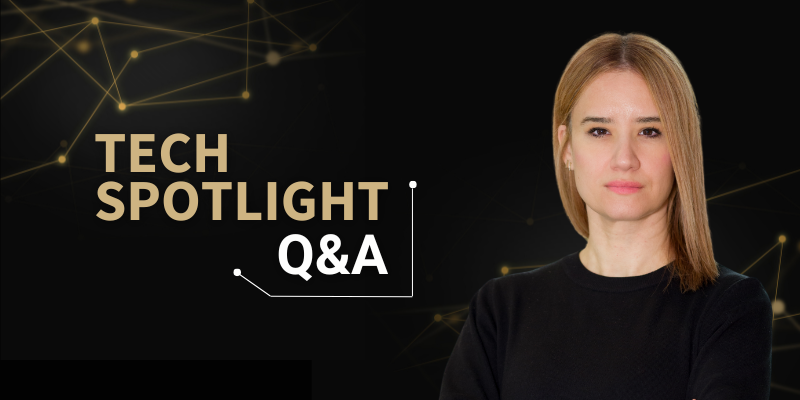
A Q&A with Alice Soragni, PhD, Professor of Biomedical Informatics and Neurosurgery, CU Anschutz

What does your research explore?
We investigate biology and drug response of rare and ultra rare tumors. Our largest focus is on sarcoma. It accounts for ~1% of tumors and within that there are about 100 different subtypes. For the majority of these subtypes, we don't have good tumor models or standard of care. We are building a platform that allows us to study drug response of these tumors in 3D to identify and develop better treatment options.
What motivated you to do this research?
There is a big conundrum. If someone develops cancer that is a traumatic event. For patients with rare cancers, they are told they have cancer and not much we can do about, which is very traumatic. There is a huge empty space to fill with knowledge on these rare and ultrarare cancers, and we need models to gain knowledge here. However, while we are focused on rare cancers, the tools we are developing can be expanded to other tumors.
“There is a huge empty space to fill with knowledge on these rare and ultrarare cancers, and we need models to gain knowledge here.” -Alice Sorgani, PhD
What's the potential impact of your research?
We want to use the knowledge we develop to help patients. Our goal is functional precision medicine through rapid testing of therapies on patient tumor organoids to help doctors make the best therapeutic choice for their patients.
What near-term milestones around your research are you most excited about?
In terms of sarcoma, we are accumulating large amounts of data of molecularly and functionally characterized tumors. I'm excited to translate this knowledge into actionable steps for patients and better understand the heterogeneity of sarcoma and how patients develop treatment resistance. With data we have generated from over 500 sarcoma patients, we can identify new targets, new therapeutic leads, and repurpose medicines.
What future directions do you wish to expand this research?
We want to broadly continue doing what we are doing. We have accumulated information that validates our platform and we have found that tumor organoid drug responses match actual patient responses. We have launched our first clinical trial in patients with osteosarcoma. We started with osteosarcoma because it's one of the more common sarcomas, but the hope is to expand our clinical trial portfolio beyond osteosarcoma.
Any shout outs you'd like to give?
- My team - they put in a lot of long hours to develop these models from clinical samples. Sometimes we have to follow surgical schedules and that's not easy. They have unmatched enthusiasm to do this work though.
- Sarcoma research community - it's a special place, it's a community that I came into a few years back from a very different background but they have been so welcoming. There is a very real understanding that when you work on rare and ultra rare cancers nobody's an island, you have to work together.
- Patients and families that choose very selflessly to participate in research. The sarcoma patient community is very active and we could not do our research without them.