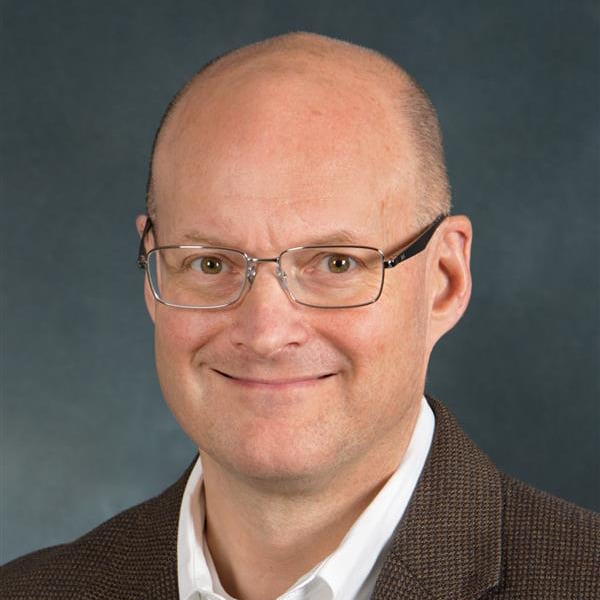

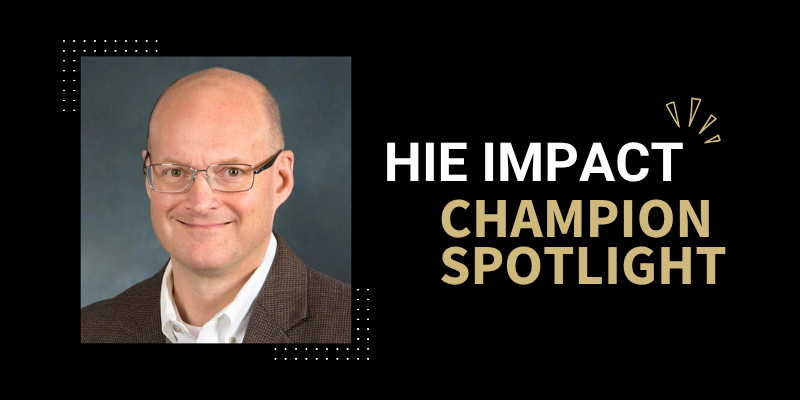
A Q&A with Michael Zuscik, PhD, professor in the Department of Orthopedics, CU Anschutz School of Medicine
HIE Impact Innovation Champions are CU Anschutz faculty and staff embedded across campus who are helping shape a culture where ideas become impact. Through this spotlight series, we’ll introduce you to the Champions driving change from within, the connectors, catalysts, and collaborators who are making innovation more visible, accessible, and actionable for all. Get to know what motivates them, the discoveries they’re championing, and how they’re helping move bold ideas toward patient and societal benefit.

Why are you passionate about advancing healthcare innovation at CU Anschutz?
I think about it at two levels. First, I genuinely enjoy the intellectual process of science, particularly research with the potential to improve patient care. The opportunity to identify an unmet need, understand the underlying biology, and develop solutions with real clinical impact is very motivating.
Second, CU Anschutz provides a uniquely fertile environment for innovation. The concentration of clinical, scientific, and entrepreneurial expertise creates opportunities to move ideas from discovery to validation, intellectual property, commercialization, and ultimately community impact. Few places have the combination of talent, infrastructure, and collaborative culture needed to translate promising ideas into healthcare advances.
How did you catch the innovation bug / what was your first exposure to innovation?
My first exposure to innovation came through research on the role of the gut microbiome in osteoarthritis and other musculoskeletal diseases. As we began to understand how gut microbiome dysbiosis contributes to disease, it became clear that modifying the functional behavior of the microbiome could represent an achievable therapeutic strategy.
That realization transformed the work from a scientific question into an innovation opportunity. It led to the formation of Solaria Bio and the development of defined microbial assemblages designed to beneficially modulate gut microbiome function. Today, that platform has generated products with applications in osteoporosis and rheumatoid arthritis advancing toward clinical use. In the context of Solaria Bio, seeing a fundamental biological discovery evolve into intellectual property, a startup company, and products with the potential to improve patient outcomes is what sparked the innovation bug for me.
What innovation work are you currently involved in (or have supported), and what impact are you hoping it will create?
In addition to my ongoing involvement with Solaria Bio, I have recently had the opportunity to work with Stephanie Bryant, Karin Payne, Laurie Goodrich, and Kelly Santangelo on an ARPA-H supported effort to develop novel therapies for osteoarthritis. This program has generated multiple innovative therapeutic candidates with the potential to alter the treatment of a disease that affects millions of patients.
We are currently completing the studies necessary to support near-term clinical safety trials while simultaneously advancing commercialization efforts. To facilitate translation of these technologies to patients, we recently established Renovare Therapeutics, a startup company focused on bringing these innovations from the laboratory to the community.
My hope is that this work will ultimately deliver disease-modifying treatments that improve quality of life for patients with osteoarthritis while demonstrating how academic discoveries can be translated into real-world healthcare solutions.
Is there anyone in your department doing particularly interesting innovation work?
It is risky to highlight only a few examples because innovation is thriving across the Department of Orthopedics. Examples include the Bone Anchored Limb Research Group's novel implant systems for amputees, Drs. Eve Burger and Vik Patel's cage technology for spine surgery supported by the SPARK program, Dr. Nick Alfonso's innovative antibiotic delivery platform for complex fractures, and Dr. Omer Mei-Dan's rotational femoral nail system. This is merely a sampling of a robust innovation ecosystem in which faculty are developing technologies and therapies with the potential for meaningful clinical impact.
If you could wave a magic wand, what is the most important thing you would be able to accomplish as an Innovation Champion?
The most important thing I could accomplish as an Innovation Champion would be to connect our faculty with the broad range of mentoring, funding, partnering, and commercialization resources available through CU Innovations. As I have become more familiar with this ecosystem, I have repeatedly discovered opportunities and resources that I did not know existed. I look forward to partnering with Dr. Vik Patel to ensure our faculty recognize that no idea is too early to engage with CU Innovations, and that support is available at every stage of the innovation and translation process.
What excites you most about the future of innovation on this campus?
What excites me most? The close connection between CU Innovations and the clinical and research enterprise. That integration triad creates a synergistic environment where even the earliest ideas can quickly gain traction. When expertise, resources, and opportunity are this accessible, the potential to translate discoveries into real-world impact is tremendous.
Any particularly interesting or surprising learnings along the innovation journey?
My most surprising lesson has been that innovative ideas require immediate, intentional effort to begin the path toward translation and commercial development. Early in my career, I viewed innovation as something that started once there was sufficient data to support new IP. I have since learned that this can be too late. Successful innovation requires early engagement, strategic thinking, and deliberate planning from the moment a promising idea emerges. One of the greatest strengths of the innovation ecosystem on our campus is that it helps investigators recognize those opportunities early and connect with the resources needed to move ideas toward translation and commercialization.
“Successful innovation requires early engagement, strategic thinking, and deliberate planning from the moment a promising idea emerges.” -Dr. Michael Zuscik
What advice would you give a colleague who has an idea but isn’t sure where to begin?
I would advise them to head on over to the Healthcare Innovation & Entrepreneurship website (https://www.cuanschutz.edu/innovations/HIE), and get connected!