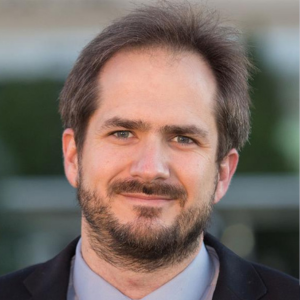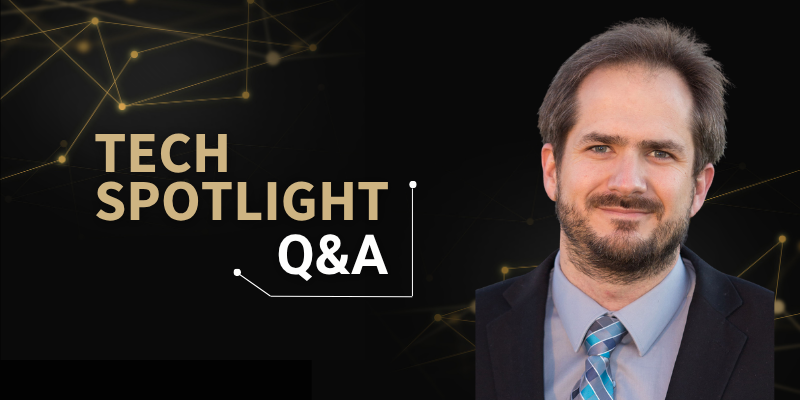
A Q&A with Benjamin Bitler, PhD, D. Thomas and Kay L. Dunton Endowed Chair in Ovarian Cancer Research
Division of Reproductive Sciences, Department of Obstetrics and Gynecology, CU Anschutz

What does your research explore?
My research explores the biology that allows ovarian cancer to survive treatment and ultimately recur. We focus on how tumor cells adapt through changes in epigenetic regulation, DNA repair, metabolism, and interactions with the immune microenvironment. Our goal is to translate these discoveries into biomarkers and new therapeutic strategies that match the right treatment to the right patient.
What motivated you to do this research?
I was drawn to ovarian cancer research because of the enormous clinical need. Many patients initially respond well to chemotherapy, yet their cancer eventually develops resistance and returns. I have also seen personally how difficult cancer treatment can be for patients and their families. That experience reinforced my desire to understand why therapies stop working and, more importantly, to develop approaches that are more effective, more precise, and ultimately less burdensome for patients.
What's the potential impact of your research?
The long-term goal is to change how ovarian cancer is treated—from relying primarily on broadly applied therapies to making biologically and molecularly informed treatment decisions. By identifying mechanisms of resistance and biomarkers that predict therapeutic response, we hope to develop new treatment combinations, improve patient selection for existing therapies, and move promising discoveries more efficiently from the laboratory into clinical trials. Ultimately, we want patients to receive therapies that are more likely to work while avoiding treatments unlikely to benefit them.
What near-term milestones around your research are you most excited about?
I am particularly excited about moving several of our laboratory discoveries toward clinical testing and building the infrastructure to study those therapies directly in patient specimens. A major near-term milestone is the development of the Rocky Mountain Ovarian Cancer SPORE (Specialized Program of Research Excellence), which brings together investigators at the University of Colorado, the University of New Mexico, and collaborating institutions to launch multiple translational clinical studies. These studies will allow us to evaluate not only whether therapies work, but also the biological changes occurring within tumors and why individual patients respond differently.
What future directions do you wish to expand this research?
Our future direction is to move molecularly and genetically informed treatment decisions earlier in the clinical management of ovarian cancer, particularly into the frontline setting. Rather than waiting for tumors to become resistant, we want to use tumor biology at diagnosis to identify vulnerabilities and guide therapy from the beginning. An important broader goal is to help establish the University of Colorado as a world leader in translational gynecologic cancer research and precision oncology.
"Rather than waiting for tumors to become resistant, we want to use tumor biology at diagnosis to identify vulnerabilities and guide therapy from the beginning."
- Dr. Benjamin Bitler
Any shout outs you'd like to give?
Absolutely. This work is only possible because of an extraordinary team.
-
UCCC Gynecologic Oncology team, led by Dr. Christine Walsh; our patient advocates; the members of the Gynecologic Oncology Research Group; and the leadership of the Department of Obstetrics and Gynecology, including Drs. Saketh Guntupalli and Thomas Jansson, for their continued support of ovarian cancer research.
-
Our collaborators, particularly Dr. Sarah Adams and colleagues at the University of New Mexico and Dr. Katherine Aird at the Wistar Institute, whose scientific partnerships have been essential to this work.
-
The patients and families who participate in our research and inspire what we do every day and my own family for their constant support.