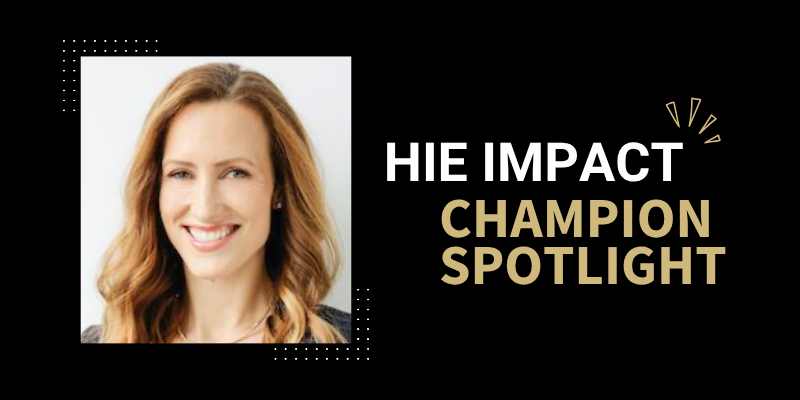
A Q&A with Dr. Daniel Kramer, Assistant Professor, Department of Neurosurgery, CU Anschutz School of Medicine
HIE Impact Innovation Champions are CU Anschutz faculty and staff embedded across campus who are helping shape a culture where ideas become impact. Through this spotlight series, we’ll introduce you to the Champions driving change from within, the connectors, catalysts, and collaborators who are making innovation more visible, accessible, and actionable for all. Get to know what motivates them, the discoveries they’re championing, and how they’re helping move bold ideas toward patient and societal benefit.

Why are you passionate about advancing healthcare innovation at CU Anschutz?
The intersection of healthcare and science is where we can use what we learn from individual patients to drive new treatments for much larger populations. To me, that is the value of being both a clinician and a scientist. Particularly in the human brain, where my clinical work takes me, I am able to leverage unique opportunities to study features of the brain that were previously impossible to investigate. My excitement comes from using that knowledge to advance healthcare in meaningful ways.
How did you catch the innovation bug / what was your first exposure to innovation?
I have always been interested in the brain because it is both the most fascinating organ in the body and one of the last true frontiers of science. Innovation is a natural outcome of that combination. Once I realized I was in a position to make discoveries that could push the field forward, I let my imagination run wild.
What innovation work are you currently involved in (or have supported), and what impact are you hoping it will create?
I work with several companies and research institutes focused on developing new treatments for brain disorders. Much of that work eventually reaches a point where new technologiesneed to be invented, patented, or otherwise advanced to move the science forward. As a result, I have become increasingly involved in the innovation and commercialization aspects of my basic and translational neuroscience research. Ultimately, I hope this work leads to more effective therapies that improve outcomes for people living with neurological disorders.
Is there anyone in your department doing particularly interesting innovation work?
Drs. Kern and Thompson were instrumental in the development of adaptive deep brain stimulation, often referred to as "closed-loop" stimulation. Dr. Welle is also generating fascinating data on vagal nerve stimulation and cognition, which complements many of the questions we are exploring in my own lab. It is exciting to be surrounded by colleagues who are advancing entirely new approaches to understanding and treating brain disorders.
If you could wave a magic wand, what is the most important thing you would be able to accomplish as an Innovation Champion?
I would accelerate the development of a closed-loop device capable of reading neural populations and delivering stimulation at precisely the right time to promote neural plasticity. That is the vision we are actively working toward. If the magic wand could also provide a little more funding along the way, I certainly would not object.
What excites you most about the future of innovation on this campus?
The university's commitment to innovation is one of the things that clearly sets CU Anschutz apart from many other institutions. That commitment attracts exceptionally talented and productive people. When you build a culture that supports innovation, breakthrough ideas naturally follow.
Any particularly interesting or surprising learnings along the innovation journey?
One lesson I have learned is the importance of protecting scientific discoveries. I have somewhat reluctantly embraced the industry and business side of innovation, but I have come to appreciate that intellectual property and commercialization are often necessary to ensure promising discoveries can ultimately reach patients.
What advice would you give a colleague who has an idea but isn’t sure where to begin?
Start with your passions! There are no shortcuts. Good science leads to good innovation, and good science is driven by curiosity and genuine enthusiasm for the questions you are trying to answer. If you follow that path, the opportunitiesfor innovation will emerge.
"Good science leads to good innovation, and good science is driven by curiosity and genuine enthusiasm for the questions you are trying to answer."